
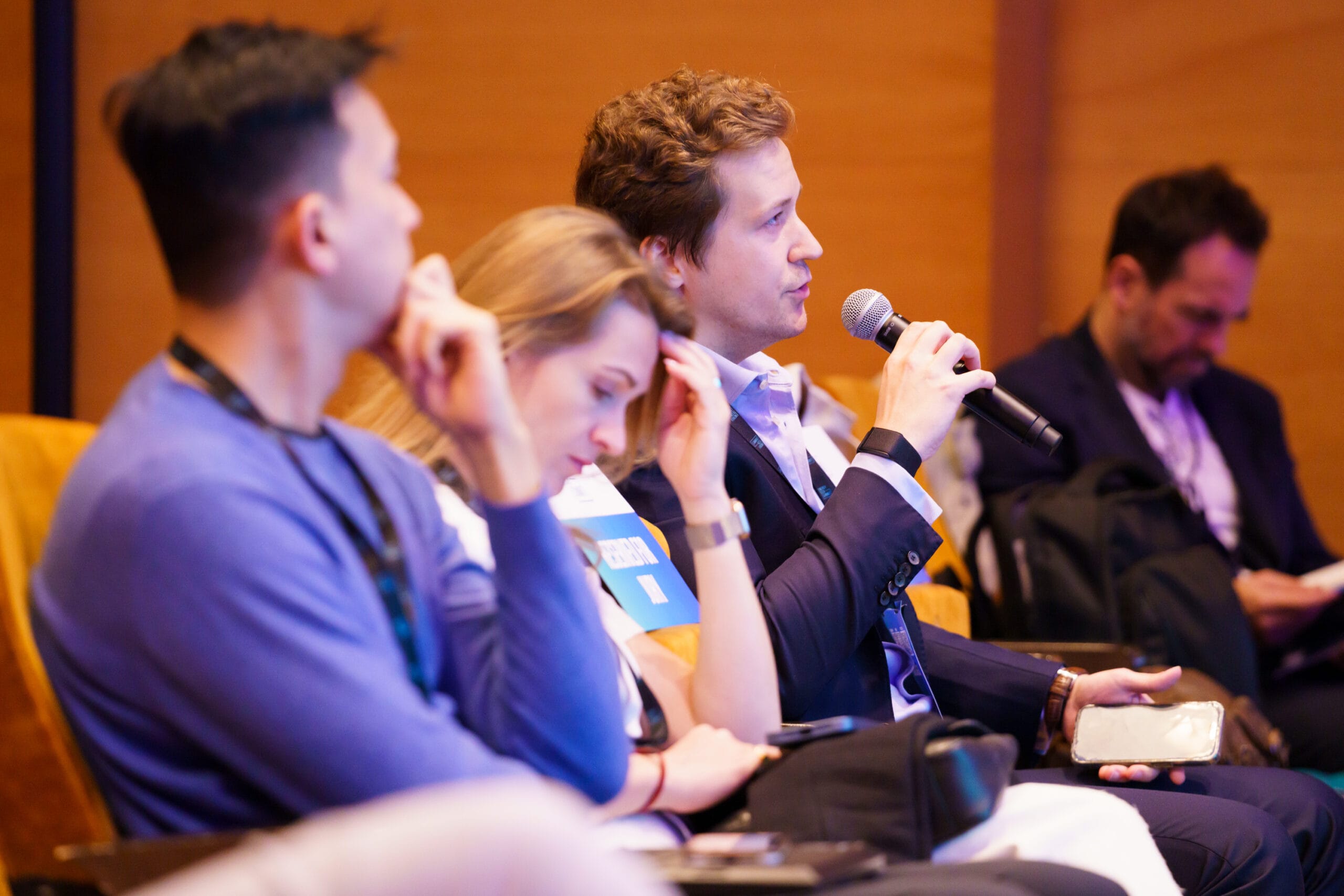
Fuels from a ceramics kiln, minerals from power plant cooling water, battery graphite from flue gas. Inside the Carbon Tech finals at Energy Tech Summit.
Carbon capture startups have spent a decade being judged on cost per tonne. This track suggested a different framing: several of these companies would rather not depend on a carbon price at all. The recurring move was to turn captured CO2 into a product someone already buys – fuels, minerals, graphite – and treat the climate benefit as a consequence rather than the revenue model.
Carbon Power Mexico: removal as a service
Daniel Cano Jiménez opened with an observation about where industrial money currently goes: companies spend heavily each year simply to avoid emissions, not to reduce or remove them.
His company installs a point-source capture unit that converts flue gas into fuels, biochar and other materials. The commercial model matters as much as the hardware – the equipment is leased rather than sold, so customers avoid a full capex outlay up front, and repayment comes through a revenue share on the substances produced. Carbon Power sells those substances and generates carbon credits on top.
The technical claim is about heat. The system operates at high temperatures, where competing approaches require the gas stream to be cooled and then reheated – which he put at a very large share of operating cost avoided.
The choice of first market was deliberately unglamorous. Ceramics is not a headline industry to decarbonize and not among the biggest emitters, but it made a good proof of concept. Glass comes next, because the exhaust composition is similar; the difference is that glass plants run continuously.
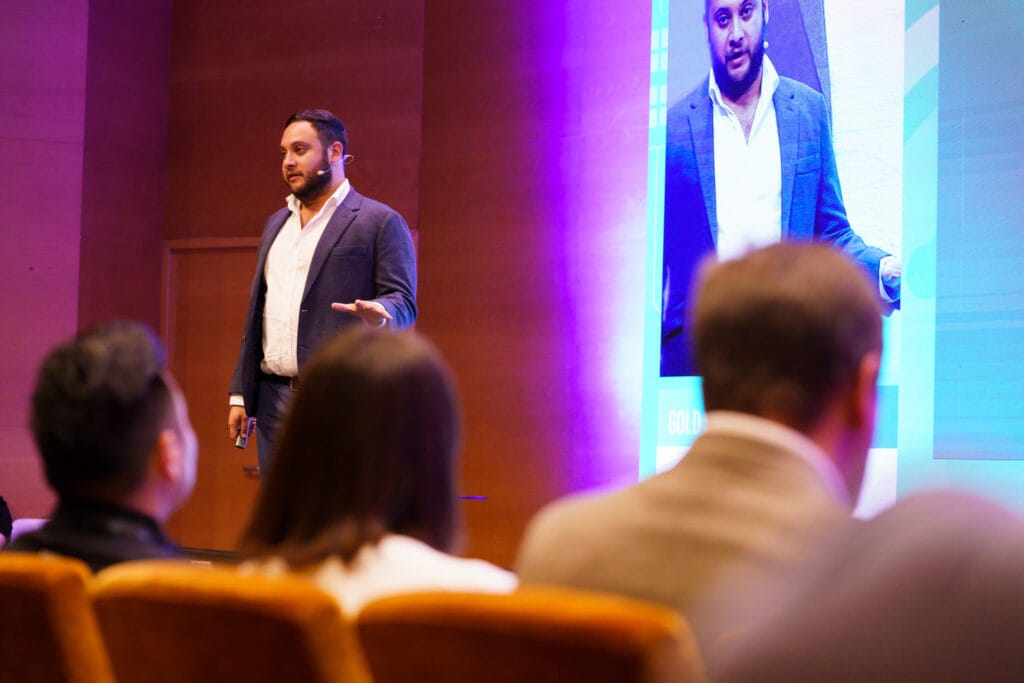
Daniel Cano Jiménez , CEO of Carbon Power Mexico pitching on stage
Ceal Minerals: fixing a problem power plants already pay to solve
Mati Shani built his pitch around an existing maintenance headache rather than a climate one. Seawater-cooled thermal power plants suffer from biofouling and scale clogging their cooling pipes, caused by calcium in the seawater, and today they dose hazardous chemicals to manage it.
Ceal’s process converts carbonates and calcium from the seawater into precipitated calcium carbonate. That leaves calcium-depleted water, which solves the fouling problem, while producing high-value carbon-negative minerals and sequestering atmospheric CO2 along the way.
The value chain is the pitch. Power plants gain efficiency and a short payback, mineral producers get cheaper carbon-negative material, and Ceal takes royalties from an asset-light position without owning the plants.
Asked whether the technology generates tradable carbon credits, Shani’s answer was emphatic – and telling for this track. They deliberately avoid them. The point is to be profitable without relying on credits, because the minerals sell for considerably more.
On barriers he was candid: the prototype has run five months on seawater and needs scaling by six orders of magnitude, which he called a big challenge. The second barrier is that the business model itself is novel, even where utilities agree the economics make sense.
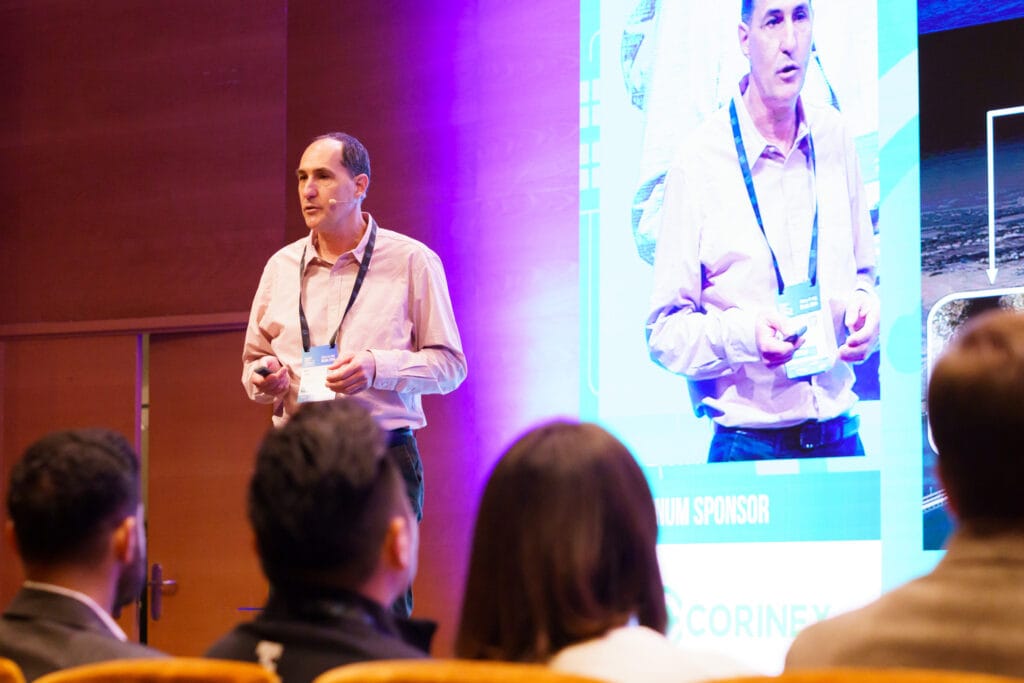
Mati Shani, Co-Founder & CEO of Ceal Minerals Ltd. pitching on stage
CO2 Lock: the S in CCUS
Scott Larson was precise about scope. “When you think of CCUS, we are the S, only the storage part.”
The process mixes CO2 with water – he compared it to club soda – and injects it into a mineral called brucite. The reaction mineralizes the CO2, crystallizing it into stone underground, permanently.
Speed is the differentiator he claimed against other geologies. In the lab the reaction is visible within days; underground he put it at 90% within nine months and complete within twelve to fifteen. On a geological timescale, that is essentially instant. He was also refreshingly unsure whether it matters enormously, noting that the real IP sits in how the water and CO2 are mixed and dissolved, and in how mineralization is monitored, measured and reported.
Revenue splits four ways: working with nearby emitters to create tax credits and share the economics; buying CO2 outright, storing it and selling the resulting credit into the voluntary market; joint ventures; and storage as a service for large energy producers seeking offsets.
On site access, he noted the regulatory answer varies by jurisdiction, and that Western Canada – where the first site sits – has among the clearest frameworks in the world for subsurface resource rights.
Klimate: the software layer under carbon removal
Mads Emil Dalsgaard opened by clearing up the name – the company is Klimate Aps, and Aps is the Danish company suffix. They don’t make apps.
His framing of the market was notably unsentimental. A large majority of the world’s biggest companies have public commitments that will require CO2 removal. Will they all deliver? “Doubtful” – but the market is large and growing fast regardless.
He then walked the trade-offs across removal pathways rather than advocating one: reforestation is cheap, scalable and high in co-benefits but not permanent; direct air capture is highly permanent but expensive, and he was openly sceptical that the prices quoted earlier in the session were achievable; biochar occupies a sweet spot at the moment.
The problem Klimate solves is the complexity underneath a purchase. Buying removal looks like connecting a buyer to a seller, but the buyer also has to engage registries, MRV providers, due diligence on projects, credit retirement and data collection for reporting – and all of it compounds with every additional project. Companies do this in spreadsheets, which he called a real risk for them.
Klimate is the software layer in between, handling sourcing, due diligence, multi-year contracts and API-based retirement across multiple registries at once.
Asked how hard the business is to copy, his answer was scale plus data model. Being a large enough buyer to procure meaningful volume is one barrier – he noted many competitors have appeared and disappeared. The other is that carbon assets are not fungible, so the software has to track an individual asset from a specific project delivery through to a specific tranche of an order.
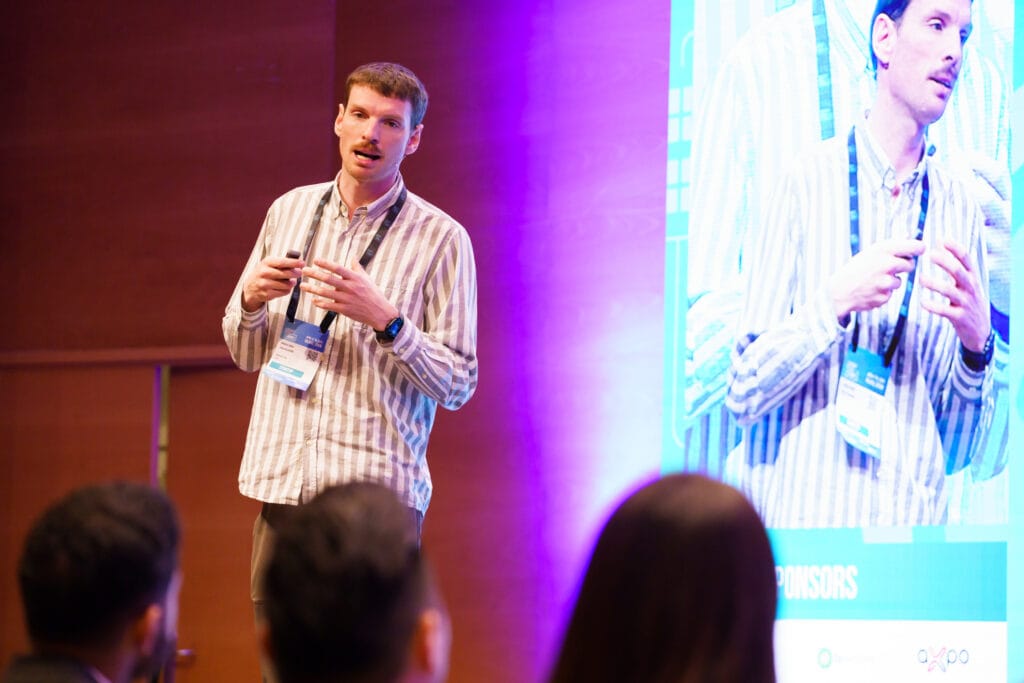
Mads Emil Dalsgaard, CEO of Klimate Aps
pitching on stage
Ucaneo: direct air capture modelled on a lung
Florian Tiller went straight at the credibility problem in his own category. Plenty of companies claim to be cheapest and best, so Ucaneo commissioned an external feasibility study instead – and his argument was about timing as much as price. Promising sub-€100 costs helps nobody if it arrives in fifteen years at million-tonne scale.
The technology is an electrochemical process using bio-inspired materials, mimicking the human lung. Rather than repeatedly binding and breaking CO2, the system bubbles it in and out using pH, which is where the energy and cost savings come from.
The property he flagged as most interesting to investors is flexibility. The plant ramps up and down very quickly, which means it can run on intermittent power and take advantage of negative or flexible energy prices – turning a grid problem into an operating advantage.
On IP, he identified three areas: the process itself, the solvents that cut energy load and capex, and the cell design. Membranes are the main capex driver.
The business model is technology provision rather than owning plants long term – though he was clear about why they build the first ones themselves: “no one loves your baby as much as you do. So at night when you have to fix stuff, it’s always you.” At larger scale with energy majors, the structure becomes SPVs and licensing.
Asked whether a biological process is harder to run than a mechanical one, he corrected the premise – there are no biological components, only polymers, which makes behaviour predictable.
UP Catalyst: graphite from flue gas
Rait Maasikas opened with a provocation: building an EV generates roughly twice the CO2 footprint of building a conventional car, and the battery is responsible – with graphite accounting for about a third of the battery’s footprint. Graphite carries two problems at once. Europe doesn’t produce it, so it is imported, and the way it is made is environmentally costly.
UP Catalyst converts CO2 emissions into battery-grade graphite and carbon nanotubes. He held up a stone that used to be an invisible gas, with the carbon now locked in solid form.
The advantage is thermodynamic. The process runs at around 700°C over a one-day cycle, against roughly 3,000°C for two weeks in conventional synthetic graphite production. That difference shows up directly in cost. And because the process consumes CO2, the end product’s footprint is neutral – which closes the loop back to the EV problem he opened with.
His framing of the competition was that the real incumbent is petroleum coke, not other CO2-conversion companies: “we turn pollution into a solution”, without felling trees or consuming biomass.
On traceability he was straightforward about the current state – the biogas sources they work with sit outside the carbon credit market entirely, so certification is not presently an issue.
Takeaway
The thread through the Carbon Tech finals was a retreat from carbon pricing as a business model. Ceal Minerals actively avoids credits because minerals pay better. UP Catalyst sells graphite into a supply chain that wants it regardless of climate. Carbon Power leases equipment and shares revenue on fuels. Even the two companies closest to conventional carbon markets – CO2 Lock and Klimate – build around durable, verifiable assets rather than sentiment. The jury’s questions reflected the same instinct, returning repeatedly to payback periods, revenue models and cost per tonne rather than to tonnes abated.
Secure your pass
Energy Tech Summit brings together the startups, investors and corporates building the energy transition. Founder’s Pass is €699, fixed.