
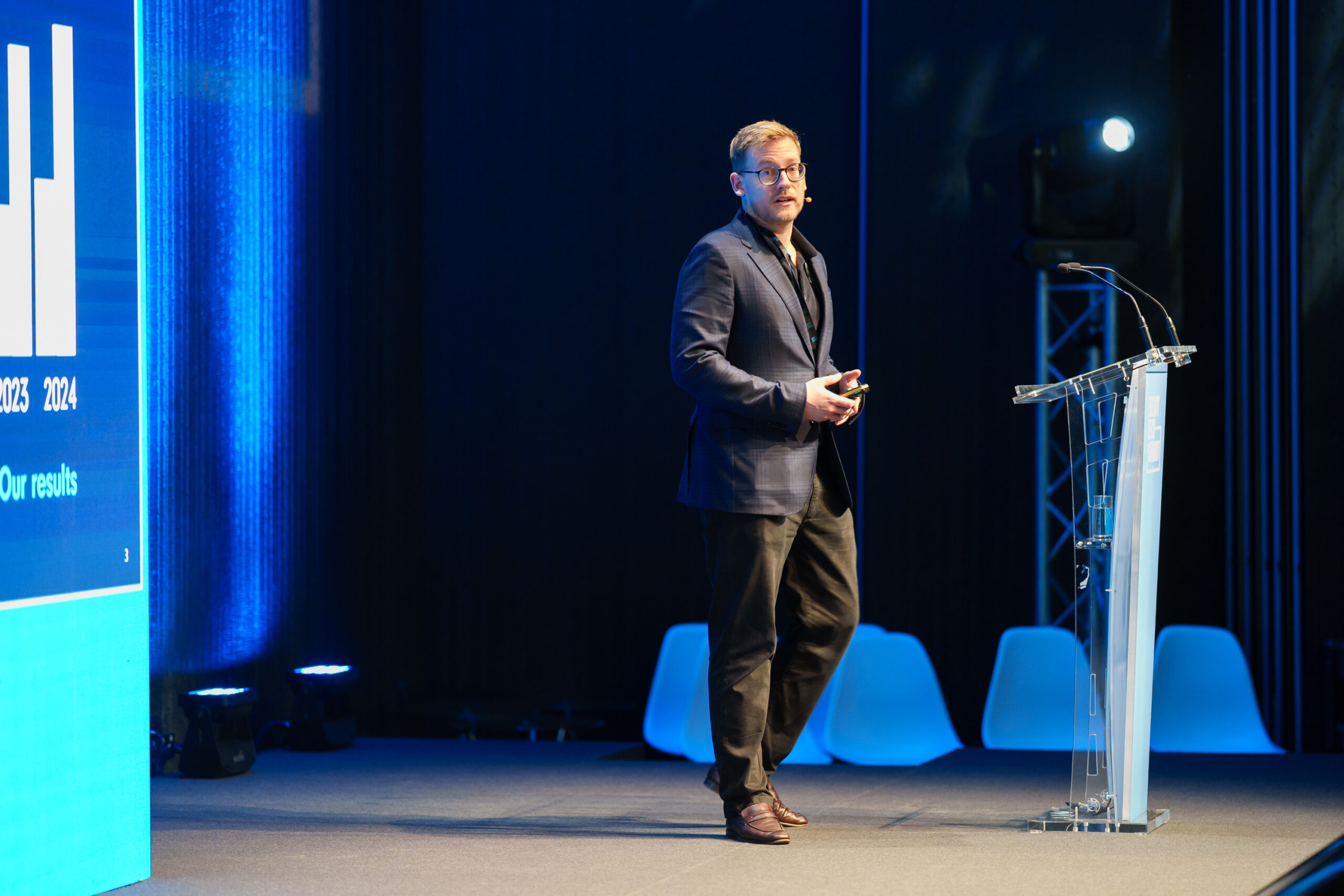
Electrification is pushing distribution grids to their limits. Corinex wants to turn existing power lines into a real-time data network – without laying a single new cable.
Aging infrastructure, rapid electrification and rising demand are putting distribution grids under pressure. At Energy Tech Summit, Jan Sobotka, Director of Strategy at Corinex, explained how broadband power line (BPL) communications can help. By sending data over existing cables, the technology gives grid operators visibility and control down to individual households.
Sobotka also shared a company update: Corinex has raised $30 million from an Anglo-Spanish investor syndicate and counts three of Europe’s five largest DSOs as customers. He stressed that a rare feature of Corinex “in the clean tech space is we’re profitable”.
Why DSOs are moving to broadband power line
Most grids today rely on narrowband power line communications. However, as solar panels, heat pumps, EVs and batteries spread, those networks are reaching saturation. Consequently, utilities in Germany, Spain and the UK are shifting towards broadband, which offers very low latency on the low-voltage grid between substation and home.
Corinex offers two main solutions: grid visibility and grid flexibility. What sets it apart is edge computing. Its devices sit directly in the grid and run algorithms locally, so they can respond in real time to protect substations and steer low-carbon technologies. On top of connectivity, they collect detailed data on voltage, phase angles, harmonics and temperature.
Grid visibility at scale
Both offerings use the same hardware. Instead, firmware, software and use cases differ between them. Corinex’s visibility solution is being mass-deployed across E.ON’s network in Germany. A key reason is scale. According to Sobotka, a single instance of Corinex’s software can manage up to five million nodes.
In Spain, Iberdrola uses Corinex technology higher upstream, at secondary substation level, as a larger data pipe for its infrastructure.
Real-time grid flexibility
The flexibility solution goes a step further. Corinex is working with E.ON on a flexibility offering that builds on its broadband power line technology. The system connects to four major low-carbon loads: solar PV, heat pumps, EVs and battery storage. Rather than simply switching them on or off, it can ramp them up or down.
That helps local flexibility aggregators comply with rules such as the UK’s G100 requirements. A concentrator at the secondary substation links to the substation meter and controls import and export limits almost in real time. As a result, it can protect transformers from overload. Sobotka said this can give DSOs around 35% additional capacity on the low-voltage grid. Because the algorithms run locally rather than in the cloud, response times are far faster.
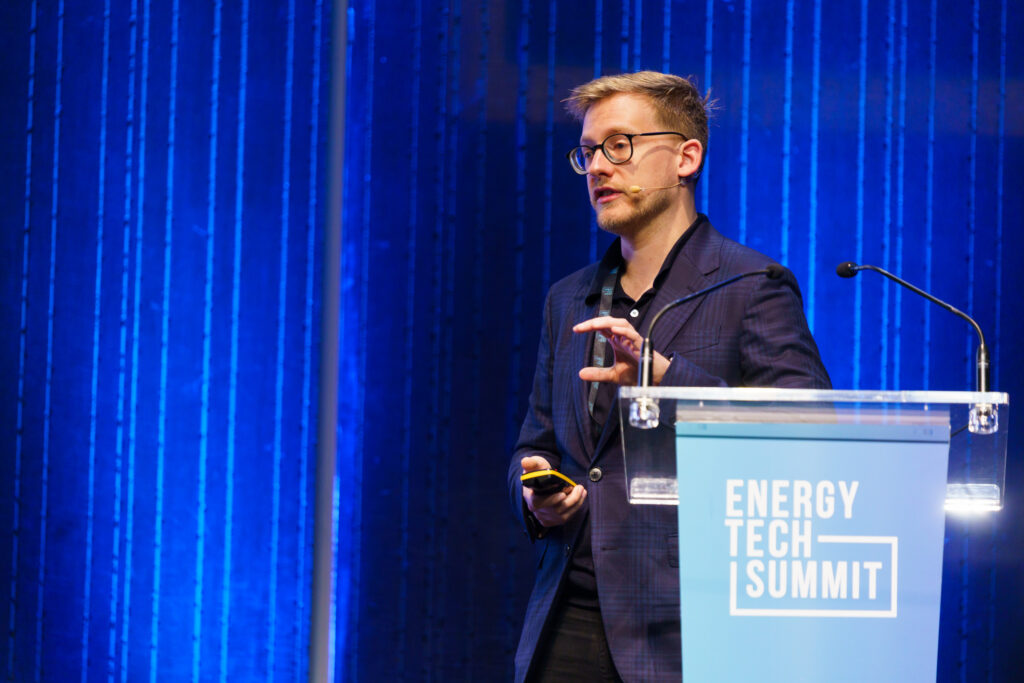
Jan Sobotka, Director of Strategy at Corinex
Standards and regulation create tailwinds
Industry momentum is building. All three major narrowband PLC alliances have either standardized broadband power line communications or are discussing it. According to Sobotka, “there’s now a concerted effort” to create a unified global standard. Corinex sees that as a market opportunity of around 240 million endpoints. Notably, demand comes not only from regulators but also from end consumers.
Regulation is moving in the same direction. Some frameworks rely on consumers opting in to flexibility, while others mandate it. The EU has adopted provisions on grid flexibility that member states will transpose into national law, and the UK has already legislated through G100.
Data as the foundation for AI
Looking ahead, Corinex is working with chip providers on its next generation of AI-integrated solutions. Still, Sobotka argued that AI depends on the kind of rich, real-time data only available at the secondary substation. That matters especially for flexibility markets, from spot and wholesale trading to balancing services. With more data and faster communication, “the more contracts you can generate the more revenue you can generate”.

Jan Sobotka, Director of Strategy at Corinex
Takeaway
Distribution grids can’t be rebuilt fast enough to keep pace with electrification. Broadband power line technology offers a faster route, turning existing cables into a real-time data and control network. With edge computing, growing standardization and supportive regulation, it could help DSOs unlock hidden capacity and prepare the low-voltage grid for AI-driven flexibility.
Secure your pass
Want to meet the companies modernizing Europe’s distribution grids? Join founders, investors and corporates at Energy Tech Summit Europe 2027 in Bilbao, April 7–8. Founder’s Pass: €699.