
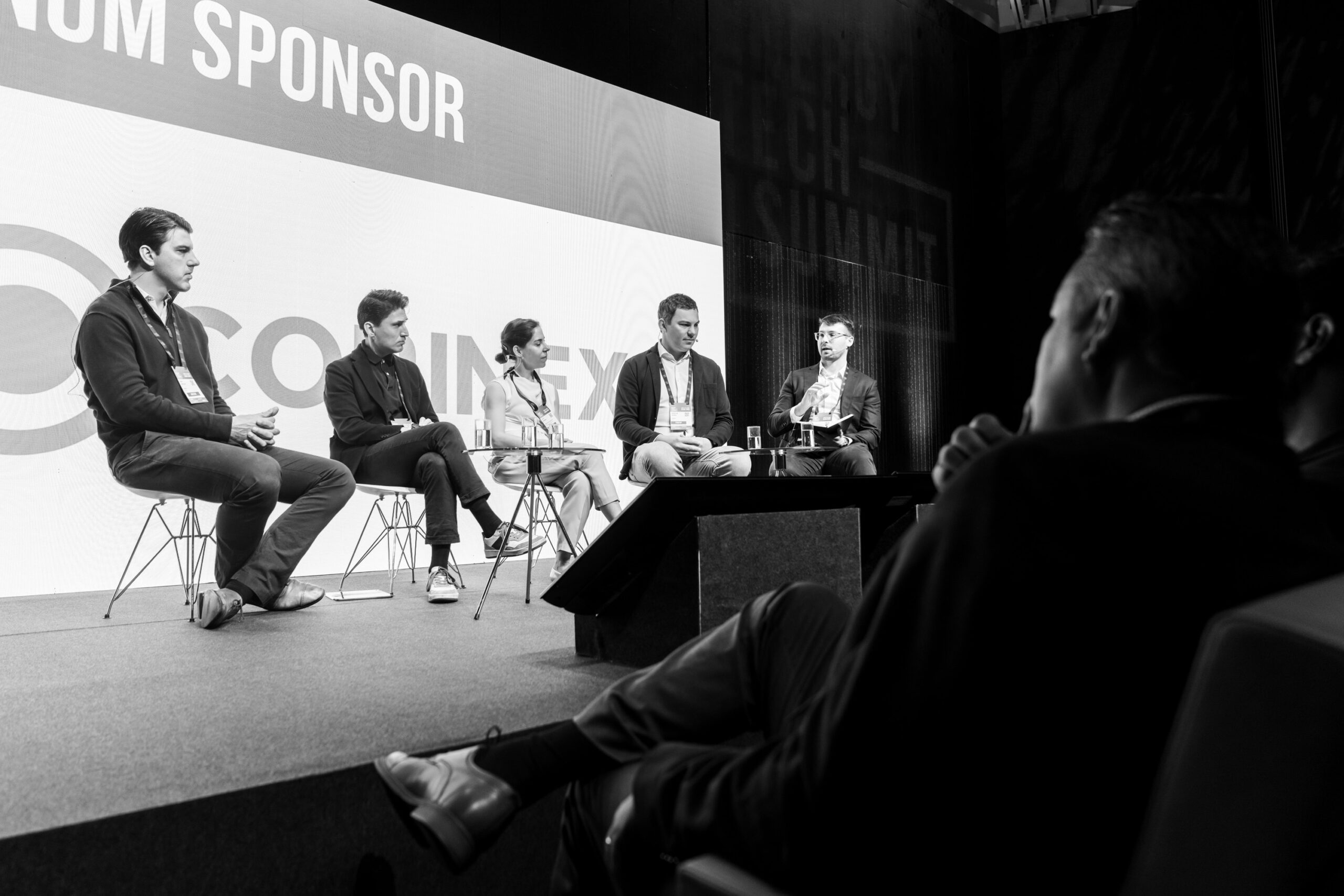
The technology to build a more distributed grid largely exists. Investors and founders explain why customer acquisition, market design and capital structure still decide who scales.
Falling battery and solar prices, rapid electrification and new loads from EVs and data centers are reshaping how power systems work. As a result, decentralized energy – microgrids, batteries and virtual power plants – has moved to the center of the grid debate. At Energy Tech Summit, Henk Both, Principal at Anzu Partners, moderated a panel on how to unlock it. He was joined by Nigel McCleave, Partner at Lightrock, Serhat Aydogdu, Private Equity Investor, Jutta Wuebken, Director, Climate & Industrial Technology at Stifel, and Sebastian Berning, CEO of Instagrid.
A distribution problem, not a generation problem
Berning began with a familiar sight. In cities worldwide, small combustion generators run wherever power outlets are out of reach. Instagrid estimates there are more than a billion such generators globally. In many emerging economies, they even provide base load, despite abundant solar resources.
For Berning, “we don’t have a generation problem but we have a distribution problem”. Instagrid’s answer is small, portable batteries that deliver the same power as a wall socket. In low-load situations, charging a battery in one place and using it in another can be more efficient than building grid infrastructure. Both added another use case: when California utilities shut off lines to prevent wildfires, remote communities often rely on diesel generators for days.
Utility-scale storage and the revenue stack
Wuebken agreed that generation isn’t the bottleneck. In Germany, renewables already supply more than half of electricity, with a target of 80% by 2030. Yet supply doesn’t match demand, and storage is lagging. Investors have also cooled on standalone solar. According to Wuebken, co-located battery storage can lift project returns from around 4–5% to between 9 and 11%.
Batteries, however, don’t manage themselves. Owners must actively optimize revenue across tolling agreements, merchant exposure and capacity markets. Developers are also shifting from flipping assets to operating them, since much of the value now comes after commissioning. Securing grid access is another hurdle, with connection requests in Germany far exceeding what the grid needs.
Looking ahead, Wuebken expects growth in standalone storage and platforms that aggregate assets. Banks typically avoid financing an asset with only merchant exposure. Aggregators can pool smaller third-party assets, structure tolling agreements and still leave owners some upside. Terralayr is one company taking this approach.
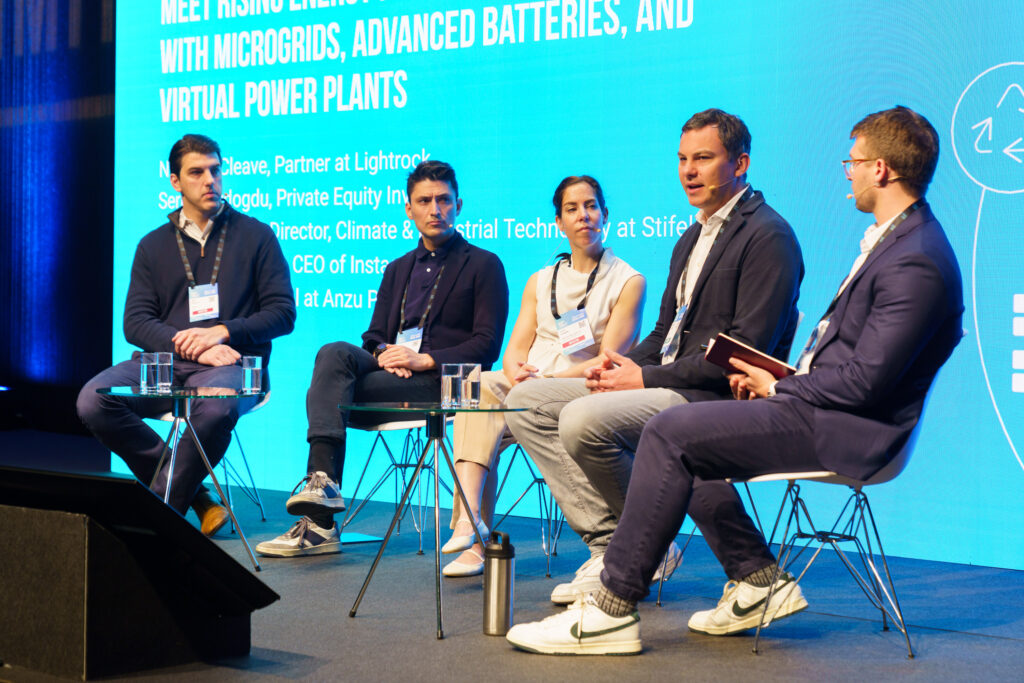
Panelists:
Nigel McCleave, Partner at Lightrock; Serhat Aydogdu, Private Equity Investor; Jutta Wuebken, Director, Climate & Industrial Technology @ Stifel (Prev. Bryan Garnier & Co); Sebastian Berning, CEO @ Instagrid; Moderator: Henk Both, Principal at Anzu partners
Why virtual power plants have been slow to scale
Aydogdu first worked on VPPs in 2009, when they were a promising new concept – and in many ways still are. The technology exists, and Europe’s legal framework is largely in place. However, basic infrastructure lags. In some European countries, smart meter penetration remains below 5%. Markets are uneven too: in several regions, grid operators don’t offer market-based flexibility products, or the revenue pools are too small.
Behavior adds friction. Homeowners are reluctant to hand over control of their assets, while industrial operators won’t risk business continuity or expensive equipment. Aggregators therefore need deep technical knowledge. A cement plant, for instance, can pause batch crushers for peak shaving, while voltage-controlled equipment in a smelter can support frequency control.
Settlement is another challenge. Many regions lack zonal pricing, so assets facing very different local congestion receive the same price signal. Meanwhile, distribution grid operators have little visibility at the edge. In Aydogdu’s view, that missing data layer holds back decentralized energy in many markets.
Who owns the customer wins
McCleave challenged a common investor mistake. When capital was abundant, VCs funded many companies to become VPPs that never should have. After all, “VPP like sounds sexy but what is it?” In practice, it’s a capacity provider and trading business. Companies solving integration, communication or control may not need to become one.
Scale depends on customers: “To have scale you need customers.” Acquisition costs look manageable early on but rise as companies grow. That is why McCleave believes energy retailers are best placed to build VPPs, as Lightrock’s investment in Octopus Energy reflects. Traditional retailers lose around 30% of customers each year. Even so, they already hold millions of relationships. Partnerships with technology providers can build on that base.
Matching capital to its purpose
Companies spanning the value chain face a financing trap. They often use equity to fund software, R&D, working capital and heavy assets such as batteries and chargers all at once. McCleave’s advice is to “segment the different types of capital for the different uses” as early as possible, for example through separate finance vehicles for assets. Otherwise, the cost of capital gets far too high. Both agreed, stressing the importance of “getting off of that IV lifeline as soon as you can to move to other more appropriate sources of capital”.
Hardware needs its own playbook
Execution is where many hardware companies struggle. Investor interest in hardware is returning, but Berning warned that “there’s not really a playbook for hardware companies”. SaaS founders can lean on established metrics and advice. By contrast, hardware founders must build global supply chains, navigate tariffs on battery cells and decide how to handle Chinese manufacturing capacity. When looking for peers to learn from, “you find yourself very alone”. He hopes more growth investors will bring hands-on experience in scaling hardware.
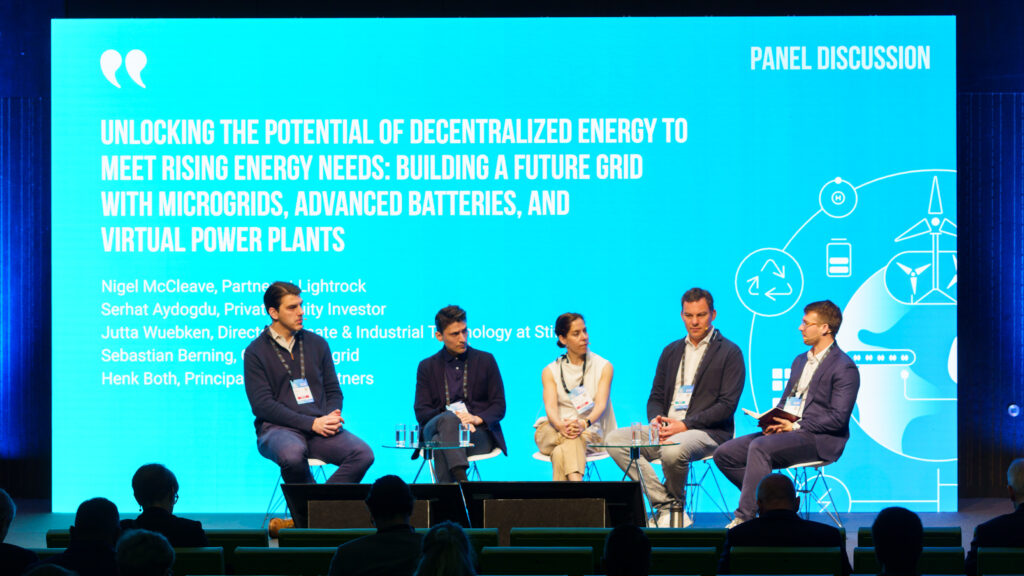
Panelists:
Nigel McCleave, Partner at Lightrock; Serhat Aydogdu, Private Equity Investor; Jutta Wuebken, Director, Climate & Industrial Technology @ Stifel (Prev. Bryan Garnier & Co); Sebastian Berning, CEO @ Instagrid; Moderator: Henk Both, Principal at Anzu partners
What comes next for decentralized energy
Each panelist shared the opportunity that excites them most. Wuebken looks forward to homes that generate, store and trade energy seamlessly, including vehicle-to-grid, without tax or regulatory barriers. Aydogdu is focused on AI-based monitoring and control. He argued that better AI-driven operations might have helped avoid the closure of Heathrow Airport after a nearby substation fire.
McCleave argued the technology is ready; incentives are what’s missing. Smart meter rollout varies widely, with France almost fully covered, the UK at around 60% and Germany at roughly 1%. In his words, “if you have the right incentives then everything scales”.
Berning pointed to falling battery costs. Lithium iron phosphate cells now cost below $50 per kilowatt hour, putting storage on a path below one cent per kilowatt hour. That means “there’s not really a penalty anymore” for storing electricity. Consequently, long-duration storage technologies face tougher competition. In sunny regions, some customers may even leave the grid, pushing costs onto everyone else. McCleave noted a similar effect in Pakistan, where cheap rooftop solar has sharply reduced grid demand.
Takeaway
Decentralized energy no longer waits on technology. Batteries are cheap, software exists and the need for flexibility is urgent. Instead, success depends on owning customer relationships, designing markets with clear price signals and matching the right capital to each part of the business. Where incentives line up, the panel agreed, distributed assets can scale quickly – and may reshape the grid itself.
Secure your pass
Want to meet the investors and founders building a more distributed grid? Join founders, investors and corporates at Energy Tech Summit Europe 2027 in Bilbao, April 7–8. Founder’s Pass: €699.