
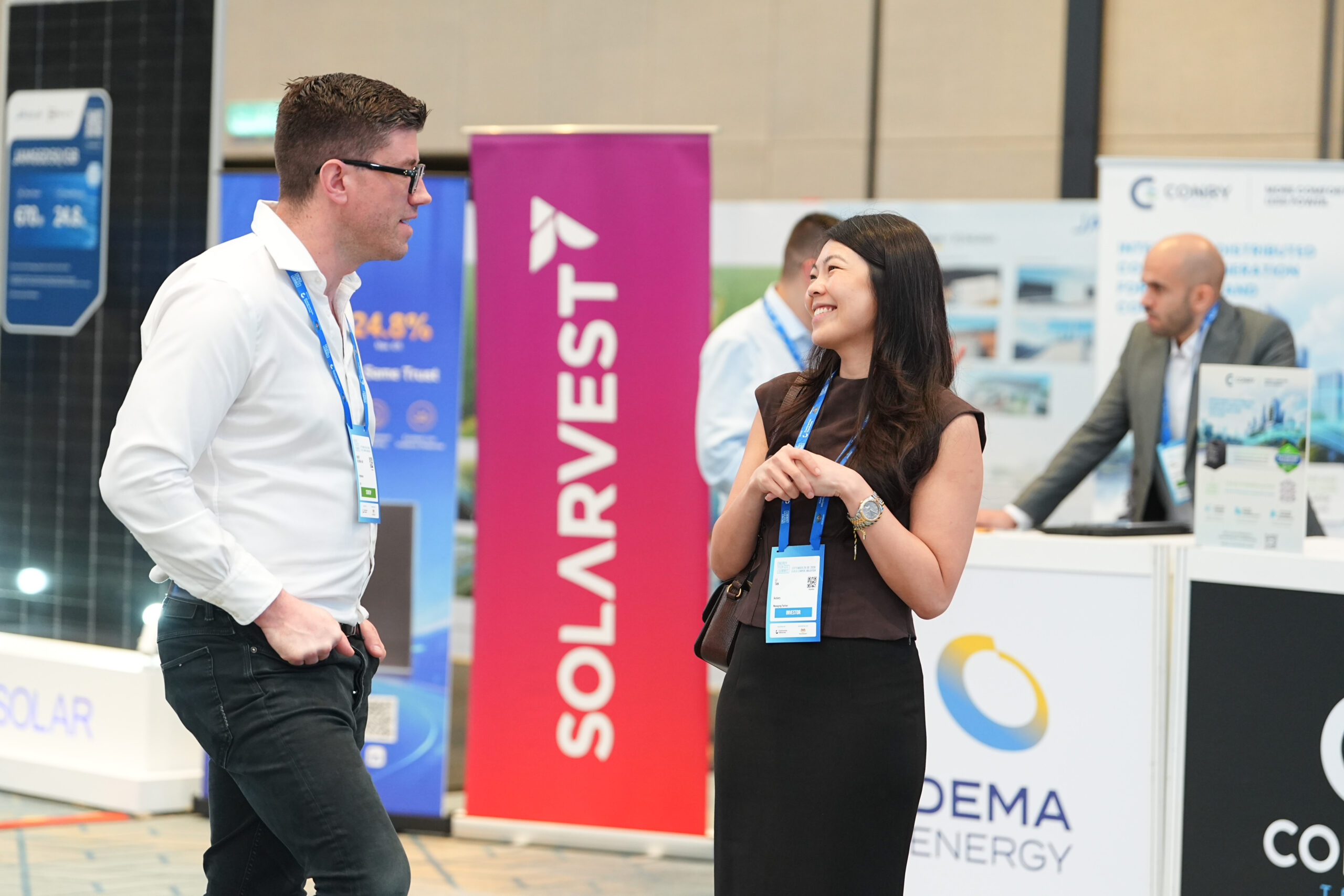
Two days in Kuala Lumpur, six startup tracks and one clear message for Europe: in Asia-Pacific, climate tech is a growth story first.
On 29 September, Malaysia’s national anthem, Negaraku, opened the first Asia-Pacific edition of Energy Tech Summit. Over the next two days, investors, corporates, founders and policymakers filled the rooms in Kuala Lumpur. The summit was supported by Malaysia’s Ministry of Energy Transition and Water Transformation (PETRA).
For Europe’s climate tech community, the main takeaway is simple. The APAC energy transition follows its own logic. Demand growth, energy security and the race to power data centres shape it, and the capital questions follow from there.
Energy Tech Summit Asia 2026 in numbers
The first APAC edition brought together:
- 210+ startups
- 100+ VCs and CVCs
- 120+ corporates and utilities
- 1,700+ 1:1 meetings
- 36 countries across 5 continents
The summit was also made possible by our partners: PETRONAS as Innovation Partner and ABB as Startup Innovation Partner.
Two days in Kuala Lumpur
The programme ran across the Main Stage, Tech Talks and the startup pitch stage, with an expo area and invite-only roundtables alongside. Day 1 focused on infrastructure: grids, data centres and the climate hardware Asia will build for itself. Day 2 then turned to energy security, finance and cross-border power, before the Energy Tech Challengers superfinal closed the summit.
Partners shaped the programme, too. PETRONAS hosted a fireside chat on taking startups from pilot to enterprise deployment, and ran a Tech Challenge for industrial decarbonisation. Third Derivative/RMI also brought 10 Korean startups to meet investors and corporates in focused roundtables.
When the stages closed on Day 1, the conversations carried on at city tours, a networking dinner and a party.
Growth and security come first
Skaiste Knyzaite, Founder of Energy Tech Summit, set the tone on the opening day: “In Asia, the transition is not only about decarbonisation; It’s about powering growth. It’s about energy security.”
Investors echoed that view. During the energy security panel, Genevieve Ding, Head of APAC Sustainability at JPMorgan Chase, put it plainly: “Decarbonisation can be an economic comparative advantage.”
That framing matters for European founders looking east. In markets where electricity demand keeps climbing, the pitch that lands is about reliable, affordable power. Lower emissions strengthen the case, but they are part of a bigger story.
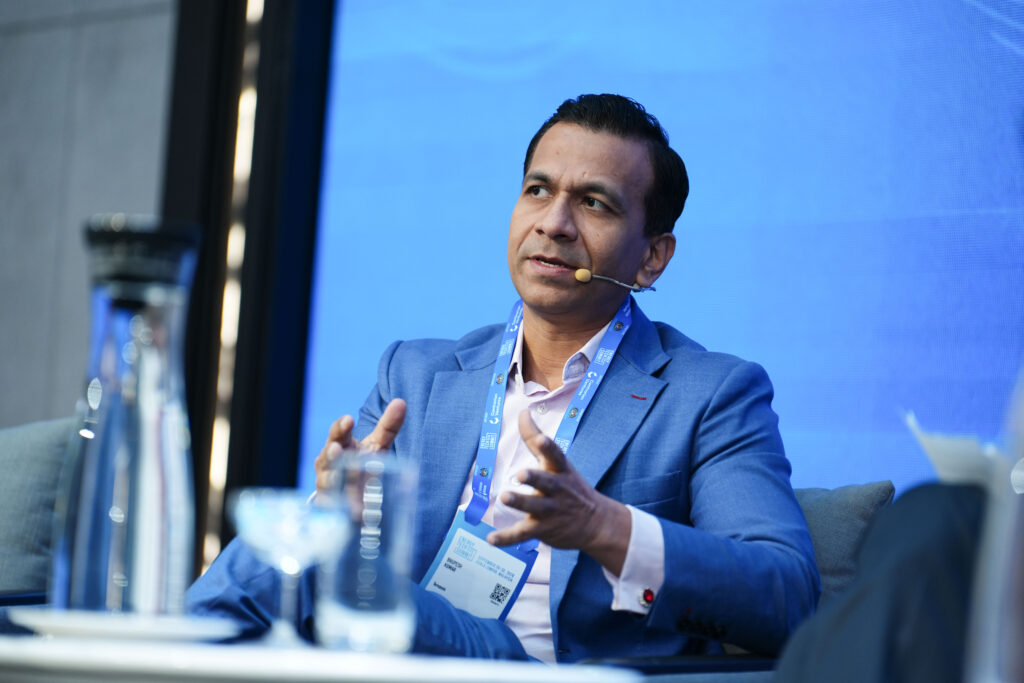
Bhupesh Kumar of Temasek speaking on the green energy infrastructure panel at Energy Tech Summit Asia 2026
Data centres are reshaping grid planning
Data centres came up in almost every room. On Day 1, one panel asked whether Asia’s 30-to-80-year-old grids can handle the hyperscale energy surge. Another, moderated by Matt Gleeson of Oracle, looked at how compute itself could help overburdened grids. JERA, GE Vernova and AirTrunk joined that conversation.
Malaysia offered a concrete case study. The Solar and Beyond panel explored what could complement solar as coal retires and data centre demand grows. Ed Ratcliffe, Executive Director at Southeast Asia Public Policy Institute, made a clear policy ask: “Our specific recommendation is to review and update the NETR and set renewable energy source diversification targets based on factors such as energy security, firmness, and projected baseloads.”
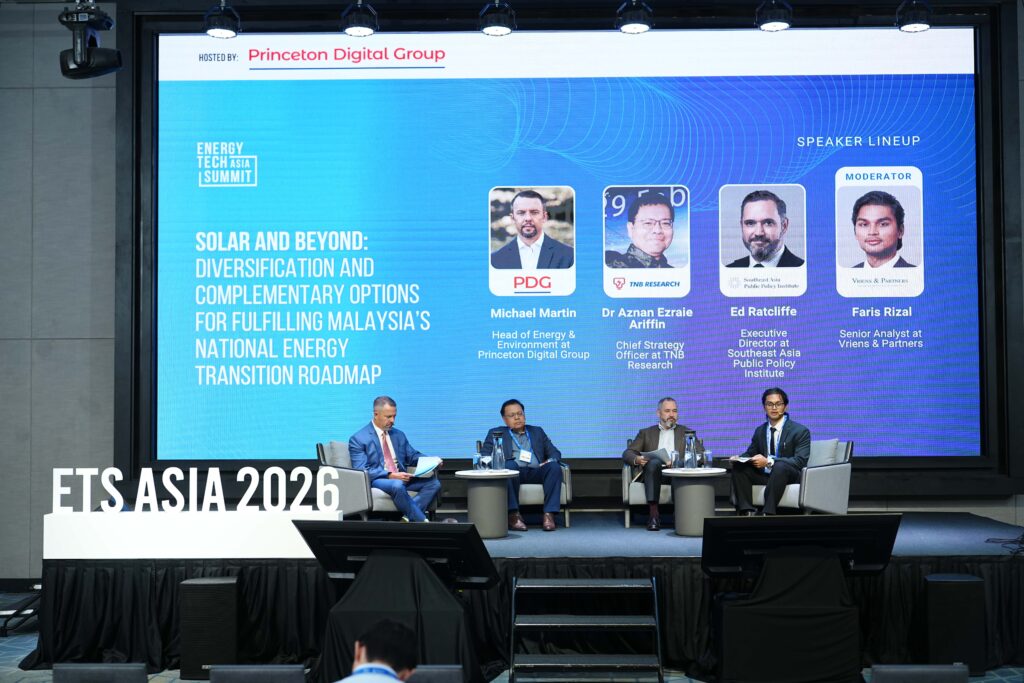
Speakers on the Solar and Beyond panel at Energy Tech Summit Asia 2026 in Kuala Lumpur
Meanwhile, Michael Martin, Group Head, Energy and Environment at Princeton Digital Group, focused on execution: “We have to make sure that we’re bringing all these different ecosystem players together to actually make that success story not just a story, but a reality.”
Firm, clean power also drove one of the Main Stage keynotes. Blykalla, the Swedish nuclear developer, presented factory-built nuclear as clean, firm power for Asian data centres and industry. Jon Christensen, Head of Strategy and AI, summed it up: “Small enough to be built in a factory, big enough to power data centres.”
Capital needs the right structure
If demand is clear, financing is often the harder part. On the opening panel, Bhupesh Kumar, Director – Investment at Temasek, was candid: “The challenge for us is the ability to deploy capital at scale.”
Day 2 then dug into how to close that gap. In the blended finance panel, Sumira Jayabalan, Vice President at 100×100, pointed to where blended capital fits best: “Initial projects and initial traction, especially in industries, markets and sectors where risk is a bit more understood, would be a good gap for blended finance.”
Similarly, Mayuresh Patange, Private Sector Manager at the Green Climate Fund, offered advice that works just as well in Europe: “Do not start with what kind of structure I want. Start with what is the problem that I need to address, and then come up with the structure.”
Cross-border projects add yet another layer. On the ASEAN interconnect panel, Ben Lindsay, Principal at Investible, listed what is still unresolved: “We haven’t agreed who pays for it, who uses it, and how power is priced across a border, or who carries the risk when a government changes its mind.”
European voices in Kuala Lumpur
Europe was well represented on stage. Jan Lozek of Future Energy Ventures joined the debate on gas versus renewables for baseload. Ernest Xue of Eurazeo asked whether Asia’s energy transition is actually lucrative for foreign capital. Dieter Billen of Roland Berger also moderated the energy security panel.
European startups made their mark, too. Blykalla won the Energy for AI track at Energy Tech Challengers, for example. In addition, X1 Wind gave a keynote on solving the cost and scalability challenges of floating offshore wind in deep water.
Energy Tech Challengers Asia: the winners
More than 50 startups pitched across six tracks at the first Energy Tech Challengers in Asia, with ABB as Startup Innovation Partner. These were the track winners:
- Green Energy Infrastructure: Cosysense
- AI for Energy: Invigilo AI
- Energy for AI: Blykalla
- Climate Hardware X: SiTration, Inc.
- Climate Software X: Reclimate Sdn Bhd
- Climate X – Wild Card: Krosslinker
SiTration, Inc. took the overall title. Its electrified silicon technology recovers critical minerals such as copper from mining, refining and recycling. CEO and Co-Founder Brendan Smith brought the solution to the final stage.
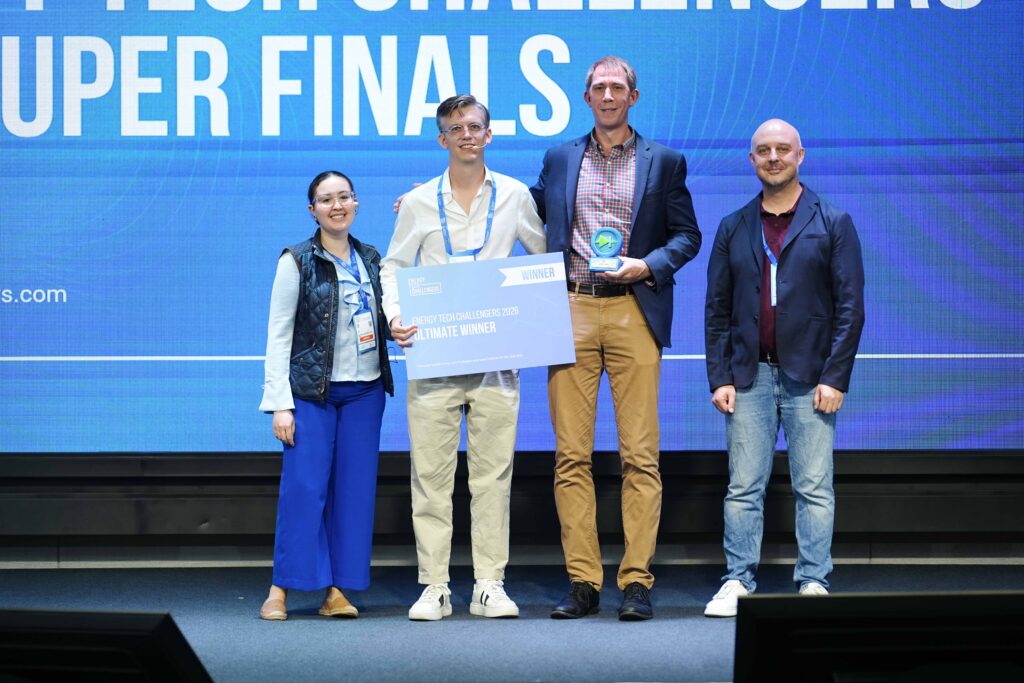
SiTration team receiving the Energy Tech Challengers Asia 2026 overall winner award
Takeaway
For European founders and investors, Kuala Lumpur was a useful reality check. In Asia-Pacific, energy security and growth set the agenda, so climate tech has to prove it can deliver both. That’s also where the opportunity sits for European capital and technology that fit those priorities.
Secure your pass
The conversation continues at Energy Tech Summit Europe 2027, the 8th edition of the summit, on 7–8 April in Bilbao, Bizkaia. Passes are €1,399 until 30 November and rise to €1,599 on 1 December. Founders can join with the Founder’s Pass at €699, and code ETS100 takes €100 off.