
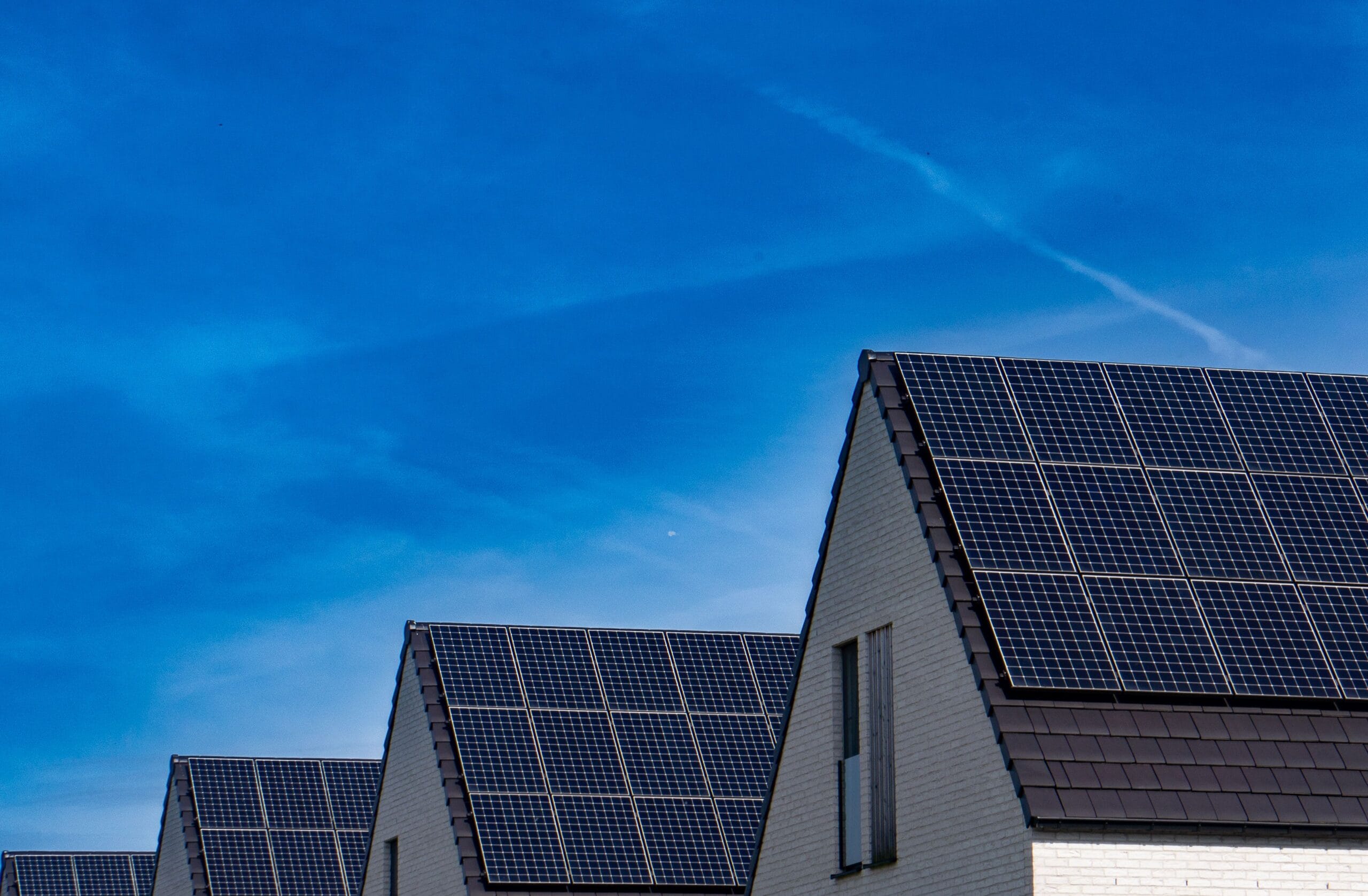
A heat pump is a hardware problem. Ten thousand heat pumps are a capital markets problem. Two founders explained how they turned the second one into a tradable asset.
Utility-scale renewables have been financed by capital markets for decades. A wind farm is a large, legible project, and a large institution can write a single cheque against it. Distributed energy resources are the opposite. Each asset is tiny, sits behind a different front door, and was installed by a different local company.
That mismatch is what residential renewables financing has to solve, and it was the subject of a panel at Energy Tech Summit moderated by Robina von Stein, Principal at Contrarian Ventures. She was joined by Simon Phelan, CEO of Hometree, and Felix Eisel, Co-founder of Enpal Financial Services.
Why decarbonising homes is a financing problem
Phelan came to the conclusion early. After several years in private equity in London, he watched the US residential solar financing pioneers and concluded that decarbonising homes is fundamentally a financing challenge rather than a hardware one. The grid is being extended into the home, and the consumer balance sheet cannot fund that capex programme.
Hometree started with heating rather than solar, which reflects where UK emissions actually sit. The company began in insurance for domestic assets, moved up the chain into installations, and then built a full financing offering for residential renewables.
Eisel arrived from the other direction. After a spell in a brutal long-short world, he wanted to do something more constructive with financial infrastructure, met one of Enpal’s founders, and joined to build the financing arm.
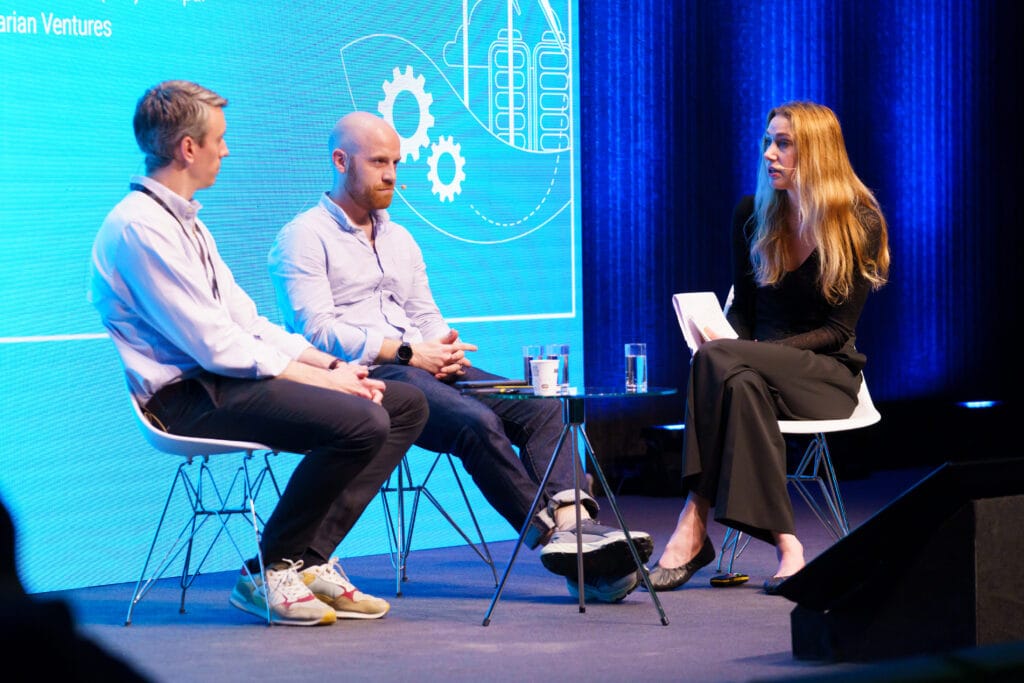
Simon Phelan, Felix Eisel, and Robina von Stein during ETS2025 panels discussion
Enpal: owning the stack, then financing it
Enpal’s core business has sold with embedded finance for years, starting with a rental model in which a customer rents a system over two decades with service included. According to Eisel, that model drove explosive growth and, just as importantly, generated consumer credit and payment data.
Vertical integration helped more than it was strictly necessary. Enpal purchases components directly, runs its own installation workforce, and works with standardised components and acceptance protocols. Uniformity matters enormously when assembling a portfolio. Building the same instrument across systems that each look different would be far harder.
Enpal Financial Services then extends that machinery outward. It operates out of the core business but offers white-label point-of-sale financing to installers across the German market.
Hometree: whole-of-market origination
Phelan set out the arithmetic that makes residential assets awkward. An individual system might be worth ten or twenty thousand, while the legal and structuring costs of capital markets financing are largely fixed. Institutions will happily fund the asset class, he argued, and the US asset-backed market has already issued tens of billions against residential solar and heat pumps. What those institutions will not do is aggregate the portfolios themselves.
Scale requirements are severe. A portfolio needs tens of thousands of projects to interest the capital that matters. Cost of capital is the reason it matters so much. Financing a twenty-year asset at consumer credit rates compounds into something ruinous, and the consumer ends up paying more in interest than the asset is worth. The target is to push this asset class down towards mortgage-like financing costs, which is precisely what public securitisation enables.
Hometree therefore built a whole-of-market platform rather than financing only its own installations. It embeds financing through technology into third-party local installers and utilities, then uses their distribution to drive demand. Neither side of that trade could do it alone. Capital markets do not want relationships with a hundred local installers, and local installers have neither the balance sheet nor the compliance capability to build securitisation frameworks.
How a warehouse becomes a bond
The structure is worth understanding, because it is the template the asset class is converging on. Hometree raised a facility combining senior financing from Barclays with mezzanine financing from CPPIB, while Hometree itself contributes a small equity tranche into an off-balance-sheet vehicle. Its exposure to the assets is limited to that equity.
Money is then distributed through third-party and in-house installers as long-term leases and loans against solar, batteries and heat pumps. Once the vehicle holds enough cash-flowing assets, the senior and mezzanine lenders are refinanced through a public bond issuance. At that point the originator chooses. Keep the equity in and hold a cash-flowing asset base for fifteen or twenty years, or sell the portfolio outright and recycle the capital into the next one.
Setting it up costs a great deal of capital and effort. Once built, though, it scales to hundreds of thousands of homes. Phelan expects the capital markets to coalesce around a handful of providers capable of taking millions of projects to market over the coming decade.
The installer is the distribution channel
Both founders kept returning to the same stakeholder. Almost nobody wakes up excited about a new heat pump. It is a complicated, utilitarian purchase, and as Phelan put it, the overwhelming majority of consumers “don’t understand how their heating works and candidly don’t want to understand.”
Trust therefore attaches to the installer rather than the hardware brand. Consumers have opinions about car marques and none whatsoever about boiler manufacturers. The installer is the conduit for information, which makes the point of sale the only sensible place to put the financing.
The alternative is absurd. A homeowner completes a technical sale involving heat loss calculations, then walks to a bank branch to explain those calculations to someone who has never seen them. Meanwhile the long-promised route of extending mortgages has not materialised, and few homeowners with a good rate want to reopen a mortgage for a modest system.
Eisel drew the parallel explicitly. Auto lenders perfected point-of-sale financing and used it to push enormous volumes of product that did nothing for the planet. The trick itself is sound. Both companies are now teaching installers to use it for something better, which is why the vast majority of cars are bought on finance while European renewables financing remains early.
Financing the energy bill, not just the hardware
Phelan made a distinction that separates this asset class from every other form of consumer credit. A kitchen loan is simply extra debt on a household balance sheet. Residential renewables are closer to securitising part of the energy bill itself. Install solar, a battery and a heat pump, and the monthly outgoing can fall far enough that bill savings outweigh the financing cost. He calls that the pay-as-you-save dynamic, and few consumer categories have anything like it.
The commercial effect on installers is measurable. Hometree’s largest financing partner found that average order value rose noticeably once financing was offered, from around £16,000 to roughly £19,500, because customers reliably added the battery and often sized up the array. Conversion improved and basket size grew at the same time, since the buyer stops thinking about a large upfront sum and starts thinking about a monthly figure.
Attach rates reflect that. In the UK, the large majority of solar installations now arrive with a battery, and Hometree finances the whole solution.
What Europe should not copy from the US
The US offers both the proof and the warning. Scale arrived first through direct-to-consumer installers, then shifted towards platforms financing the whole market. Two problems followed.
The first was selling conduct. Aggressive in-home sales produced mis-selling scandals. Phelan argued Europe is better protected here, describing the UK regulator as among the strongest in the world and the compliance burden in this business as significant.
The second was pricing discipline. US originators discounted the par value of loans in order to advertise lower headline rates. The resulting portfolios traded below par, and when interest rates rose the industry took a shock. His conclusion was pointed, and aimed at the investors in the room. These are consumer lending and leasing businesses, not enterprise software. They carry consumer cyclicality, interest rates matter, and regulation matters just as much.
Keeping the asset class healthy therefore means keeping every participant behaving as a good actor, so institutional capital does not lose faith in it.

Simon Phelan, CEO of Hometree speaking at Energy Tech Summit 2025
What scaling actually requires
Both agreed the immediate task is proving repeatability. Facilities in the hundreds of millions are, by capital markets standards, small. For this asset class to matter it needs to become a multi-billion annual issuance market, otherwise it stays niche. Demand has been evidenced and the legal structures work. The next stretch is about originating consistently, at quality, without high default rates.
Eisel added a longer-term ambition. Securitisation works, but it carries substantial cost across a long chain of counterparties and intermediaries. Bringing fixed-rate buyers such as insurers and pension funds closer to the assets would strip cost out. He nodded to Mosaic founder Billy Parish’s original peer-to-peer vision as the harder, more interesting version of that idea.
For now his priority is narrower. Germany is a large market with a great deal of solar and heat pump capacity still to install, and the job is execution: originate more, run leaner, and give the market a takeout several times a year.
The chicken-and-egg problem of the first warehouse
An audience question from a Latin American originator cut to the practical obstacle. How do you secure a first warehouse facility when lenders want scale you cannot yet show?
Phelan offered no silver bullet, and said so plainly. Every scaled fintech founder he knows had to improvise their way to the first facility. In Hometree’s case, the company arrived with an existing insurance business, an installation business, substantial equity raised, institutional investors on the board and a prior corporate debt relationship. That standing bought the meeting.
Key takeaway
Residential renewables financing succeeds or fails on aggregation. The hardware works, the capital exists, and the consumer economics can be genuinely favourable. What has been missing is the layer that turns millions of small, messy installations into portfolios an institution can buy. Build that layer with discipline, and rooftops become an asset class. Build it carelessly, and the capital walks away.
Secure your pass
Energy Tech Summit Europe returns to Bilbao on 7–8 April 2027, bringing together the investors, financiers and founders building the energy transition’s capital infrastructure.