

From cruise control to self-driving. What happens when the energy platform stops recommending and starts deciding.
Remco Eikhout, CEO of Tibo Energy, closed the keynote programme with an argument about where energy software goes next. Most platforms today deliver dashboards and analytics. Energy intelligence, in his framing, means something considerably more ambitious: optimizing across domains and, eventually, controlling energy systems autonomously.
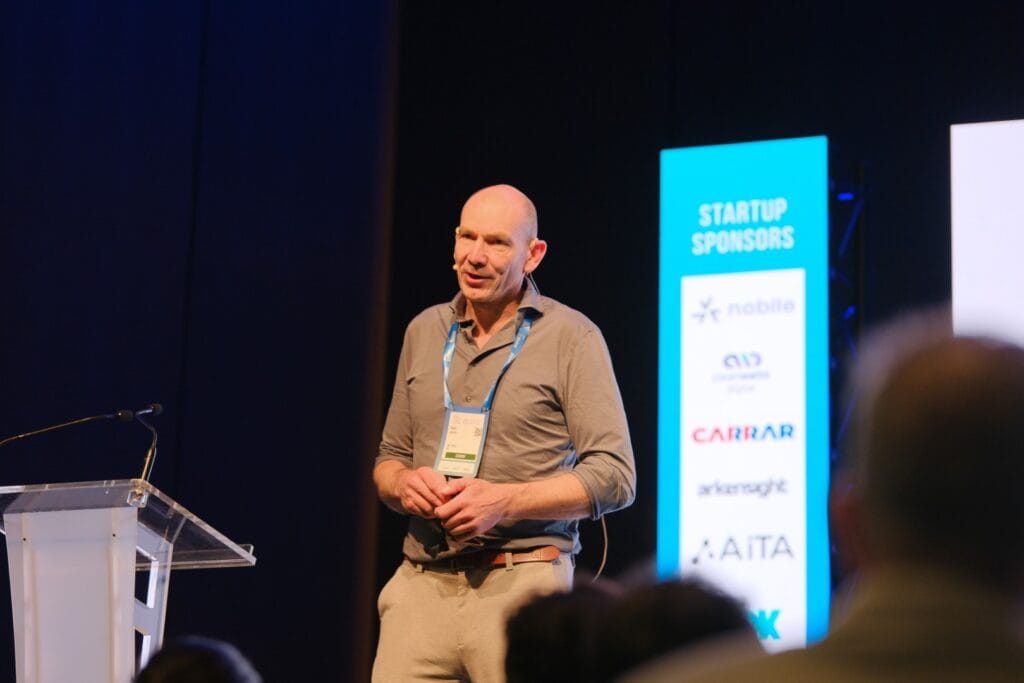
Remco Eikhout, CEO of Tibo Energy speaking at Energy Tech Summit 2026
Why the company started
Tibo Energy began four years ago, because Eikhout saw a gap in optimization that could handle genuine complexity – specifically mathematical complexity.
That complexity arrives faster than people expect. Once you have more than two or three assets plus dynamic pricing, he said, the optimization puzzle becomes considerably harder than most people imagine.
Customers arrive with a concrete problem rather than an abstract interest. They want to move to electric vehicles but lack the capacity to charge them. They want a heat pump. They need peak shaving. Or they already have a battery and do not know how to use it well.
Simulate first, then control
The platform optimizes those systems, and it also simulates them – which Eikhout considers the more important half of the sequence.
Running a proper simulation, built exactly the way the real deployment will be built, creates trust with the customer. Consequently, that trust is what unlocks the investment decision. Once the customer commits to the assets, Tibo moves into control and optimization of the live system.
He was candid about how the competitive landscape has shifted around that offering. Four years ago, at a major trade show in the Netherlands, the company was the only one doing this. Today, he estimates 20 to 40 competitors at the same event claiming similar capabilities. He did not dispute their claims, while adding that he still believes his company does it best.
What customers actually have to decide
The reason Eikhout wants to go beyond optimization has to do with who buys this software and what their job involves.
His customers are frequently CFOs at larger companies, often in transport, with teams of energy managers and compliance managers underneath them. Those people are responsible for far more than buying assets and optimizing them. They also have to build an entire energy strategy.
Building that strategy takes a great deal of data, which Tibo can supply. However, Eikhout noted the obvious limitation with characteristic bluntness: draft a three-year energy strategy today, and a geopolitical event can render the whole exercise obsolete before you finish it.
Trading has changed substantially too, he added, and no longer produces the outcomes it once did.
So the decision load is heavy. Customers make hundreds of decisions every month. When the system raises an alarm, somebody has to act on it. Who should the next energy provider be? How should procurement proceed? The rooftop solar still works, but should the panels be replaced now that newer ones are considerably more efficient?
Five steps, and where the industry has reached
Eikhout laid out a progression, and placed the market honestly along it.
The first four steps are things Tibo already does: providing the data, providing visibility, running analytics, and performing optimization.
Most companies in the sector, however, cluster around visibility and analytics. While venture investors complain that the energy transition moves slower than expected, he sees a genuine shift underway as companies move from analytics into optimization.
Tibo is already working on the fifth step, which is autonomous control. The impact he expects from it is synergy between domains that currently sit apart, and the cost savings and business impact that follow.
His analogy for the transition was automotive. Moving from optimization to autonomous control resembles moving from cruise control to fully self-driving cars.
Recommendations, then wizards, then decisions
The path Eikhout described proceeds in stages rather than in a single leap, and the company is partway along it.
Today, the platform already issues recommendations while optimizing. It might suggest earlier replacement of equipment, flag maintenance, propose a contract change, or advise on progressing the energy strategy.
The next stage automates those recommendations into actions. If the solar system underperforms, for instance, the platform recommends checking it – and then provides a wizard that books the appointment with the vendor who installed it.
Beyond that sits full autonomy, where the system makes and executes the decision itself.
Why energy managers resist the last step
Eikhout was refreshingly realistic about how far away that final stage remains, and his reason had nothing to do with technology.
Energy managers, he said, would not appreciate signing a contract with one supplier and receiving an invoice from another the next day, because the system had autonomously switched providers on their behalf.
Nevertheless, he expects that resistance to fade. Over the coming years, he believes energy managers will come to see pressing approve – being the last human in the loop – as a burden rather than a safeguard. At that point, the platform can genuinely decide for itself.
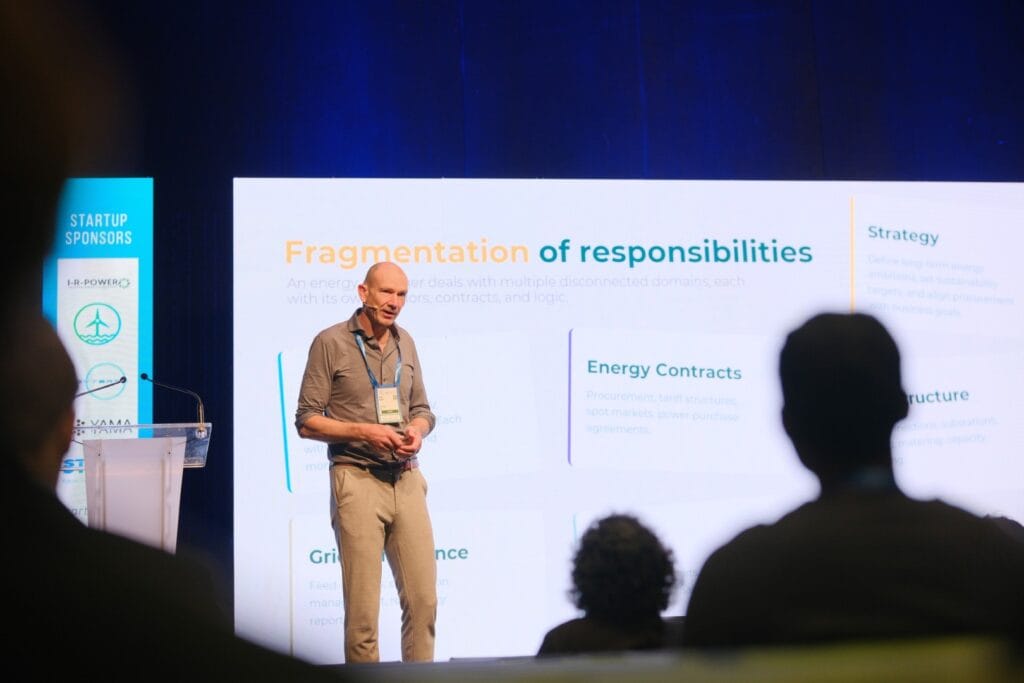
Remco Eikhout, CEO of Tibo Energy delivering is keynote during Energy Tech Summit 2026
Takeaway
The interesting part of this keynote was not the destination but the obstacle. Eikhout thinks the technical path from optimization to autonomous control is reasonably clear, and that the market is already crowded with companies doing the first four steps. What stands between the industry and energy intelligence is a human one: nobody wants to explain to their CFO why the software changed the electricity supplier without asking. That objection dissolves only when the volume of decisions grows heavy enough that approving each one becomes the bottleneck – which, given customers making hundreds of decisions a month, may not take long.
The keynote stage returns at Energy Tech Summit 2027 in Bilbao, April 7–8.