
Other industries automated their routine work years ago. Exnaton’s co-founder on why utilities haven’t, and what has to change before they can.
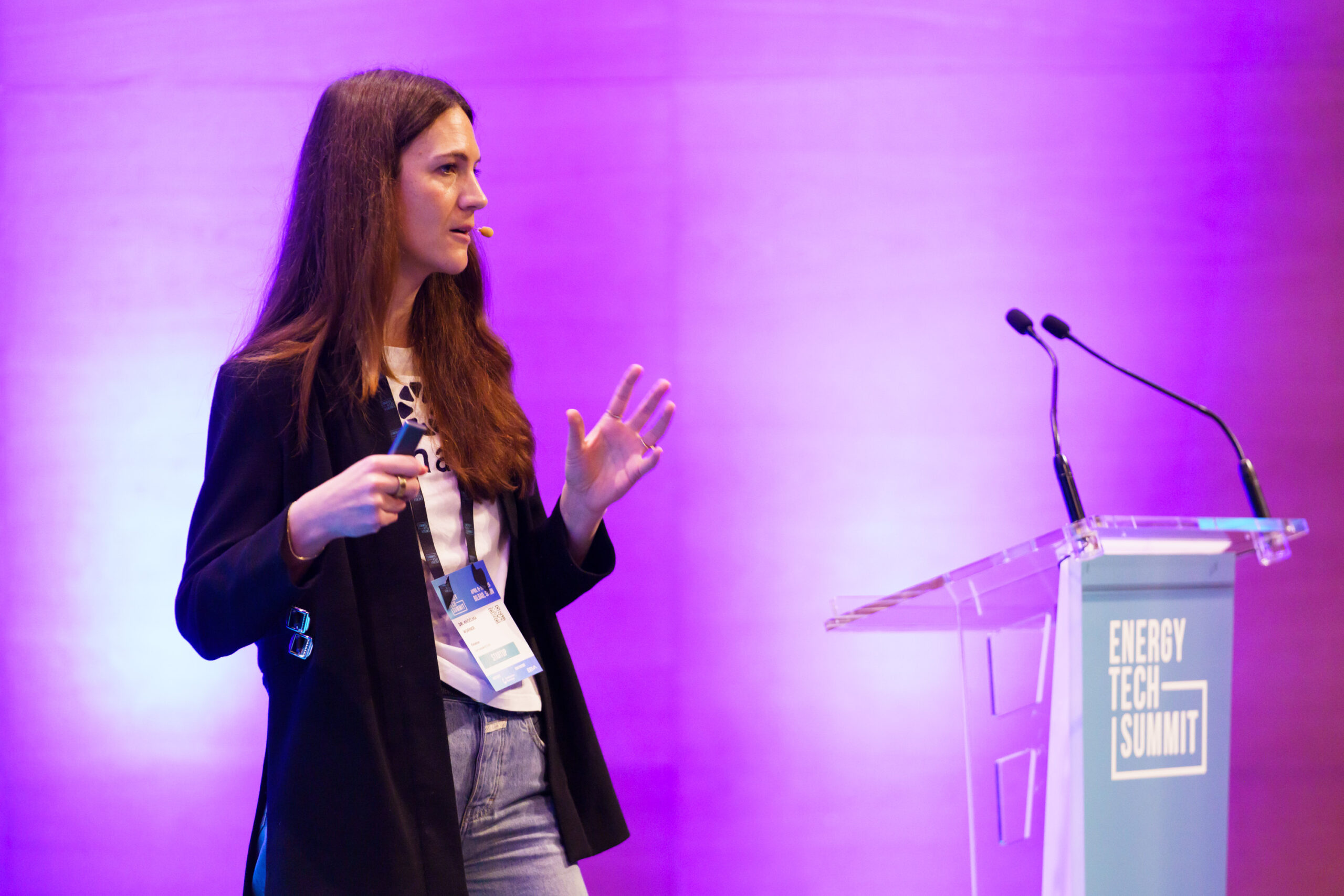
Utility automation is the part of the energy transition that rarely gets stage time. Dr Anselma Wörner, Co-Founder and COO of Exnaton, used her Energy Tech Summit keynote to talk about operations rather than technology – specifically, how the day-to-day running of energy retail changes as automation and AI arrive.
Her framing was that the sector has thoroughly discussed one transition while barely noticing another. Renewables integration, electric mobility, electrified heating and rising electricity use are familiar to any audience here, as is growing consumer awareness of what energy costs, where it comes from and what it emits.
What has not yet filtered into the energy industry is the change AI has already pushed through elsewhere.
Three things other industries already automated
Wörner works closely with startups outside energy, and identified three shifts that have moved from novel to standard.
Routine task automation. Manual operations are being replaced by automated agents, and the push to remove any remaining manual routine work is now the default expectation rather than an innovation.
Customer success. This goes well beyond chatbots and complaints handling. Voice agents already get on the phone with customers to resolve simple support tasks, and she pointed to rapidly scaling US startups in the space.
Automated decision-making and predictive analytics. This is the change she found most significant, because the economics moved. Two years ago, automated decisions only made sense for high-stakes calls with large financial implications. Now small models deliver good decisions cheaply and without much implementation difficulty – so the technique spreads into ordinary operations.
Her conclusion was direct: all three will be reality in ten years, and utilities will not be able to stay out of it.
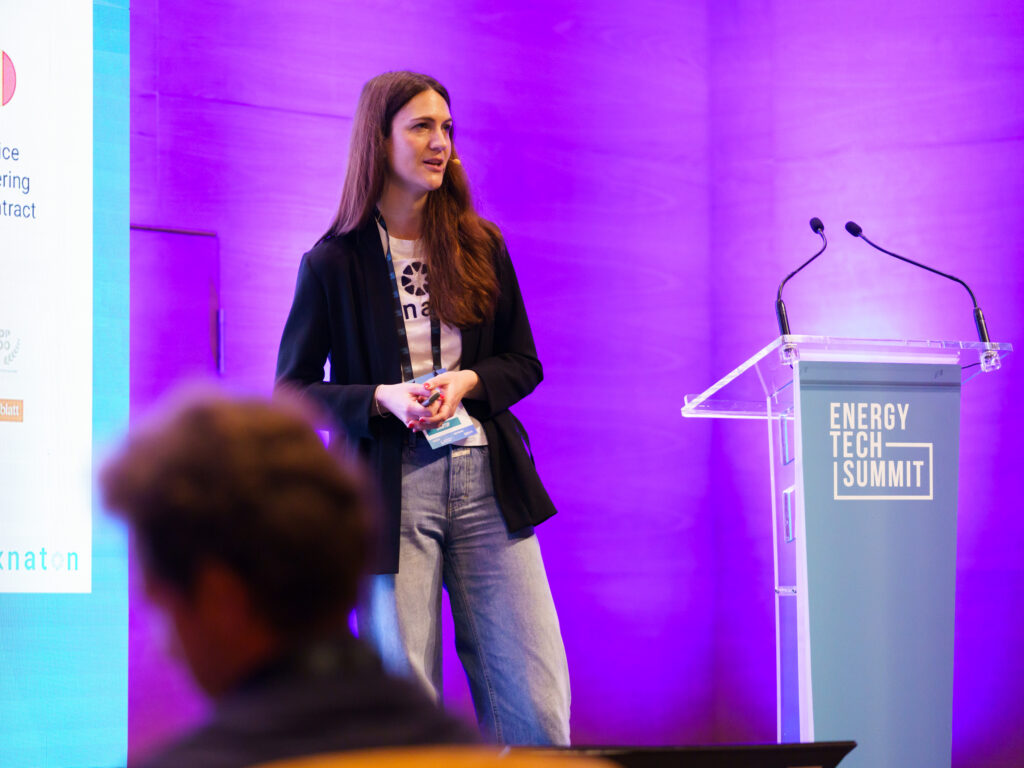
Dr. Anselma Worner, Co-Founder & COO of Exnaton
Why utilities can’t simply adopt it
The gap between that future and the present is not about willingness. It is infrastructure, and Wörner was specific about three blockers.
Many utilities still run on-premise systems that are hard to update.
Where smart meter data exists, it often sits in large lakes that go unused – and in plenty of cases smart meters have not been installed at all, so there is no data foundation for automated decisions in the first place.
So the software landscape utilities operate on has to be upgraded before the industry can even enter the era other sectors are already in. The upside she sees is proportionate – an opportunity to overhaul processes entirely and reach a genuinely intelligent company, rather than a slightly faster version of today.
Starting with billing
Exnaton’s entry point is billing, chosen because the potential there is easiest to capture. The aim is a platform that automates billing while surfacing automated insights from the data utilities already process – making them agile enough to compete with newer entrants who arrived with their own software infrastructure from the start.
That competitive framing is the sharper end of the argument. A traditional utility on legacy systems is not only slower internally; it is up against companies that were built software-first.
Letting customers ask their own questions
It is possible today to let end consumers interact with their own consumption data in natural language. Where am I using most energy? How could I cut that? What would reduce my bill? Those questions currently require an analytics process run by a data scientist, which is why most customers never get answers to them.
The same capability supports the utility side. Customer support agents fielding queries about bills and prices, and product managers deciding what price or tariff to bring to market while meeting regulatory requirements, both benefit from data-driven tooling as products grow more complex.

Dr. Anselma Worner, Co-Founder & COO of Exnaton
Nobody does this alone
Wörner closed on partnership rather than product, and it was the most credible note in the keynote given she was on stage to raise money.
Exnaton works on billing. Optimization and trading are equally large opportunities, and plenty of other providers and startups – including many in the room – will be needed to move the industry. Her company takes an API-integrated approach precisely so it can plug into other systems.
Her argument is that the industry will undergo a change too large for any single company to deliver.
Takeaway
Utility automation is usually as a technology question, and Wörner’s keynote suggests it is a readiness question instead. The capabilities exist and have been proven elsewhere; what utilities lack is the data foundation and modern software layer to apply them. That makes the work unglamorous – meters, integrations, billing systems – but it is what determines whether the next decade of energy retail looks like the last one. The competitive pressure is the part likely to force the issue, since the newest entrants never had the legacy problem to solve.
Secure your pass
Energy Tech Summit brings together the startups, investors and corporates building the energy transition. Founder’s Pass is €699, fixed.