
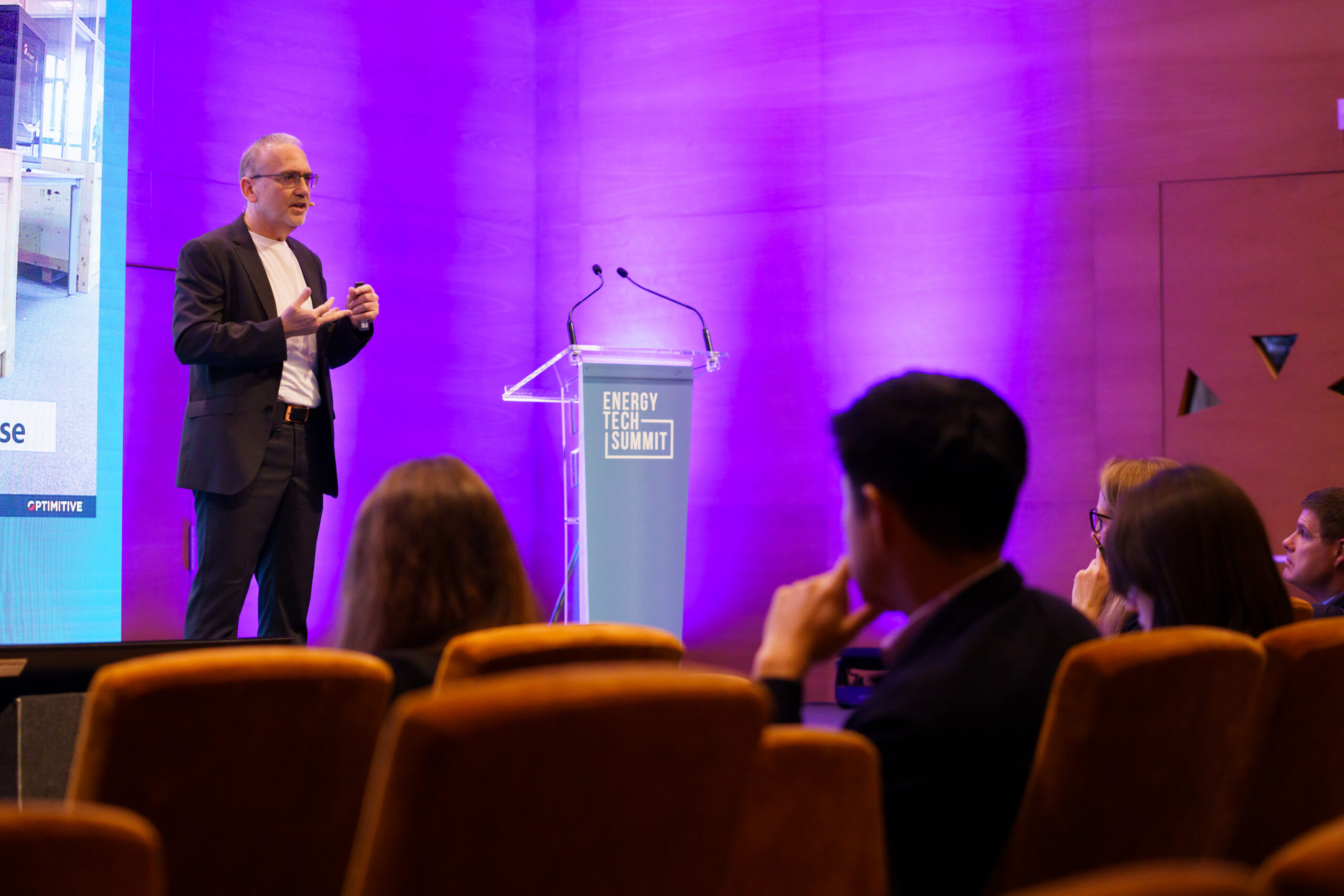
The same technology, the same problem, three decades apart. What changed wasn’t the algorithms – it was the ability to keep them running.
Industrial energy efficiency has an unusual history, and Javier A. García Sedano used his Energy Tech Summit keynote to tell it from the inside. Thirty years ago he was a young physicist at a Spanish power utility, working on R&D projects applying artificial intelligence and machine learning to heat rate optimization in power plants.
The tooling of that era explains what happened next. Old PCs, on-premise, cable-connected to mainframes or process computers. No practical internet, no search, nothing beyond the PC, the process, the code and the people writing it.
Which made online maintenance impossible. So the systems worked for a few months and then fell out of use.
That failure produced the insight the rest of his career rests on: effective online maintenance is what keeps an AI system working over long periods. The models were never the hard part.
Where the energy actually goes
His framing of the problem is one worth quoting to anyone who thinks efficiency is a buildings story.
More than half of the world’s primary energy is consumed in the control rooms of process industries – not only power plants but cement, paper and chemicals. In those rooms, operational efficiency depends on human decisions.
And the humans are not ignoring efficiency out of carelessness. The operation is complex, with a great many variables to manage, and operators are rightly concerned with quality, process stability and throughput. Energy efficiency is further down the list, so it does not get the attention, and energy is wasted.
Building for maintainability
Ten years after that first experience, he founded Optimitive to do it properly – and the design goals were shaped entirely by why the earlier systems failed.
The product had to work across any process industry rather than one vertical, whether power, cement or chemicals. It had to be easy to install. And critically, it had to be easy to maintain, which by then was possible because internet connectivity existed.
The first deployments look almost archaeological now. The software shipped inside black boxes – racks holding several CPUs, one dedicated to optimizing each process unit, with an optional 3G modem to secure the connection and enable remote maintenance. Those racks went out worldwide.
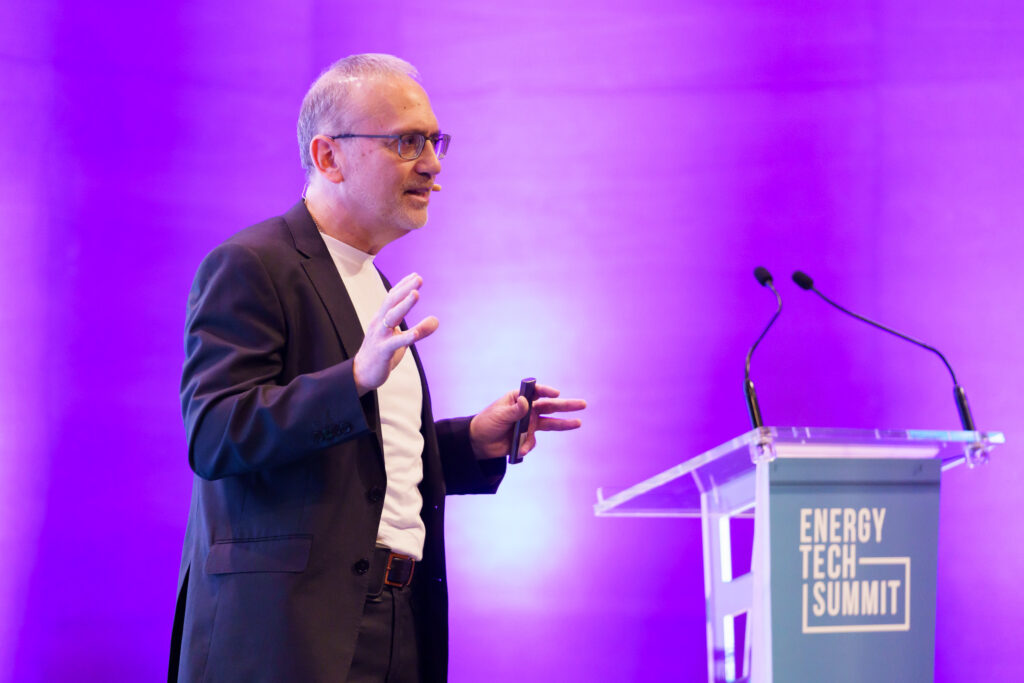
Javier A. Garcia Sedano, Founder of OPTIMITIVE
The market caught up
His account of 2015 will be familiar to anyone who sold AI before it was fashionable. The world was not ready. Artificial intelligence was not popular, and a great deal of the work was convincing people the thing was possible at all.
The change since is not primarily technical. Industry 4.0, cloud computing, IoT and big data are all established, and Optimitive now installs its software in customers’ data centres or in the cloud rather than shipping hardware.
But the difference he emphasised was demand rather than capability: industry now wants AI. After thirty years of arguing the case, the argument no longer has to be made.
How the optimization works
The mechanism is straightforward to describe and hard to do. The software connects to process data, reads it every few seconds, learns from it, and automatically adjusts optimal set points – temperatures, pressures, valve positions – applying the right settings at the right moment.
The claimed results cover both sides of the plant manager’s interest: energy saved and output raised. Which matters commercially, because efficiency alone rarely wins the meeting.
From projects to subscriptions
The most forward-looking part of the keynote was about cost structure rather than technology.
Heavy industry process units are heavily customized, so every deployment needs setup services delivered by Optimitive’s engineers or its partners. That setup cost is what limits how far the technology can reach.
AI is now reducing that cost – and his projection is that it falls far enough for some equipment to be optimized on a plug-and-play basis, connected and optimized automatically.
That changes who can buy. Optimization becomes a subscription service rather than a project, which brings smaller equipment into scope: crushers, air compressors, the machinery never worth a custom engagement. Subscribe the equipment from a tablet or phone, and the intelligence runs in the cloud connected to the machine, saving energy in real time.
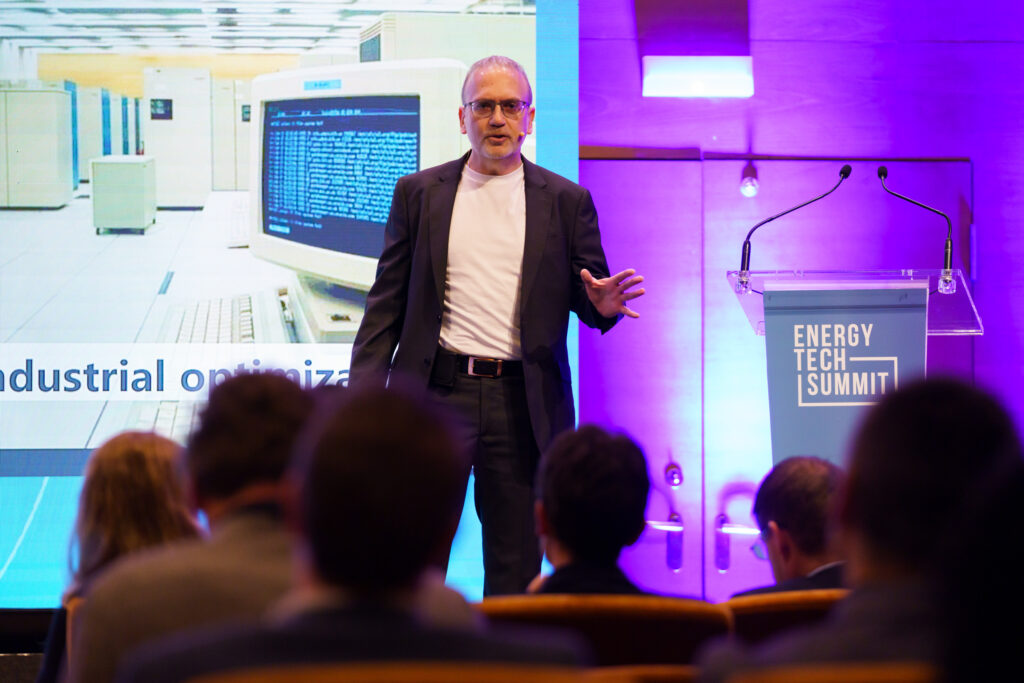
Javier A. Garcia Sedano, Founder of OPTIMITIVE
Takeaway
García Sedano closed with a comparison between a mountain’s mass and the CO2 that optimization at scale could keep out of the atmosphere. The more interesting claim is the quieter one underneath it. The AI he was building three decades ago worked; it just could not be kept alive. What has changed since is connectivity, cloud infrastructure and falling setup costs – plumbing rather than intelligence. Industrial energy efficiency has been technically solvable for a long time. It is only now becoming deliverable at a price that reaches beyond the largest process units.
Secure your pass
Energy Tech Summit brings together the startups, investors and corporates building the energy transition. Founder’s Pass is €699, fixed.