
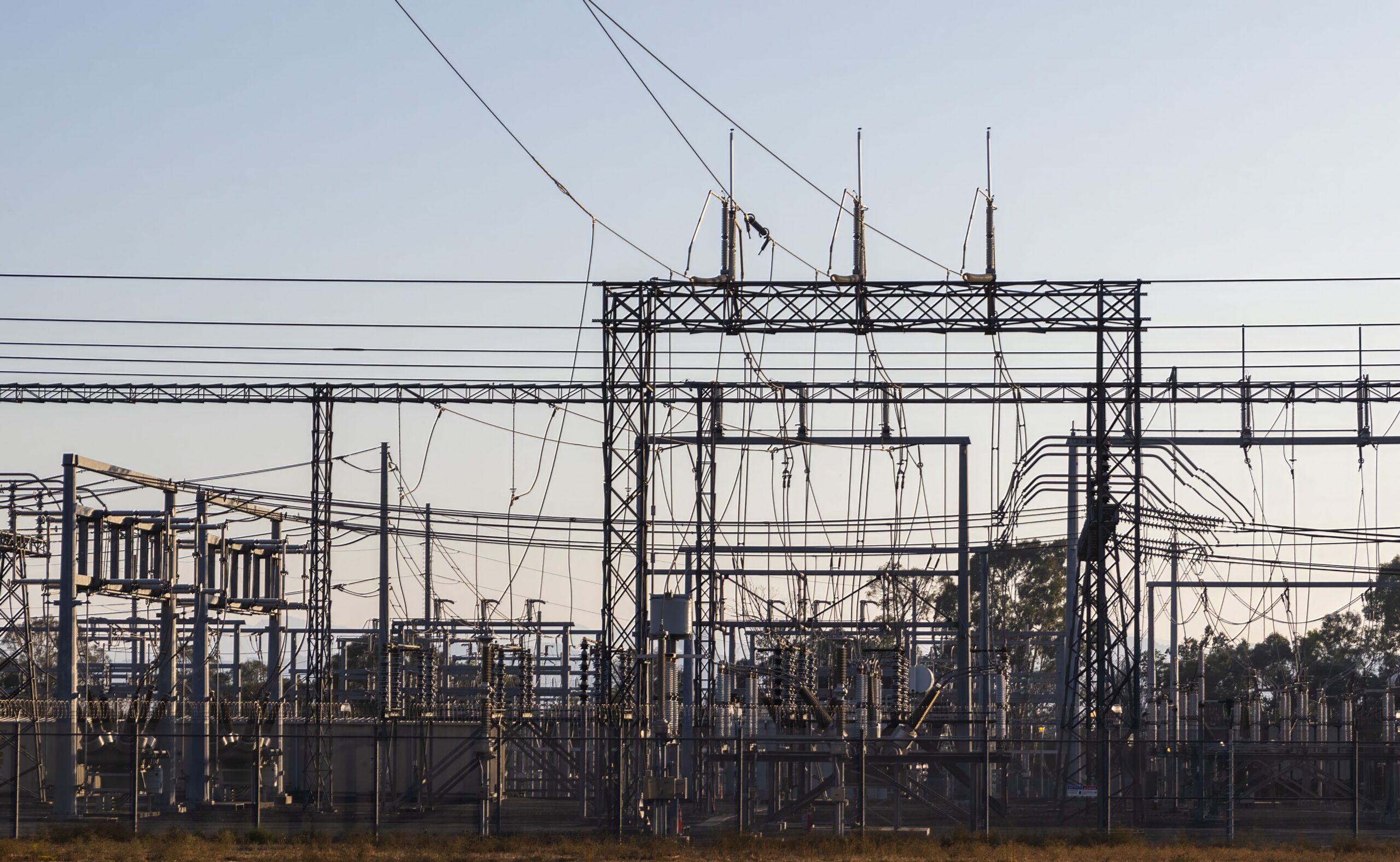
A utility investor, a climate tech VC and a solar-plus-storage founder explained what it will take to make grids flexible enough for a renewable future.
Across Asia-Pacific, electricity demand is rising quickly and distributed solar is spreading fast. In 2024 alone, Pakistan imported 19GW of solar modules, close to half its grid-connected capacity. For utilities and investors in the region, grid modernization is therefore becoming as urgent as building new generation.
That challenge took center stage in a panel at Energy Tech Summit. Max Hefti, Investment Manager, Energy at Emerald, moderated the discussion. He was joined by Mariana Costa, Principal of EDP Ventures, Borja Rosales, Principal of Seaya Andromeda, and Omeed Badkoobeh, CEO of Yotta Energy.

Grid modernization panel session at ETS 2024, with Mariana Costa, Borja Rosales, and Omeed Badkoobeh.
Why grids need to become more flexible
Hefti set the scene. Renewable capacity keeps growing, and most new generation is intermittent. At the same time, demand fluctuates more because of e-mobility and the electrification of heat.
Grids, however, were not designed for that level of variability. As a result, they need to become far more flexible to stay resilient.
The panel brought three perspectives together. Costa represented both a utility and a corporate investor, since EDP Ventures is the corporate venture arm of the EDP group. Rosales spoke for a financial investor, and Badkoobeh for the solution side. Notably, EDP Ventures is an investor in Yotta Energy.
Grid modernization: transmission vs distribution
Costa expects huge challenges on both sides of the grid. On transmission, stakeholders coordinate well. Still, balancing has long relied on dispatchable conventional plants. As coal and gas plants close, the system will need new sources of flexibility.
Distribution, in her view, is the bigger struggle. Everyone installs the assets they want and connects them to the grid, often without planning. Consequently, distributed energy resources introduce bidirectional power flows, localized generation, congestion and power quality issues.
The core goal, she argued, is to close the gap between the speed of the energy transition and the renewal of the grid itself. Above all, the network must not become the bottleneck.
Rosales agreed. Transmission lines were built to carry power from large plants. However, the rise of variable, unpredictable renewables puts growing stress on distribution networks. For that reason, he sees distribution as the area that needs the most help right now.
Empty rooftops and rising demand
Badkoobeh framed the problem as a coming shortage of power. He asked the audience who drove an electric vehicle, who planned to get one, and who would consider one with perfect charging infrastructure. By the final question, almost every hand was up.
For him, that points to a sharp rise in electricity demand. “You cannot simply build power plants fast enough,” he said, even if you wanted to build coal and natural gas plants.
Instead, he looks to the empty rooftops visible from any airplane window. Yotta Energy has built a decentralized solar-plus-storage solution that turns those rooftops into dispatchable power. Its low-voltage architecture is designed to be safe, and owners can manage systems remotely, even across continents.
In his words, “the future of the grid is decentralized.” As a result, “any company that wants to invest in technology can now become a power producer.”
Closing the grid investment gap
Hefti then raised a striking imbalance. Investment in grids lags well behind investment in renewable generation. The IEA’s World Energy Investment 2025 report puts annual grid spending at around $400 billion, against roughly $1 trillion for generation.
Rosales sees two timelines for closing that gap. Physical infrastructure is essential for long-term reliability. However, it is capital-intensive and depends on regulatory and policy change, so it moves slowly.
Digitalization, by contrast, can move faster. Many grid operators already have modern equipment with sensors, but they struggle to read live data across the network. Better data and analytics would help them make smarter decisions. Rosales estimated that around half of today’s curtailment could be avoided, since much of it stems from outdated rules and a lack of live readings. That makes digitalization “a faster and more cost effective solution.”
Costa added three levers. First, infrastructure investment depends heavily on funding conditions and interest rates. Second, regulation must change, so that market designs value flexibility and reward investment in it. “We are not there yet,” she said.
Third, new technology has to integrate safely. Interoperability, compatibility and cybersecurity all matter. After all, “DSOs are by nature one of the most conservative and risk averse customers.” Crucially, all three levers need to move together in a well-orchestrated way.
Badkoobeh agreed. “If utilities and regulators create the incentive structures the market will meet the demand,” he said. In his view, much existing infrastructure can already handle bidirectional flows. What’s missing are market dynamics that reward people for dispatching their power.
Solutions for the near term and the long term
Badkoobeh’s priority is what already exists and is easy to adapt. Every empty rooftop could host a dispatchable solar power plant that produces energy more cheaply than new generation. With the right incentives, a building owner such as an auto repair shop could cut its bill and also earn revenue from utility programs.
He pointed to Texas, where part of the state is deregulated. There, Tesla set up its own retail electricity provider to create new incentives for battery owners. According to Badkoobeh, “they got tired of waiting for the utilities to do this.”
Costa took a more holistic view. Existing infrastructure is massive, and “we cannot ignore the existing infrastructure.” Retrofitting it is the quick win. Meanwhile, forecasts point to such strong demand growth that new build will also be essential, offering a chance to design a flexible system from scratch.
How EDP is putting flexibility into practice
Costa shared several initiatives across EDP. On the hardware side, EDP is testing intelligent power transformers in the field to manage power flows and congestion. Looking further ahead, it is exploring solid-state transformers.
On flexibility markets, EDP is working with Piclo, a flexibility marketplace, to run the first local flexibility market with its DSO in Portugal.
The EDP Ventures portfolio adds more examples. Splight uses digital twins, monitoring and control to run networks at higher-than-traditional loads. PlexiGrid works with EDP’s DSO in Spain to map the low-voltage grid and its constraints. Energyworx supplies EDP’s Portuguese DSO with its energy data management platform.
That data layer is critical. To act on the low-voltage grid, operators need to process huge volumes of granular, real-time smart meter data.
Rosales added solutions across the value chain. These include smart inverters on solar systems to regulate voltage, demand response through virtual power plants, large battery storage and dynamic line rating for transmission operators. He also highlighted peer-to-peer energy trading, which lets consumers trade directly with producers.
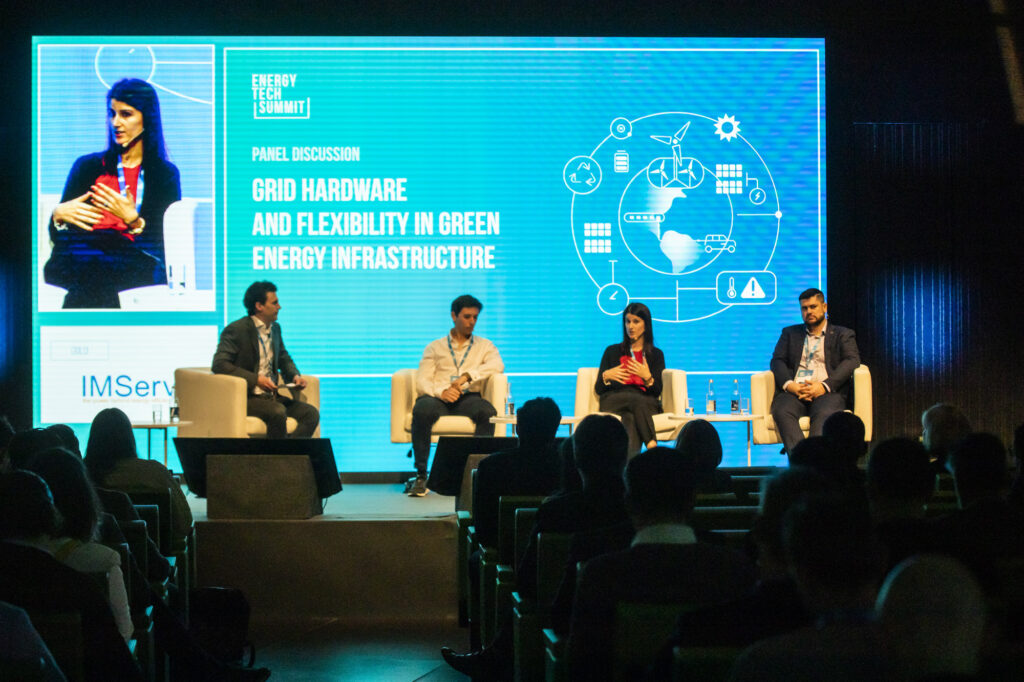
Expert speakers sharing insights on Energy Tech Summit 2024 stage.
A call to action
Badkoobeh closed with a story from Texas. On one day shortly before the session, around 80% of the state’s power mix came from wind and solar. Critics had once warned that the grid would fail at 50%, yet nothing happened. In his view, “the grid will adapt” – but “we have to build faster deploy more.”
Costa ended on urgency. “The current existing infrastructure took us around 150 years to put us here,” she said. Now the energy transition demands that the grid be redefined in roughly 20 years. Therefore, “all the decisions all the initiatives need to start today.”
Takeaway
The panel agreed that distribution networks will feel the strain of the energy transition first. Digitalization offers the fastest gains, while physical upgrades remain essential for the long term.
Above all, progress depends on coordination. Investment, regulation and technology have to advance together, so that the grid supports clean energy growth instead of holding it back.
Secure your pass
Dates for the next Energy Tech Summit Asia are coming soon. In the meantime, join investors, utilities and founders at Energy Tech Summit Europe 2027, the 8th edition, on 7–8 April in Bilbao, Spain.
Passes cost €1,399 until 30 November, then €1,599 from 1 December, €1,799 from 1 February 2027 and €1,999 from 1 March 2027.
Founders can join with the Founder’s Pass for €699. Use code ETS100 for €100 off.