
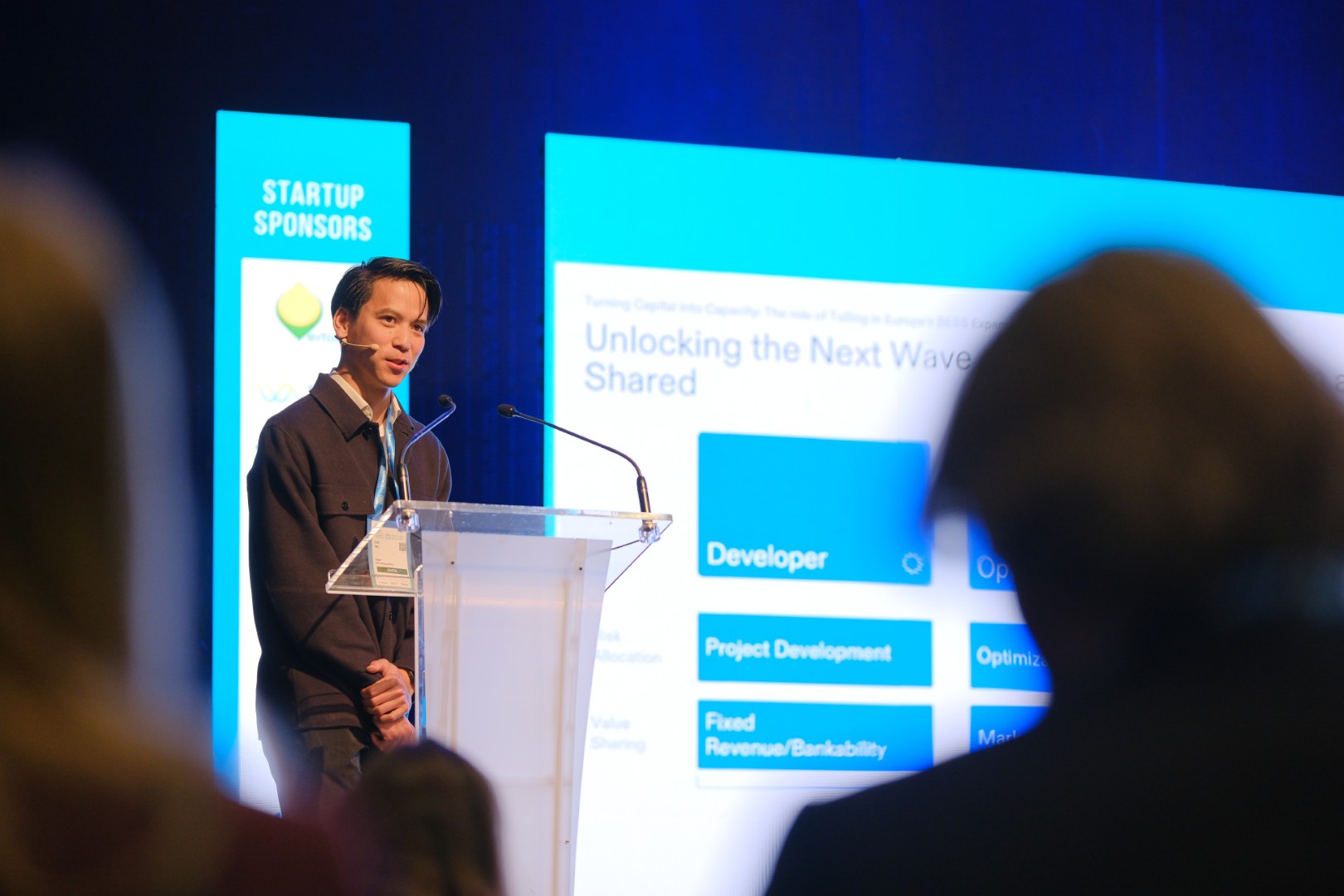
Energy Tech Summit 2026 keynote
Europe is building renewables far faster than the batteries to balance them. Flower’s Alan Ting on how a financing shift, from merchant risk to tolling, could unlock the next wave of grid-scale storage.
Alan Ting, Chief Commercial Officer at Flower, used his Energy Tech Summit keynote to make a financing argument rather than a technology one. In short, the batteries Europe needs for grid-scale storage already exist. Instead, what is missing is the right way to pay for them.
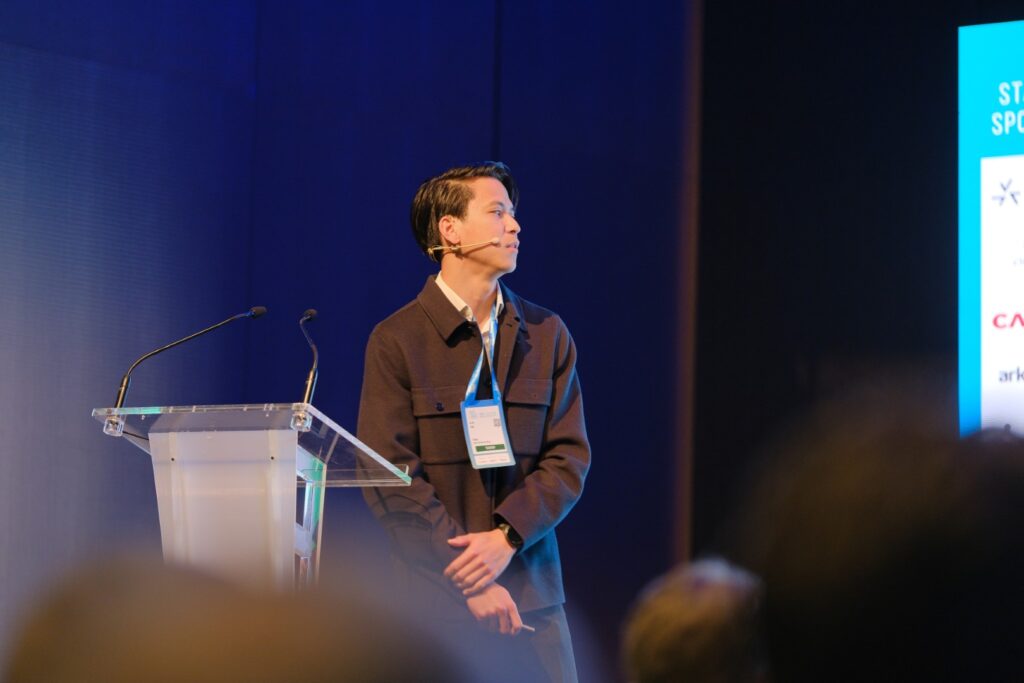
Alan Ting, Chief Commercial Officer of Flower speaking at Energy Tech Summit 2026
The gap: renewables are racing ahead, storage isn’t
Ting framed the problem with Germany. First, the country has over 200 gigawatts of installed renewable capacity, and the figure keeps climbing. Meanwhile, grid-scale batteries lag far behind, with only around 3 gigawatts connected today.
As a result, that mismatch carries a cost. Because renewable output is intermittent, Ting said, the market has grown considerably more volatile. Day-ahead price spreads have widened, and the gaps between day-ahead and imbalance prices have grown with them. In other words, the volatility is there to be managed. Yet the batteries that would manage it are not.
The problem with how Europe finances batteries
The bottleneck, in Ting’s telling, is the financing model. Traditionally, Europe has funded battery storage on merchant models, which bring unpredictable revenue streams and full exposure to the market. Therefore the risk, he said, is not so much inefficiently allocated as simply not allocated at all.
Furthermore, there is a second catch. Under the old model, anyone who wanted access to that flexibility had to develop, build and operate the asset themselves.
The fix: tolling, and who should carry which risk
Flower’s answer is the tolling model, which works essentially as a lease. First, it swaps unpredictable merchant income for fixed revenue streams. Second, it allocates risk to whoever is best placed to manage it. Finally, it lets players access flexibility without owning the asset.
Accordingly, Ting broke the value chain into three roles, each carrying the risk it is built for. Developers take project development risk. Offtakers, usually utilities, take the market exposure, which suits them because they are balancing renewable portfolios anyway. Meanwhile, the optimizer takes optimization risk, being best positioned to hit the right markets at the right times.
By contrast, value flows in the opposite direction. Developers get fixed, bankable revenues from the offtaker, which is what makes projects financeable. Similarly, the optimizer keeps the market upside. And the utility gets flexibility without touching project development, grid connection or any of the operational headaches. Ultimately, that alignment is what unlocks the next wave of grid-scale storage.
Where Flower fits
Ting closed with the company’s own position. Flower was founded in Stockholm in 2020 and is, he said, the market leader in flexibility in Sweden.
Of that team, roughly half works on Flower’s optimization platform, which pulls in market and weather data to extract the most flexibility value from the portfolio. In total, that portfolio runs to around 350 megawatts of batteries, alongsidesolar, wind, EV chargers and greenhouses. Moreover, all of it connects to multiple markets, from grid stability through to day-to-day power trading.
Because Flower is both a developer and an optimizer, Ting’s pitch to the room was an open invitation. Specifically, he is looking for partners to offtake the batteries Flower is developing, for co-development partners, for asset owners who want their assets optimized, and for offtakers looking for projects. “Short, sweet presentation,” he wrapped up. In the end, the ask was the point.
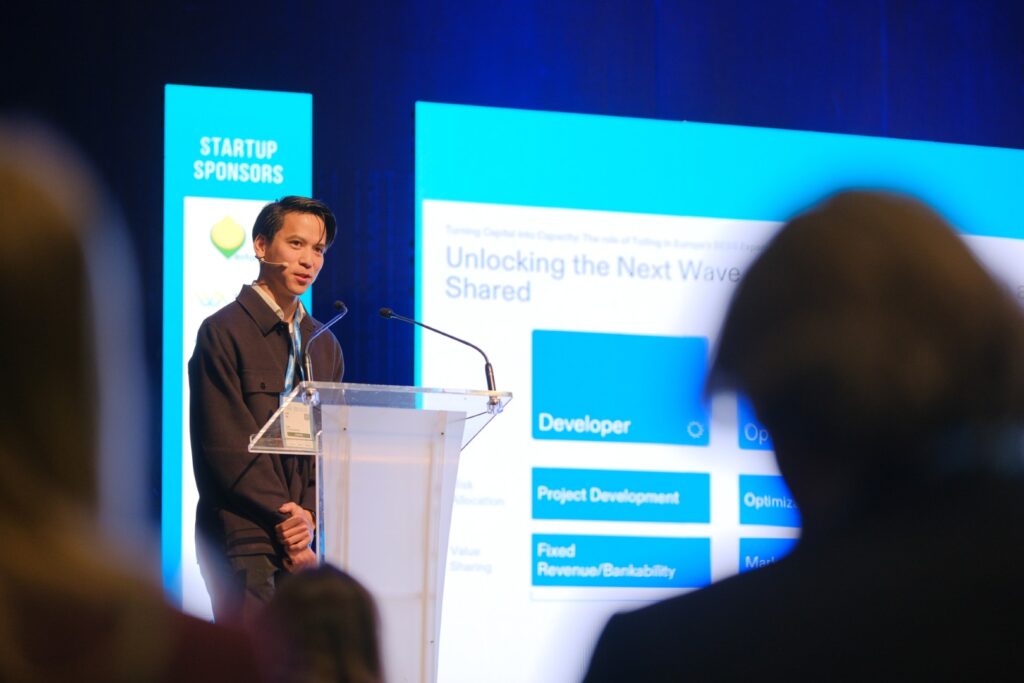
Alan Ting presenting Flower at Energy Tech Summit 2026
The takeaway
Ting’s keynote reframed a hardware bottleneck as a financing one. Europe does not lack the technology to store renewable power. It lacks a model that gets batteries built at the pace the grid needs. Tolling, by handing each risk to the player best able to carry it, is his candidate for the fix.