
Cheap renewables give Spain and Portugal a rare competitive edge. McKinsey explained how incumbents and startups can turn it into new industry – before the window closes.
Europe has spent two decades losing industry. Yet the energy transition in Spain could reverse that trend. At Energy Tech Summit, McKinsey & Company set out why Spain and Portugal hold a rare competitive advantage – and why the window to use it is closing.
Patricia Ovidio, Associate Partner in McKinsey’s Lisbon office and one of the leaders of its sustainability practice, presented alongside Xavier [SURNAME] , an Engagement Manager in the Barcelona office who leads the firm’s Iberian industry and energy transition work day to day.
Three messages for the energy transition
Ovidio framed the talk around three messages. First, the energy transition is an unprecedented opportunity to create value. However, it comes with a deadline: “you need to act now.”
Second, capturing that opportunity means thinking differently. “We need to think structurally different,” she said, combining the firepower of incumbents with the speed and drive of startups.
Third, McKinsey is investing heavily in the transition itself, including a think tank focused on Iberia.
The transition will look different from region to region, she explained. It will require huge investment everywhere. Nevertheless, regional strengths will make it uneven, and some countries will gain a clear edge. Spain is one of them.
Industry runs through every part of that value pool. Transport depends on the automotive sector, for instance, while buildings rely on steel. For that reason, industry deserves far more attention in the transition debate.
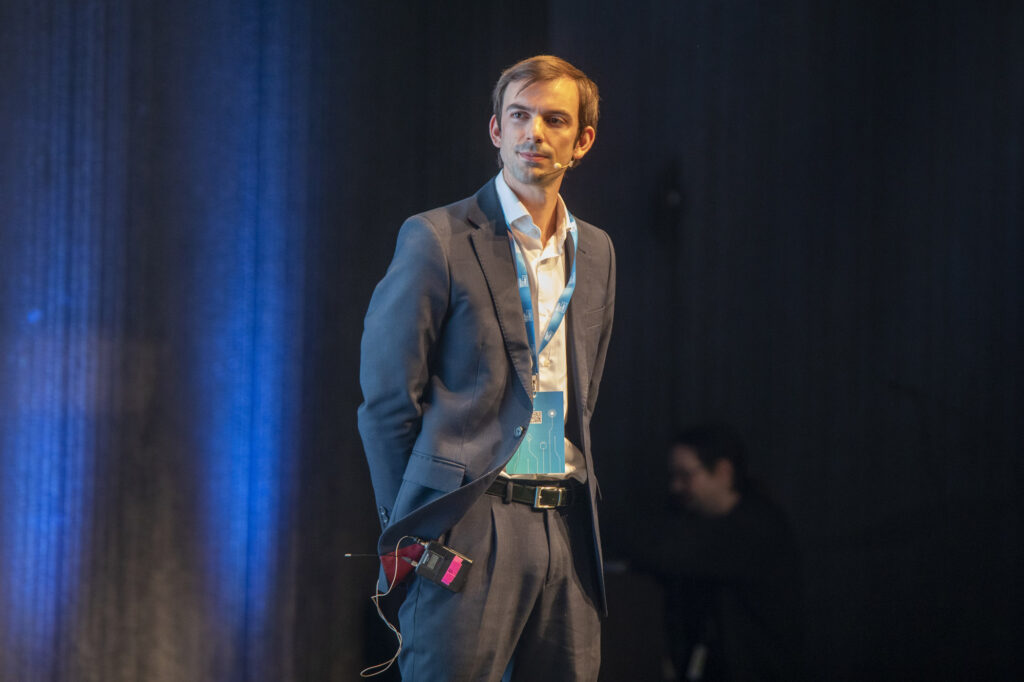
Experts from McKinsey & Company provided insights on the transformative changes in Spain’s energy landscape.
Why the energy transition in Spain is a rare opportunity
Xavier then turned to the economics. Over the past 20 years, Europe has deindustrialized, and Spain has done so even faster than the rest of Europe. The transition creates a window to reverse that, but it won’t stay open forever.
The good news is that the disruption will hit countries differently. “For once Spain and Portugal are actually in a position of privilege,” he said. Sunny weather makes solar power cheaper, so energy vectors such as green hydrogen can also be produced at lower cost.
Iberia also has useful inputs, such as lithium and biogenic CO2. Moreover, it already has an industrial base and infrastructure to build on.
The opportunities fall into two groups. On the energy side, they include renewables, electrification and green molecules such as biomethane, biofuels and green hydrogen. On the industry side, cheaper clean energy can strengthen existing sectors and create new value chains, from EVs and batteries to green ammonia and green steel.
The size of the prize
McKinsey’s analysis suggests Spain could nearly double the renewable capacity in its power mix. Biomethane remains a largely untapped opportunity, and synthetic fuels, green steel and green ammonia could also take root.
Existing industries could become more competitive too. According to McKinsey’s estimates at the time, Spain’s investment potential across these sectors could reach nearly €150 billion by 2030, with more than one million jobs created.
How companies can build green businesses
Ovidio then brought the opportunity down to business level. A McKinsey survey of around 1,000 executives found that they expected roughly half their revenue to come from new businesses within two years. That, she admitted, is “exciting but also a bit scary at the same time.”
More than 90% said their new businesses would be linked to sustainability within five years. The question, then, is how to build those green businesses quickly.
Her answer is to combine two strengths. Incumbents bring customers, capital and brand awareness, but they are rarely fast or agile. “Big comes with good parts but it also comes with some slowness,” she said.
Startups are the mirror image: agile, purpose-driven and ambitious, yet short on customers and capital. Bringing the two together is what Ovidio called “the Holy Grail” of green business building.
Seven themes for scaling green businesses
Ovidio outlined seven themes that successful green ventures share:
First, ambition – a clear north star that rallies people. Second, real demand, because the business has to address a genuine need. Third, a clear cost advantage, since profitability is a struggle for many green ventures.
Fourth, technology with a credible path to maturity and scale. Fifth, installed capacity, so the business is ready to scale when the time comes.
Sixth, an ecosystem. It is “very hard to do it by yourself,” she said, so partnerships matter. Finally, and arguably most important, people: founders need to “surround yourself early on with the right people.”
McKinsey has applied this approach with incumbents and startups alike, in areas from green steel and solar services to circular textiles and agriculture.
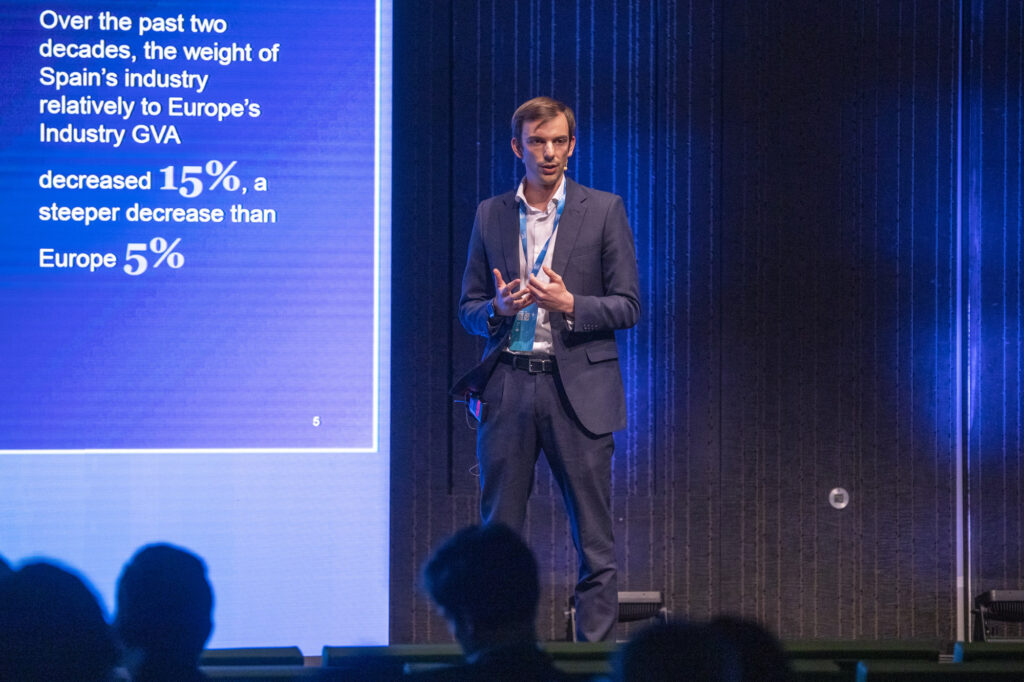
Experts from McKinsey & Company provided insights on the transformative changes in Spain’s energy landscape.
Inside the Iberian think tank
To help Iberia seize the moment, McKinsey created a think tank on the energy transition and industrialization of Spain and Portugal. It brings together partners from industry, finance and energy, including BBVA as a founding member.
The initiative has a dual purpose. It builds knowledge on the key transition topics. At the same time, it aims to accelerate the investments the region needs.
So far, it has focused on three missions: electrification and renewables, green molecules, and hydrogen. For each, partners assess the current status, set an ambition for Spain, identify challenges and develop solutions through round tables. McKinsey has since published a series of reports on the Iberian industry and energy transition, covering topics such as biomethane, green hydrogen and sustainable fuels.
Takeaway
Spain and Portugal have a rare chance to turn cheap renewable energy into a new industrial base. However, the window is limited, and neither incumbents nor startups can capture it alone.
The path forward combines corporate scale with startup speed, backed by clear ambition, real demand, cost discipline and the right people.
Secure your pass
Want to explore Spain’s green industrial opportunity in person? Join us at Energy Tech Summit Europe 2027, the 8th edition, on 7–8 April in Bilbao, Spain.
Passes cost €1,399 until 30 November, then €1,599 from 1 December, €1,799 from 1 February 2027 and €1,999 from 1 March 2027.
Founders can join with the Founder’s Pass for €699. Use code ETS100 for €100 off.