
Phelas founder Leon Haupt argued that storage is held back not only by technology and policy, but by how the industry values it.
Almost everyone agrees that a renewable grid needs far more storage. So why isn’t long-duration energy storagetaking off faster? At Energy Tech Summit, Leon Haupt, Founder of Munich-based Phelas, argued that part of the answer lies in how the industry values storage in the first place.
Different durations, different jobs
Haupt, an energy economist by background, began by mapping the needs of a power system. Short-duration storage provides ancillary services. Longer durations shave peak loads, while seasonal storage provides strategic backup.
These categories are often mixed up in debates, particularly in Germany, he said. Yet each needs different technologies and economics. As renewables approach around half of Germany’s power mix, storage needs are moving from short-duration “sprinters” towards longer durations, with seasonal storage as the endgame.
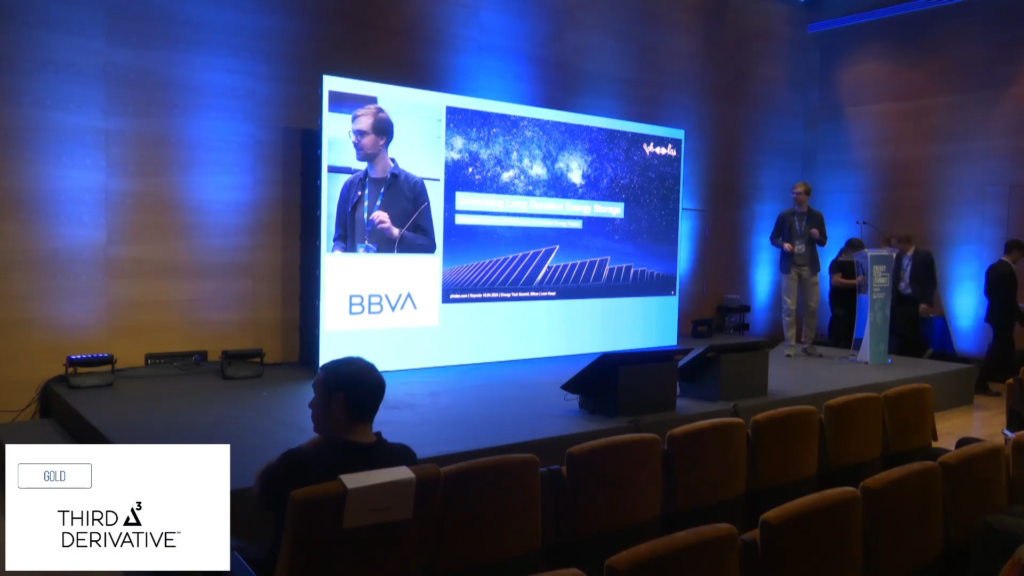
Leon Haupt, Storage Business Case Analyst / Founder of Phelas
What’s holding storage back
If the consensus is so strong, why isn’t the market unlocking the full potential of storage? Haupt sees two well-known factors. The first is the technology itself, including cost and cycle life. The second is the incentive structure, from regulation to new schemes such as the UK’s cap-and-floor discussions and Germany’s planned capacity market.
However, Haupt added a third factor: how the industry captures the value of flexibility. Storage developers have borrowed the project finance approach from wind and solar. In his view, that approach is “not wrong but it’s not right either.” Put more bluntly, “the project approach to energy storage is flawed.”
Four blind spots in storage business cases
Haupt identified several problems. First, storage is often sized and designed separately from the wind or solar asset it is co-located with. The two simply share a grid connection rather than being planned together.
Second, many projects ignore grid congestion and curtailment. Third, most projects rely on merchant revenues, while storage PPAs are only beginning to gain traction. Finally, decisions are often made project by project, instead of looking at how storage can reduce risk across a whole portfolio.
The insurance value of long-duration energy storage
Typical analyses project cash flows 20 years ahead and calculate an IRR. That misses the points above, Haupt argued. Instead, he proposes a more sophisticated approach that models uncertain market prices, curtailment scenarios and weather fluctuations to produce a probability distribution of returns.
Curtailment can be modeled, he stressed, because “no number is worse than a bad number.” His analysis shows that renewable assets without storage have a riskier spread of returns than those with storage. Wind and solar already use P90 and P50 metrics to describe risk, but storage rarely does.
In other words, storage can do more than generate revenue. It can also de-risk a co-located renewable asset or a wider portfolio.
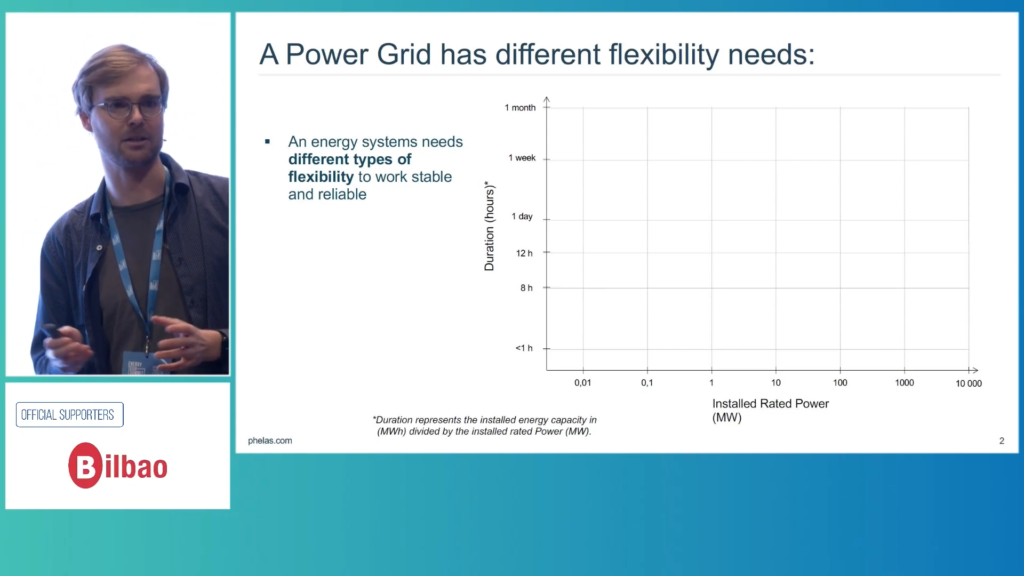
Leon Haupt, Storage Business Case Analyst / Founder of Phelas.
Rethinking the business case
Haupt offered a simple analogy: “what’s the business case of an emergency generator?” Nobody expects a backup generator to earn money every day. Its value lies in protecting against rare but costly events, and storage should be valued in a similar way.
He also urged developers to plan dispatchable renewable power plants as integrated systems and to include curtailment in their analysis, even with simple estimates. Phelas works on both sides of the challenge, developing liquid air energy storage hardware and better methods to quantify storage’s value.
Takeaway
Long-duration energy storage doesn’t only need better technology and better incentives. It also needs better business cases.
By modeling risk, curtailment and portfolio effects, developers and investors can capture the insurance value of storage – and unlock investment that today’s IRR-only models overlook.
Secure your pass
Want to meet the innovators unlocking the next generation of energy storage? Join us at Energy Tech Summit 2027, the 8th edition, on 7–8 April in Bilbao, Spain.
Passes cost €1,399 until 30 November, then €1,599 from 1 December, €1,799 from 1 February 2027 and €1,999 from 1 March 2027.
Founders can join with the Founder’s Pass for €699. Use code ETS100 for €100 off.