

Insurers and investors explained why first-of-a-kind climate projects struggle to raise debt – and how insurance and hedging can help them get financed.
Climate startups often hit the same wall. Equity investors will back a first-of-a-kind plant, but lenders won’t touch it until the risks are proven. At Energy Tech Summit, a panel explored how risk transfer solutions such as insurance and hedging can bridge that gap from equity to debt.
Dr Amaya López-Durán Viani, Head of Industry Observatory at BBVA, moderated the discussion. She welcomed the audience to “a fascinating panel about insurance yes insurance.” Joining her were Kobi Weinberg, Senior Manager of Strategic Initiatives at CREO, Stephan Leser, Senior Underwriter in Munich Re’s Green Tech Solutions team, Tyler Christie, Managing Director at Decarbonization Partners, and Matilda Elfving Hauan, Director at Altor Equity Partners.
A panel spanning insurance, equity and climate finance
The panel brought together very different perspectives. Leser leads technology performance guarantee insurance at Munich Re, covering projects in bioenergy and the circular economy, including carbon capture, hydrogen and power-to-X.
Weinberg works at CREO, a network focused on mobilizing private capital for climate solutions. Previously, he developed and underwrote financial risk transfer products for large sustainable projects at Nephila Climate.
Christie leads investments at Decarbonization Partners, a BlackRock and Temasek joint venture investing in venture and growth equity. Meanwhile, Elfving Hauan has worked on renewable energy and residential green transition deals at Altor, a private equity firm.
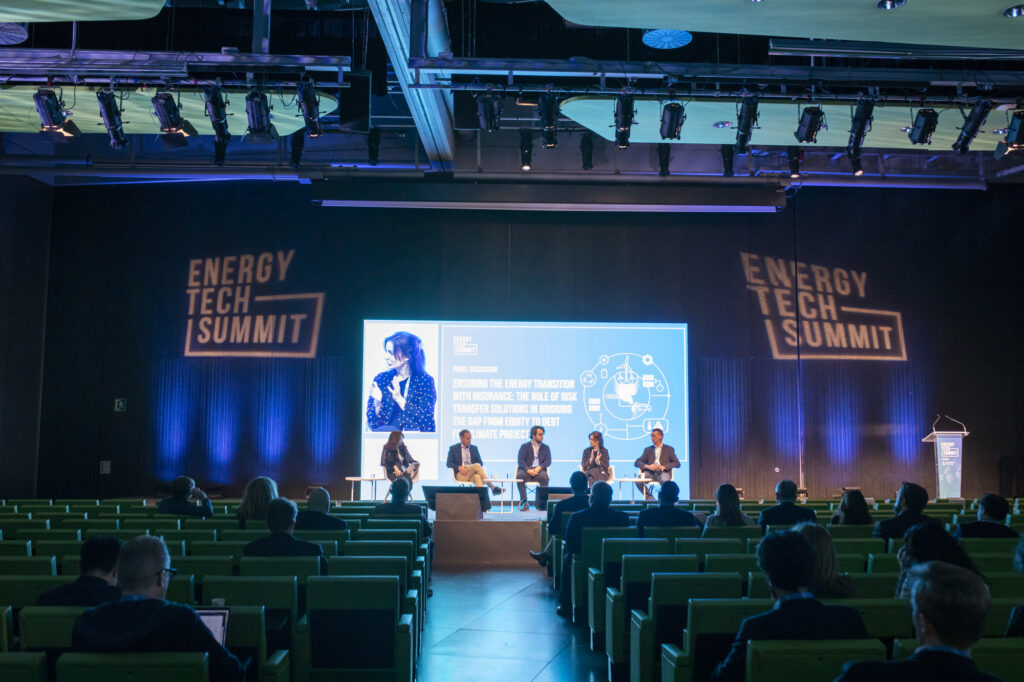
Panel featuring: Kobi Weinberg, Senior Manager of Strategic Initiatives at CREO, Stephan Leser, Senior Underwriter at Green Tech Solutions Team, Munich Re, Tyler Christie, Managing Director at Decarbonization Partners, Matilda Elfving Hauan, Director of Altor Equity Partners and Dr. Amaya López-Durán Viani, Head of Industry Observatory at BBVA.
What are risk transfer solutions?
Weinberg explained that “risk transfer solutions is basically an umbrella word for two different varieties of financial products.” First, insurance covers individual loss events, such as a catastrophe or construction failure. Second, derivatives and hedges protect against downside based on an index, such as electricity prices.
A wind farm, for instance, might hedge its power price and also insure against construction delays. These tools matter more and more for founders building first-of-a-kind projects. Equity investors accept more risk than lenders, so anything that protects debt investors makes projects easier to finance.
Leser agreed that lenders are highly risk-averse when it comes to technology. That is where insurers can step in. “This is not a standard insurance product this is really something which is new,” he said.
The challenge goes beyond new technology. Even established technologies, such as electrolyzers and fuel cells, are now combined in new ways, creating integration risk. Feedstocks, products and providers may all be new, so banks struggle to price them. As a result, financing slows down – and so does the energy transition.
How investors handle risk
Elfving Hauan explained that “all investors are kind of in the business of risk reward,” but different players take different risks. Altor avoids technology risk, preferring technologies it knows will work.
Commercial risk is a different story. Altor can invest before revenue, provided offtake agreements show future demand. For large industrial projects, such as Stegra’s green steel plant in northern Sweden, debt is essential. Commercial de-risking is key to making those projects bankable. Execution risk, meanwhile, is where Altor feels it adds the most value.
Christie’s firm invests earlier and does take some technology risk. Its portfolio companies typically run a pilot before building their first commercial plant. “We view that as engineering technology risk rather than sort of science risk,” he said.
At the Series C stage, there are few alternatives to equity. At the time of the session, Decarbonization Partners had led a large all-equity round for battery recycler Ascend Elements to build its plant. Christie noted that insurers and hedging providers usually come in once a first commercial facility is running.
When the warranty provider disappears
Leser raised another risk that lenders worry about: whether technology providers will survive. In solar, and later in wind, many manufacturers went out of business. Their warranties became worthless.
The same concern now applies to hydrogen, from electrolyzers to fuel cells. Lenders ask whether today’s providers will still be around to maintain equipment, carry out repairs and ultimately protect debt repayment. Insurers can take that risk off investors’ and developers’ hands.
To price new technologies, Munich Re combines historical data with in-house technology experts. It also looks closely at project economics, including expected income streams, balance sheets and the wider market.
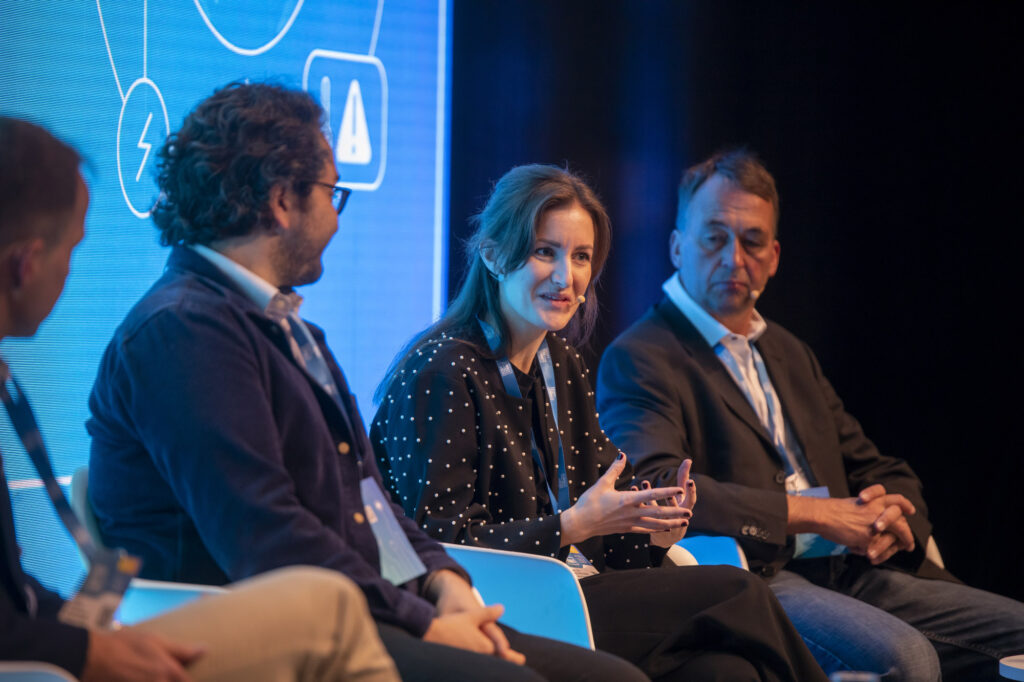
Panel featuring: Kobi Weinberg, Senior Manager of Strategic Initiatives at CREO, Stephan Leser, Senior Underwriter at Green Tech Solutions Team, Munich Re, Tyler Christie, Managing Director at Decarbonization Partners, Matilda Elfving Hauan, Director of Altor Equity Partners and Dr. Amaya López-Durán Viani, Head of Industry Observatory at BBVA.
Is there enough risk capacity for climate?
Asked whether there is enough climate-focused risk capacity, Weinberg was blunt: “there’s probably not enough risk capacity today.” Large reinsurers such as Munich Re help, but the market remains constrained.
Much capital flows into equity and debt, but far less into the middle layers, such as risk transfer and EPC contracting. That gap is also a big opportunity.
He shared an example from his time at Nephila. In the early days of wind, banks asked a simple question: “how do we know the wind is going to blow for the next 30 years?” Nephila created a revenue swap. If a wind farm earned less than an agreed level, Nephila paid out. If it earned more, it shared in the upside. More capital and expertise are needed to create products like that for new climate technologies.
How portfolio companies use insurance today
Christie said his portfolio companies mainly explore ways to manage supply chain risk, such as volatile or rising input costs. So far, that is often handled through structured contracts rather than insurance.
For novel technologies, government support can help unlock other capital. At the time, Christie pointed to Monolith, which makes carbon black, and a large loan it expected through the US Department of Energy’s Loan Programs Office. Government-backed debt can de-risk a company’s whole capital stack and crowd in other risk products.
At Altor, every investment includes “insurance DD” – an insurance due diligence process carried out before investing. It shows which risks are covered and where the gaps are, so the firm can close them as part of its value creation plan.
Leser added that insurers have deep experience across industries. Munich Re, for example, is “technology agnostic” and can tailor solutions to almost any exposure.
Policy is speeding things up
Looking ahead, Leser sees regulation as a major driver. National and international policies are pushing more projects into the pipeline. As awareness grows, he sees more business opportunities and stronger government support, which he called a very positive development.
How founders can make risks insurable
Finally, Weinberg offered practical advice for startups. From day one, founders should identify their biggest risk and “start collecting projected versus actual data” for it.
If you expect to produce 100 tons but produce 95, track that gap and refine your model. Over time, that record shows underwriters and banks that you understand your project. Indeed, “the longer the data feed that you have to do that the easier it is for a lot of underwriters to actually price that risk,” he said. The same applies to construction timelines, financing needs and output.
One message for founders
Each panelist closed with a final message. Leser kept it simple: “if you have a problem just come to us.” Elfving Hauan reminded founders that investors weigh risk against reward and will support companies to reach a profile that works.
Weinberg stressed that speed shouldn’t come at the expense of risk management, which is what makes returns profitable and repeatable. Christie warned that “your biggest risk is to run out of capital.” Founders should “raise enough capital to have the time to figure it out,” he said, rather than hitting a wall and facing a down round.
Takeaway
First-of-a-kind climate projects are stuck between equity investors who accept risk and lenders who won’t. Insurance and hedging products can bridge that gap by moving technology, performance and revenue risk to players with the balance sheet to carry it.
However, the market still lacks capacity and specialist expertise. Founders who collect performance data early and plan for risk from day one will be best placed to use these tools as they grow.
Secure your pass
Want to meet the investors, insurers and founders financing the energy transition? Join us at Energy Tech Summit Europe 2027, the 8th edition, on 7–8 April in Bilbao, Spain.
Passes cost €1,399 until 30 November, then €1,599 from 1 December, €1,799 from 1 February 2027 and €1,999 from 1 March 2027.
Founders can join with the Founder’s Pass for €699. Use code ETS100 for €100 off.