
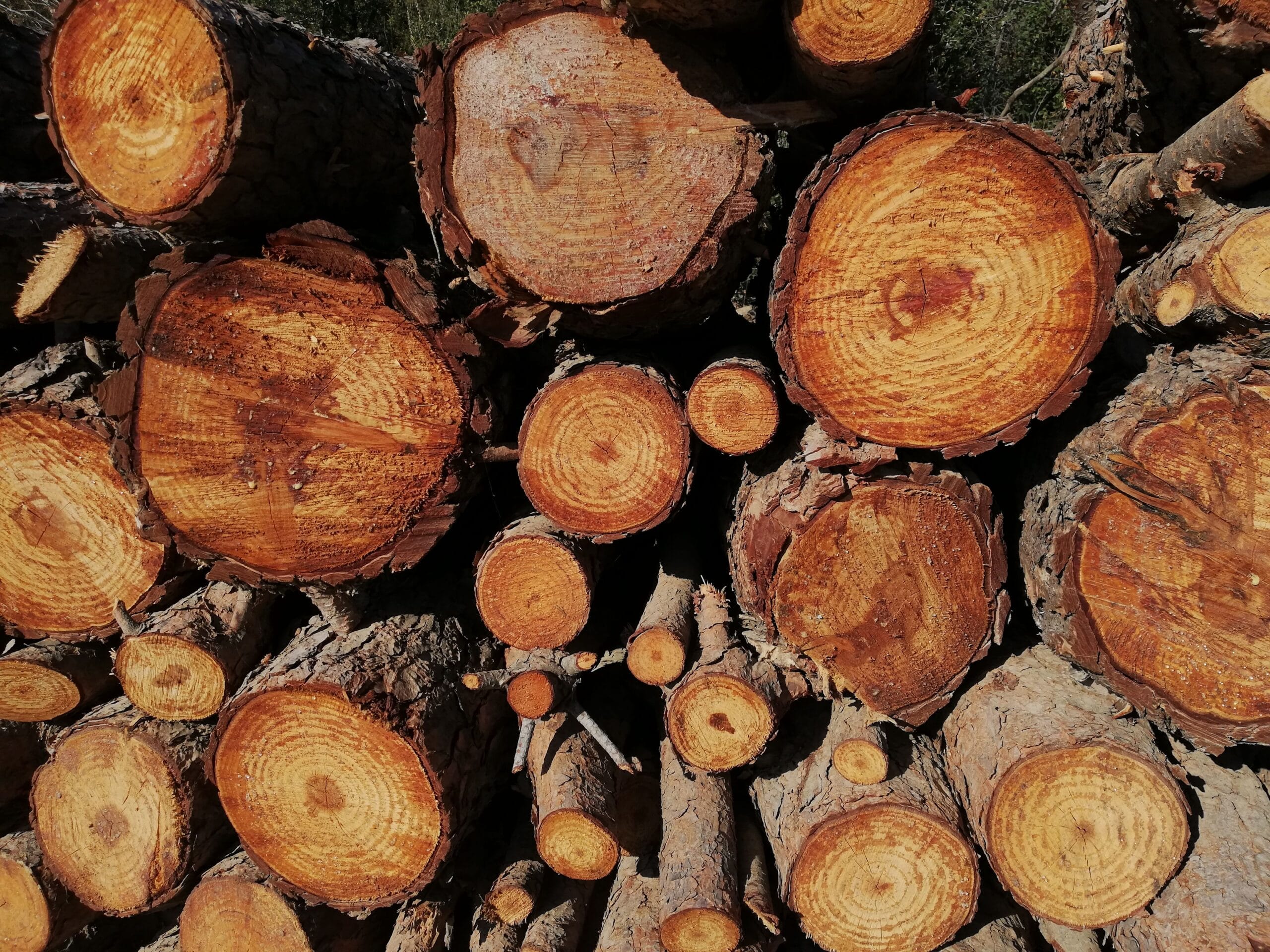
Cellulose is the beams, lignin is the cement. We have spent two millennia valorizing one and burning the other.
Michael Boot, Founder and co-CEO of Vertoro, opened by asking how many people in the room had never heard of lignin before that moment. A great many hands went up. Therefore he began, as he put it, with some evolutionary biology, so that nobody would be caught out by the question again.
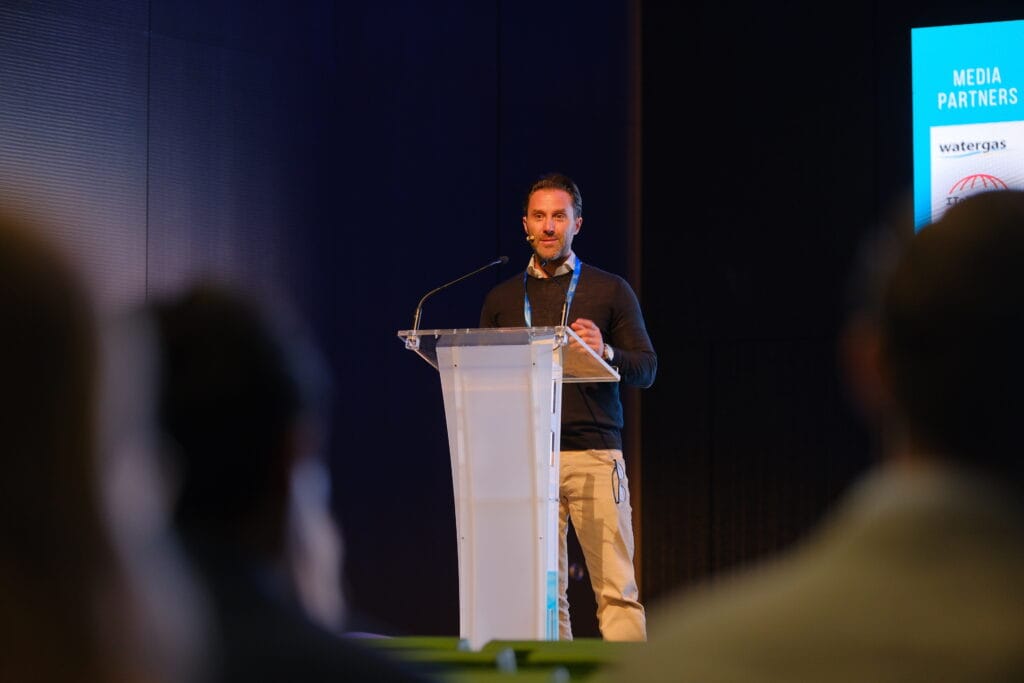
Keynote by Michael Boot, Founder and co-CEO of Vertoro delivered at Energy Tech Summit 2026.
Why lignin exists at all
Compare aquatic biomass such as seaweed with terrestrial biomass such as trees, and the main compositional difference between them is lignin. So why did it evolve?
When the first seaweeds ventured onto land millions of years ago, they met an entirely new set of evolutionary pressures: oxygen, gravity, UV radiation, fire and microbes. Cellulose, the main structural component of seaweed, was completely unprotected against all of them.
Consequently, nature evolved lignin as a protective shield. However, it does more than protect. It also works as a scaffolding mechanism, allowing plants to grow upward and compete for sunlight.
The comparison Boot uses is reinforced concrete. Cellulose forms the beams, while lignin acts as the cement holding the structure together.
That structural role explains the waste. For roughly 2,000 years, industry has valorized the cellulose into paper while dumping the lignin into rivers or burning it in boilers.
The square peg problem
Boot then set up the central engineering challenge, and he explained it the way he explains it to his children.
Consider agricultural and forestry residues on one side. On the other, consider the trillions already invested in fossil-world legacy assets, plus every ship and every aircraft in operation. Getting the first into the second is a fundamental problem, because it amounts to squeezing a square peg into a round hole.
The reason is physical rather than economic. Biomass is a solid, whereas everything entering existing fossil infrastructure, and everything going into a jet or a ship as fuel, is a liquid.
There are two ways to solve that. First, you can force the square block through the round hole – the approach Boot took as a toddler – which works, yet irredeemably damages the square. Alternatively, and this is Vertoro’s approach, you can do it reversibly: take solid biomass, turn it into a liquid, then return it to a solid state for applications beyond fuel.
The coffee machine
The route to that reversible process came from an unlikely source: the coffee bean. Turning a coffee bean into a liquid has been at full technology readiness for several hundred years already. You cook it in a solvent, part of the bean solubilizes, and the resulting blend is coffee.
Biomass demands adjustments, naturally. A tree is not a coffee bean, and neither is corn stover, so water will not serve as the solvent. Instead, Vertoro uses alcohols – methanol or ethanol. Likewise, the 90 degrees that works for coffee is insufficient, so the process runs at slightly elevated temperatures, around 180.
Beyond that, Boot said, there is not much more to it. He showed the company’s patent families specifically to make a point about innovation: something does not have to be needlessly complex or sophisticated to be genuinely innovative, and patentable.
Put a tree into that coffee machine and cook it in alcohol, and the lignin fraction dissolves into the alcohol. What emerges is an alcohol-lignin blend – the coffee. Meanwhile, what remains in the waste compartment is cellulose, for which the world has no shortage of established uses.
Selling coffee to companies that already bought water
Looking for markets for what Boot called a strange beast, Vertoro turned first to industries that had already pivoted away from heavy petroleum products toward alcohols.
Shipping was the obvious candidate. Numerous shipping companies have each invested billions in vessels capable of sailing on methanol or ethanol.
Oil companies followed a similar path, examining ethanol as a feedstock for refinery co-processing to make ethylene, which then goes into sustainable aviation fuel or plastics.
The pitch to both groups is neatly framed: if you like water, you will love our coffee. Adding lignin alongside the alcohol brings performance benefits rather than complications.
For engines, that means better ignitability and higher energy density. For oil refiners, the difference is in the output. Feed in alcohol alone and you get ethylene. Feed in alcohol plus lignin and you get ethylene plus valuable aromatics, including some in the jet fuel range.
Instant coffee, and a product that is two things at once
The reversibility Boot promised at the start comes from an equally familiar process. Making instant coffee has also been at full technology readiness for about a century, and it happens whenever you leave a cup on your desk. It is simply evaporation.
Vertoro does the same thing. Evaporate the alcohol out of the lignin blend, and what remains is a highly purified form of lignin – which brings back everything the opening biology lesson established. Lignin is an antioxidant. It is a UV blocker. It is an antimicrobial agent, and a natural resin, among other things.
For that purified product, branded Goldilocks, the company is developing applications as diverse as engineering plastics and personal care.
Boot explained the appeal through childhood preferences. His favourite toys were things that were two things at once, and his favourite clothes were reversible. Similarly, this product is the only fuel on the market that is also an antioxidant, and simultaneously the only engineering plastic that is also a fuel. That childhood taste for dual-purpose objects, he noted, has become a genuine business model.
ETS2026 audience listening to Michael Boot’s keynote on Vertoro.
Where the company is going
Vertoro was closing the first tranche of its B round within weeks of the keynote, with a second close under consideration for select investors.
After that comes the capital-intensive stage. In 18 to 24 months, the company expects to raise again for the capex investment behind a first-of-a-kind plant.
Takeaway
The strength of this keynote was how little it asked the audience to accept. No new chemistry, no exotic equipment – just cooking biomass in alcohol at moderate temperature, then evaporating the alcohol back off. Because the process is reversible, the same feedstock serves two entirely separate markets: a liquid that drops into methanol-ready ships and refineries, and a purified solid that competes in plastics and personal care. Lignin has been treated as a disposal problem for two thousand years, and the argument here is that it was never waste. It was simply the fraction nobody had found a use for.
The keynote stage returns at Energy Tech Summit 2027 in Bilbao, April 7–8.