
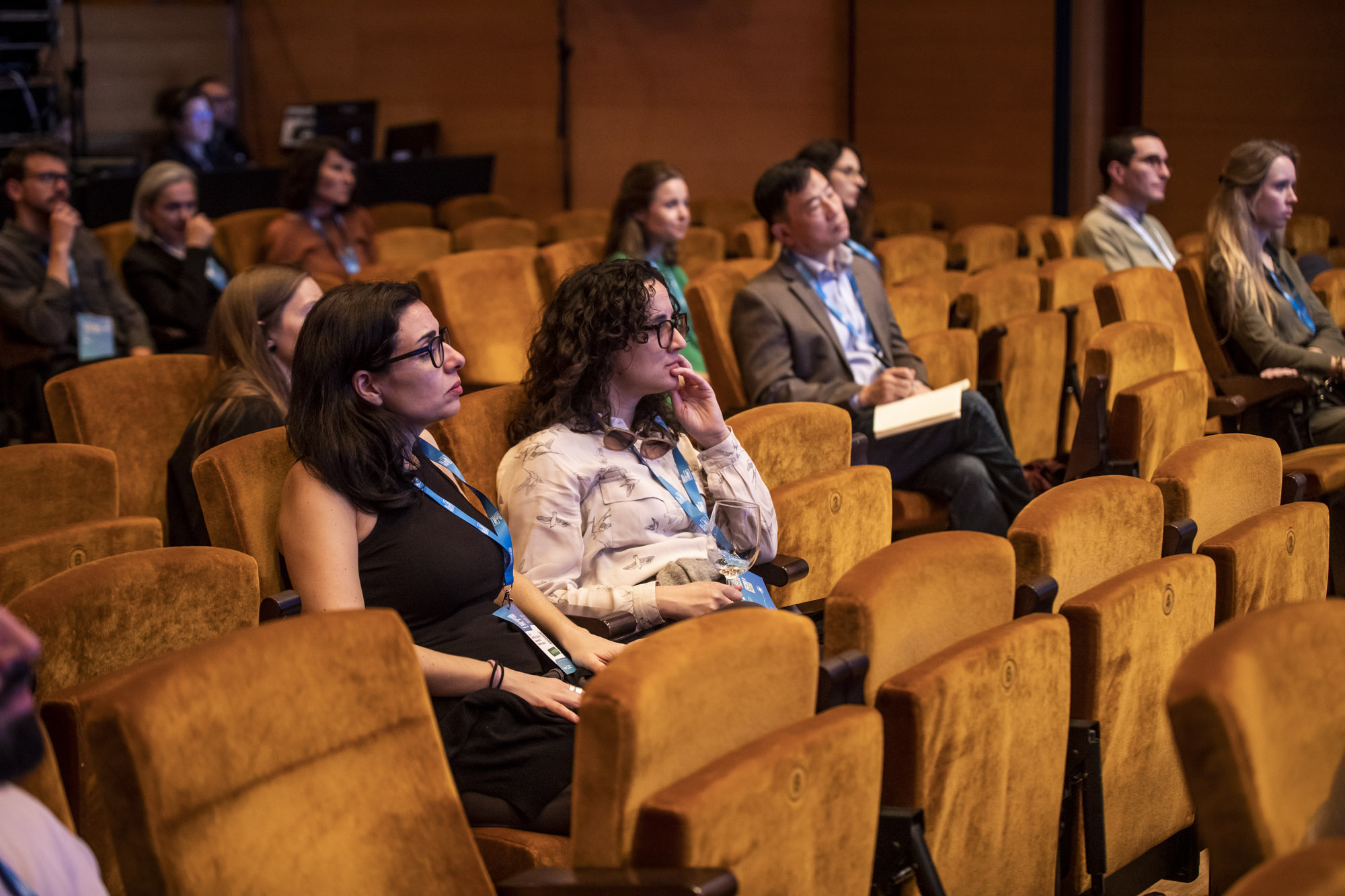
Three energy tech investors and one founder shared what has actually worked in scaling startups, and what has held them back.
What separates an energy tech startup that scales from one that stalls? At Energy Tech Summit, a panel looked past the textbook answers to the startup growth strategies they have seen succeed and fail.
Christian Adelsberger, Founder and CEO of Necture, moderated the discussion. He was joined by Franz Zöchbauer, Managing Director of VERBUND X Ventures, Terhi Vapola, Founder and Managing Partner of Greencode Ventures, and Lars Hennersdorf, Investment Manager at the Smart Energy Innovation Fund of Energie 360°.
Together, the four covered both sides of the table: a startup, a corporate VC, an independent VC and a utility-backed fund.
Speed, service and the “marriage” strategy
Zöchbauer opened with two growth strategies that had caught his attention. The first he called “service and speed.” It describes a digital platform that gives customers immediate value and can be deployed anywhere in the world within weeks.
That speed convinced VERBUND X Ventures to invest. In fact, the company he described was Necture itself, the moderator’s own startup.
His second example drew on European history. The Habsburg monarchy, he noted, expanded through marriages rather than wars. Similarly, he had seen two wind turbine monitoring companies merge, one with a low-cost entry product and one with a high-end offering.
As a result, the combined company could take customers on a full journey. The cheap product comes first, “so that the customer can fall in love and then get addicted to it and then have a long-term relationship.”
Startup growth strategies start with product–market fit
Vapola cautioned against easy formulas. “There is no one growth strategy which would work for everybody,” she said. Instead, the right path depends on the industry, the company and its goals.
Still, the basics apply everywhere. “In order to scale you need to have a very good product market fit,” she explained. A startup should refine its product in a home market or a specific segment first, because “only then it makes sense to start scaling.”
After that, focus becomes everything. Startups have limited resources, so they need to choose between going deep in one large market, moving into adjacent markets, expanding into new geographies or growing through partnerships.
To illustrate, Vapola pointed to Finnish EV charging platform Virta, a company from her previous portfolio. What really changed its trajectory was focus. Trying to do too many things at once is expensive and spreads resources thin, she said.
Above all, she stressed execution. Hiring the very best people, especially in sales, and listening closely to customers made the difference. In her words, “it is all those little things which matter.”
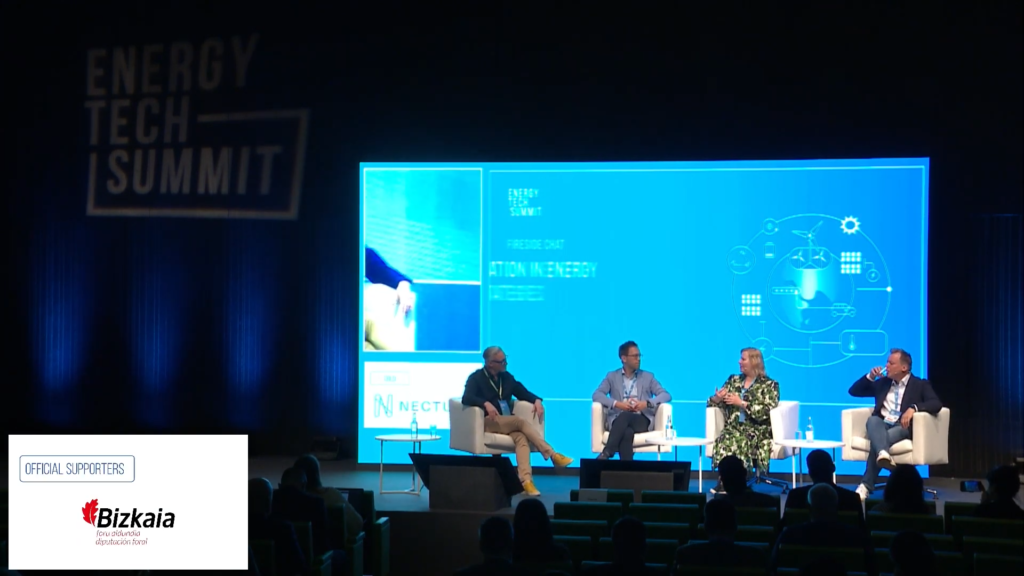
Panel discussion featuring Franz Zöchbauer, Managing Director at VERBUND X Ventures, Christian Adelsberger, Founder & CEO of NECTURE, Terhi Johanna Vapola, Founder & Managing Partner at Greencode Ventures, Lars Hennersdorf, Investment Manager at Smart Energy Innovations Fund.
Founder focus and open boardrooms
Hennersdorf agreed that focus is often where young startups struggle. Markets keep changing, driven by many external factors. Therefore, a founding team that keeps its attention on the business model stands out.
He also highlighted the relationship between founders and investors. Boards meet many times a year, and those sessions work best when there is real material for discussion.
Both sides need to be open. Investors should be able to give advice and input, even though “in the end the founder is the expert in his business.” For Hennersdorf, collaboration and trust in the founding team matter most, ideally established before challenges arrive.
A founder’s honest lesson: scaling too early
Adelsberger then shared Necture’s own story. The company began by working with car-sharing operators around the world, optimizing where their vehicles were positioned to meet demand. As more electric vehicles joined those fleets, Necture learned the challenges large fleets face in the EV transition, and it has since extended its work to business fleets.
Its growth strategy was something the team “stumbled upon.” Notably, “the very first customer that we won was in Seattle,” roughly 10,000 kilometers away from what was then a ten-person company. Investors warned against it, but the distance forced Necture to build and deploy its product fully digitally.
Because the team had no local knowledge, it also relied on more data sources than usual. Eventually, that became “a blueprint to rolling out pretty much wherever in the world.” Today, Adelsberger sees that flexibility as a major competitive advantage.
He was equally candid about a mistake. “I decided to scale way too early,” he admitted. “We truly believed we had product market fit and the team was so confident about it,” but “we ignored a lot of signals.”
For that reason, he values investors who can deliver uncomfortable truths. Founders need “a trustworthy relationship to enable hard feedback,” he said, as well as the openness to take that feedback on board.
The hidden obstacles to scale
Asked about other barriers, Zöchbauer pointed to an unexpected one: too much success with a single customer. A high concentration rate looks good on paper. However, if that customer changes course, the startup suddenly faces serious risk.
Adelsberger recognized the pattern. “I’ve seen a lot of companies with great product turn into project companies,” he said. By following one big customer too closely, those companies lost the ability to scale.
Vapola added the challenge of long industrial sales cycles. Her advice was to build a clear playbook and “work on long game and short game at the same time.” In other words, startups can serve large strategic customers while also selling to segments that convert faster.
Meanwhile, Hennersdorf returned to sales. Across his portfolio, he often sees startups lose focus on the sales side. Without strong salespeople, even a proven product struggles to grow, and finding the right talent is very difficult.
What investors really bring to the table
Finally, the panel turned to what investors contribute beyond capital. Zöchbauer said VERBUND X Ventures had asked its portfolio companies exactly that question. The clear answer was “opening doors.” As a large corporate, VERBUND can easily connect startups with people and organizations, and it can share the energy expertise of its workforce.
Vapola’s message was aimed at founders: be clear about what you need. Investors have different strengths, so startups should know which areas they want support in.
She gave the example of Supercritical, the first investment in Greencode’s fund. The carbon removal company already had Lightspeed Venture Partners as lead investor and specifically wanted a climate tech fund that understood carbon removal technology and its regulation. Her advice: “know what you want then you can find what you need.”
Hennersdorf offered a corporate investor’s perspective. The Smart Energy Innovation Fund invests partly to learn from startups, but integrating a startup’s solution into its own organization takes time and internal buy-in.
That creates a tension. Investors ask startups to stay focused, yet internal integration can pull them away from their core business. As Hennersdorf put it, “it’s a balance between doing the right things,” and one that will require more learning in the future.
Takeaway
The panel agreed that growth rarely comes from one big strategic move. Instead, it comes from real product–market fit, ruthless focus and strong execution, especially in sales.
Equally important is the relationship between founders and investors. Trust makes hard feedback possible, and clear expectations help startups find investors who can open the right doors.
Secure your pass
Want to hear founders and investors share lessons like these in person? Join us at Energy Tech Summit Europe 2027, the 8th edition, on 7–8 April in Bilbao, Spain.
Passes cost €1,399 until 30 November, then €1,599 from 1 December, €1,799 from 1 February 2027 and €1,999 from 1 March 2027.
Founders can join with the Founder’s Pass for €699. Use code ETS100 for €100 off.