

Green Energy Origin wants to make the chemistry inside every battery cell close to where cells are built – and it’s moving at a speed few western chemical players can match.
Cathodes get most of the attention in battery debates. Yet every cell also depends on battery electrolyte, the liquid that carries charge between the electrodes. On the Energy Tech Summit stage, Martin Saewe, President of GEO Europe at Green Energy Origin, explained why his company is betting on this less visible component. In short, the goal is a battery chemistry platform for growth across North America and Europe.
Where battery electrolyte sits in the cell
Venture capital founded the company together with people from the battery industry. Their starting question was how to bring proven technology into western markets. As a result, GEO began with electrolyte manufacturing rather than cathodes.
Saewe placed that choice inside the cell itself. Four key materials go into every cell, whatever the application: cathode, anode, electrolyte and separator. Alongside electrolyte, GEO also makes additives that improve conductivity in anode and cathode materials.
The electrolyte itself has three parts. First, carbonate solvents make up to 80% of it. They are a commodity, so producers need scale, cheap raw materials and low energy costs. Notably, some processes can even use CO2 as the carbon source. Second, lithium salts such as LiPF6 and LiFSI carry the charge from one side of the cell to the other. Making them requires hazardous inputs like hydrofluoric acid, which nobody wants to ship over long distances. Third, additives are where most development still happens.
Chemistry that changes every few months
Additives matter because battery technology keeps moving. Faster charging and higher capacity now arrive through lithium iron phosphate (LFP) cells, which many people treat as settled. Saewe disagreed: “LFP is like a commodity in itself but it’s changing basically every couple of months”. Consequently, “you always have to adapt the electrolyte to the new demands”.
That pace explains GEO’s investment in testing. To develop new chemistry, the team builds batteries and cycles them under low and high temperatures, as well as fast and slow charging. Each test needs its own testing channel, plus plenty of energy, people and know-how. GEO already runs around 6,000 testing channels and plans to expand that number significantly.
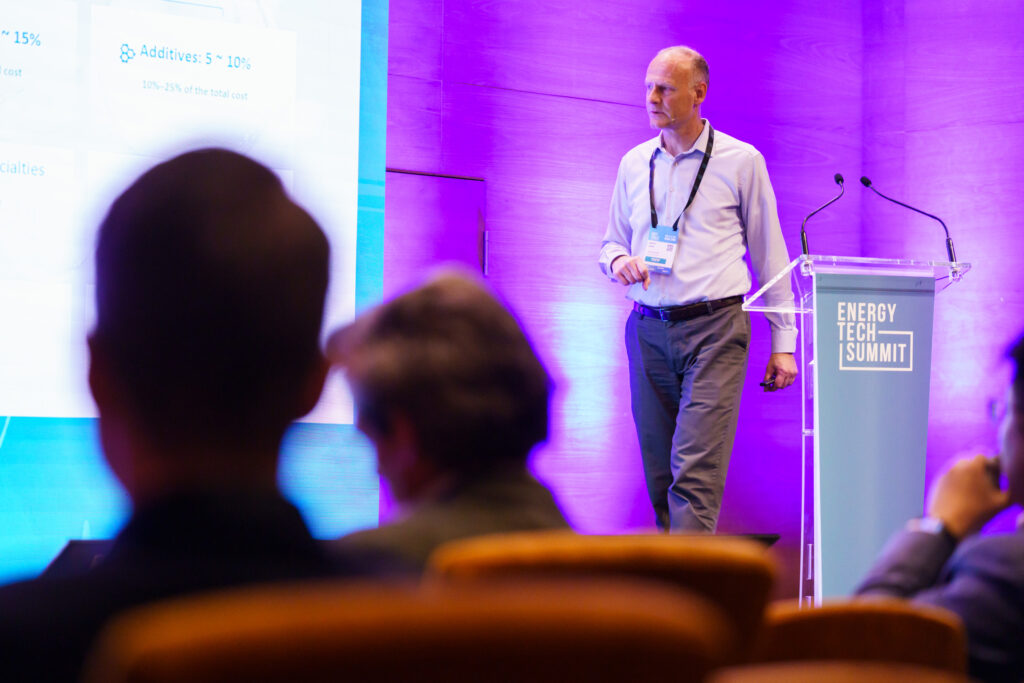
Martin Saewe, President of GEO Europe of Green Energy Origin
The company’s R&D center sits in China for a clear reason. In Saewe’s words: “Because there’s where all the knowhow is sitting in the chemistry of those batteries.” The center is located in Liyang, Jiangsu province, close to Shanghai.
Speed as a competitive edge
Saewe spent more than 20 years at a German chemical company that had considered building its own electrolyte plant. Detailed planning pointed to two to three years overall. By contrast, GEO built its facility in the Czech Republic in just over 12 months. The Czech gigafactory has a capacity of 200 kilotons of electrolyte.
Location played its part too. The Czech site sits roughly halfway between Hungary’s battery hub and the battery cluster around Berlin. Poland lies to the north, home to a major LG battery operation. According to Saewe, it hosts the largest battery capacity in Europe.
Proximity is also a technical requirement. Electrolyte isn’t especially stable before filling, since it contains chemistry designed to react during the battery’s formation cycle. Therefore, production needs to sit near cell manufacturing.
Automation runs through the whole plant. A manufacturing operations management (MOM) system sits above every process and collects data from inline quality measurements, loading and unloading. Meanwhile, sensors track pressure and temperature in the isotanks around the clock.
From electrolyte to a full chemical ecosystem
GEO’s core products are electrolyte and additives for cathode and anode. However, the vision reaches further upstream, into solvents and lithium salts. “We are just implementing one project after the other in the right location with the right people with the right process,” Saewe said.
The roadmap follows that logic. GEO is seeking funding for a 100-kiloton electrolyte gigafactory in Texas and a second Czech phase focused on anode and cathode additives. The company also plans a low-carbon chemical park in Spain, producing electrolyte and, later, cathode active material. Ultimately, the aim is a complete battery chemistry ecosystem for the western hemisphere.
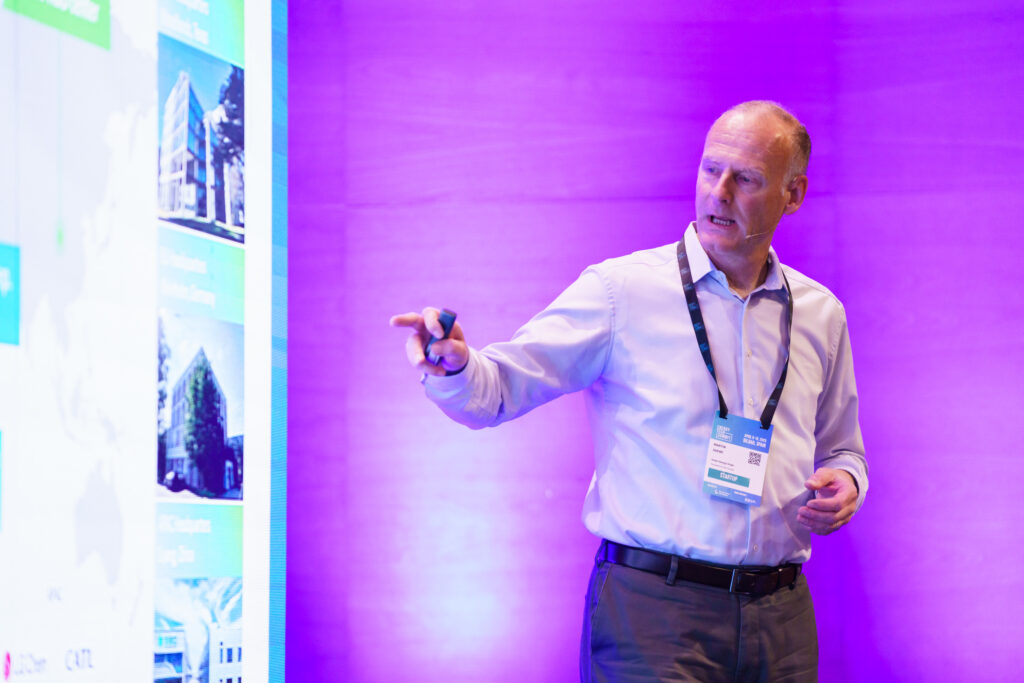
Martin Saewe, President of GEO Europe of Green Energy Origin
Takeaway
Western battery ambitions often focus on cells and cathodes. Saewe’s keynote made the case that battery electrolyte deserves equal attention. Because the chemistry evolves fast, reacts easily and relies on hazardous inputs, it has to be made close to cell production. For that reason, speed, automation and local R&D may decide who builds the western battery supply chain.
Secure your pass
Want to meet the companies building the energy transition’s supply chains? Join founders, investors and corporates at Energy Tech Summit Europe 2027 in Bilbao, April 7–8. Founder’s Pass: €699.