
Nobody wants to buy the first one. A thermal battery company, a public bank and a scale-up programme worked out how to change the question being asked.
First-of-a-kind projects carry substantial risk, demand heavy investment and, by definition, lack the track record that makes private investors comfortable. That combination is why public-private finance matters in climate technology, and why one worked example is more instructive than any amount of theory.
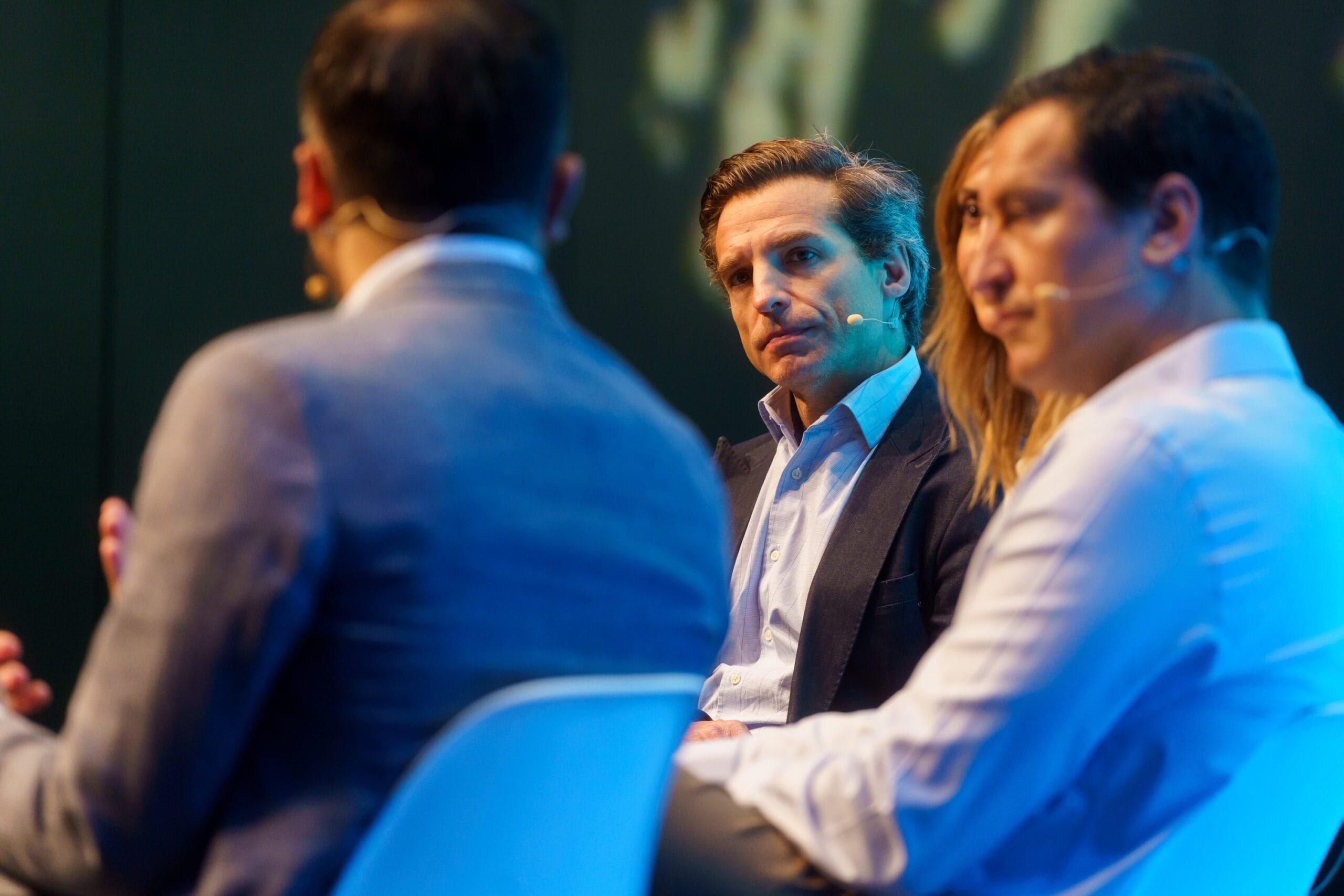
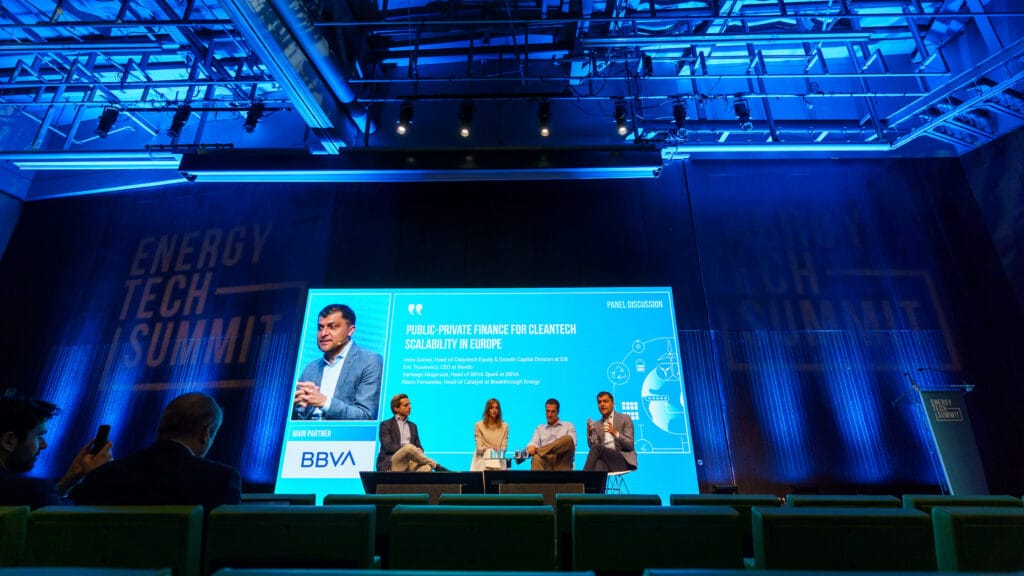
A panel at Energy Tech Summit walked through exactly such a case. Santiago Muguruza, Head of BBVA Spark at BBVA, moderated. He was joined by Irene Galvez, Head of the Cleantech Equity and Growth Capital Division at the EIB; Mario Fernandez, Head of Catalyst at Breakthrough Energy; and Eric Trusiewicz, CEO of Rondo.
What Catalyst looks for
Breakthrough Energy spans discovery, development and deployment. Catalyst is the last of those, handling scale-up and deployment, and Fernandez was clear about the moment it enters.
Once the science is proven through a pilot or lab work, it has to scale quickly, and the capital for that jump is genuinely hard to find. Whether a company is moving from pilot to a demonstration project an order of magnitude larger, or from there to a first commercial plant, the sums involved are substantial.
Catalyst identifies companies at the cusp of that transition and partners with them. Fernandez stressed that the contribution is not only capital. It is the expertise to reach a commercialisation model, and to answer how a company will design, engineer, build and operate at scale. The question his team asks is deceptively simple: can this company, and this CEO, actually scale up?
Mario Fernandez, Head of Catalyst at Breakthrough Energy speaking in the panel discussion
What the EIB brings to the table
Galvez set out the bank’s position. The EIB is the bank of the European Union, owned by its member states, supporting projects across the EU, Norway and Iceland. Being policy-driven puts innovation and breakthrough technologies at the core of its mandate.
Within a very large institution sits a programme developed with the European Commission for close to a decade, focused on venture debt. For cleantech, it engages with technologies at technology readiness level six and above, with the explicit intention of carrying them through to commercialisation.
Muguruza pressed on sequencing, and the answer matters for founders. EIB venture debt complements equity rounds rather than replacing them, and the aim is to crowd private investment in rather than crowd it out. Because it is not a fund structure, the bank does not need to enter alongside a specific round or exit at the next one. It can stay patient until a company reaches particular milestones.
The technology underneath the deal
Trusiewicz described a problem larger than most people assume. Industrial heat accounts for roughly a quarter of global CO2 emissions, and almost everywhere in the world it is produced by burning fossil fuels on site to make steam or process heat.
Rondo electrifies those processes. Renewable electricity is now cheaper than fossil fuels in many places, but it is intermittent, while large-scale industrial processes run continuously. Rondo is a thermal battery that absorbs renewable electricity, whether from the grid or on site, and delivers base load heat to industrial processes.
The engineering choice was deliberately unexotic. Rather than novel materials, the company built on a refractory approach drawn from the steel industry, effectively an electrified Cowper stove, using a design already proven at global scale. That is what allows Rondo to claim the fastest-scaling and lowest-cost position in its category.
Where scaling actually stalled
Asked about the hardest part of scaling, Trusiewicz separated it into phases. Building a product that works came first, achievable at small scale with Series A backing and validated by an independent engineer’s report. Finding a configuration customers actually wanted came second, and generated real traction.
The third phase was the wall. Financing large-scale energy infrastructure is a different discipline entirely. Even substantial equity raises cannot fund infrastructure without diluting shareholders into financing assets rather than building a business. Non-dilutive capital partners were therefore not optional.
There was a market problem underneath the financing one. Rondo had focused on Europe for a period before the partnership without gaining traction, because it had no offering that took risk off the final customer.
Steam as a service: the commercial unlock
Fernandez identified the real blockage, and it was commercial rather than technical. Rondo had an excellent technological product that customers had not yet recognised as a commercial product.
The pattern is familiar across the sector. Conversations go well, everyone is interested, and very few counterparties will take the leap of actually buying. The change was to move Rondo from a capex model to an opex one, and deploy in Europe first through the joint venture.
They called it steam as a service. Instead of asking a customer to buy a large piece of energy infrastructure they could not see operating anywhere in the world, and pay upfront, Rondo could offer to install it, let the customer watch it work, and bill monthly over fifteen or twenty years for something the customer needed regardless.
Fernandez was frank about why big corporates hesitate, and it is not institutional. The person evaluating a new technology has a long career at that company, and buying something unproven is a personal risk. If it goes wrong, the question becomes why they did not simply buy the proven option. Unlocking that requires changing what is being asked of them.
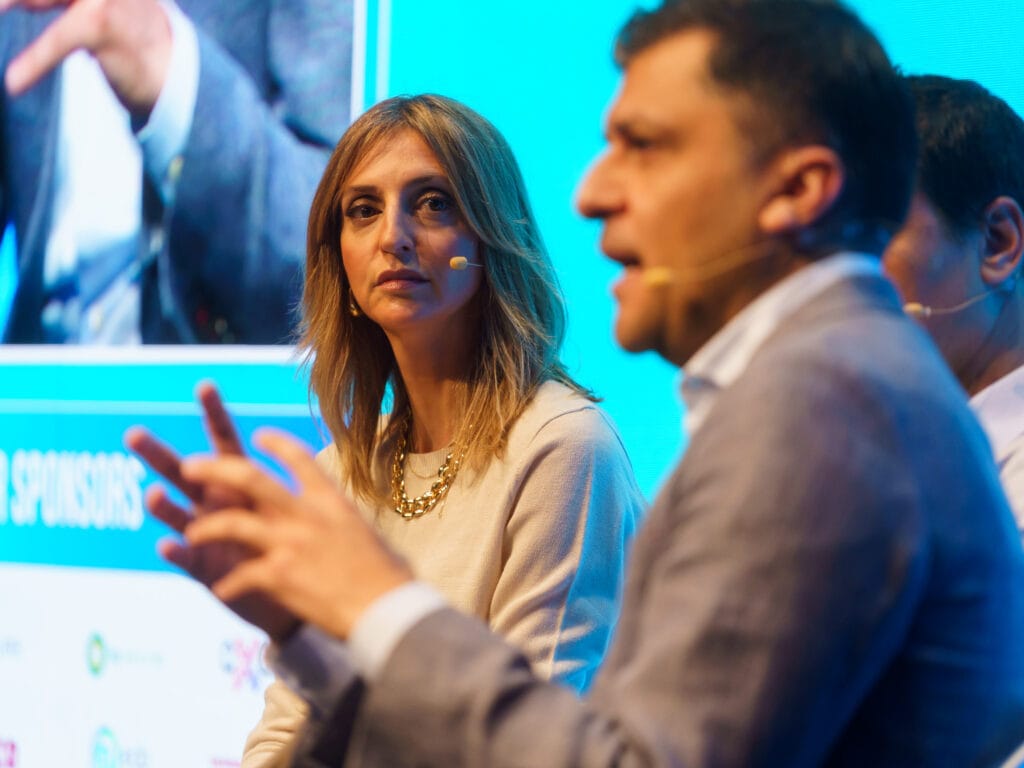
Irene Galvez, Head of Cleantech Equity & Growth Capital Division at EIB
Designing a contract a bank can lend against
The partnership’s durable output was not the money. It was a long-term contract structured to be bankable, containing the features a project finance banker or infrastructure investor looks for, and notably not placing all the risk on a small startup.
Galvez described the complementary division of labour. The EIB performs due diligence on the company as a whole, examining the business plan across the coming years at parent company level with the objective of bringing a technology to market. Catalyst focuses on making the projects themselves bankable and preparing them for infrastructure investors and project finance lenders. The shared goal is to structure a first project that works as a blueprint for the next ones.
Muguruza, speaking from the commercial banking side, named the obstacle plainly. In this space pricing and demand carry deep uncertainty, offtakers are often absent, and market pricing is uncharted for genuinely novel technologies. Preparing the ground so banks can come in sooner rather than later is, from his perspective, the point of the whole exercise.
Building for the money that comes next
Catalyst’s second focus was structural. The team set Rondo up not merely to complete its first few projects, but for platform growth, because large infrastructure investors typically will not engage below very substantial cheque sizes.
Fernandez pointed to precedent from the same playbook, including work with Infinium in the US that brought Brookfield into a project and platform at scale. He was explicit that the Catalyst team came from infrastructure investing, which shapes what they optimise for. Plenty of excellent venture investors can pick the best technology. The question Catalyst asks is which technologies can scale quickly regardless of how impressive the science is.
Galvez added the coordination point that makes the partnership work. The European Commission and Breakthrough Energy jointly identified priority technologies including hydrogen, sustainable aviation fuel, long duration energy storage, industrial decarbonisation and direct air capture.
Her reasoning for concentration was practical. Infrastructure assets at challenged returns need granular support in the capital stack to make equity returns work for incoming investors. Just as importantly, the funds have to arrive at the same time. Scatter the provision and companies run out of cash mid-process.
What the process demanded
Trusiewicz was candid that the experience was intense, and that the intensity was worth it. The collaboration let the company grow at a rate it could not have managed alone, and enter Europe in a way it otherwise could not have.
The underwriting itself became the training. Roughly a year of demanding conversations covered not only how the projects worked, but what Rondo was doing to build the team that would construct them, how it would articulate the technology, what its long-term costs looked like and whether it would remain the most competitive option. That process taught the company exactly what an infrastructure bank would ask.
The results were concrete. Rondo now has three lighthouse projects underway across three industries in three European countries, which Trusiewicz called an enormous pathway for the company. The process also attracted external capital, including a sizeable project finance facility from an investor who reasoned that if the EIB and Catalyst were both committed, the opportunity deserved a look.
Asked from the audience about geographic exposure and trade policy, he noted that Rondo has always pursued a geographically diversified strategy across North America, Europe and a pipeline elsewhere, and that its supply chain uses fairly standard materials available from multiple sources. That flexibility provides room to respond as conditions change.
Getting commercial banks in earlier
Alberto Toril of Cleantech for Iberia asked the closing question from the audience: what do private financial actors need in order to participate?
Galvez pointed to instrument design. The EIB is developing a counter-guarantee for commercial banks, intended to unlock more affordable working capital facilities for cleantech innovators who lack the bankability to access letters of credit without posting heavy cash collateral.
Fernandez argued the constraint is knowledge rather than product. Having worked in project finance himself, his response to demands for more project finance is that most companies are years away from it. The realistic route is corporate lending. Once a company has raised substantially, a motivated bank can extend a corporate facility that is modest relative to the pipeline but sufficient to build familiarity. The bank learns how the company contracts, structures deals, handles customers and plans growth. Trying to force project finance into a stage that cannot support it is, in his view, hitting a wall unnecessarily.
Trusiewicz closed with what sits in Rondo’s own control. Interest from infrastructure investors is already substantial. What determines the outcome now is execution quality on those three projects, on budget and on time.
Key takeaway
Public-private finance did not simply make this project cheaper. It changed what the customer was being asked to buy. The capital mattered, but the durable outputs were a commercial model that removed risk from the buyer, a contract structured for lenders who had not yet arrived, and a company trained by the underwriting process itself. That is the pattern worth copying: use public capital to build the blueprint, so private capital has something recognisable to finance next time.
Secure your pass
Energy Tech Summit Europe returns to Bilbao on 7–8 April 2027, bringing together the public institutions, banks and founders financing first-of-a-kind projects.
Secure your pass and join them.