
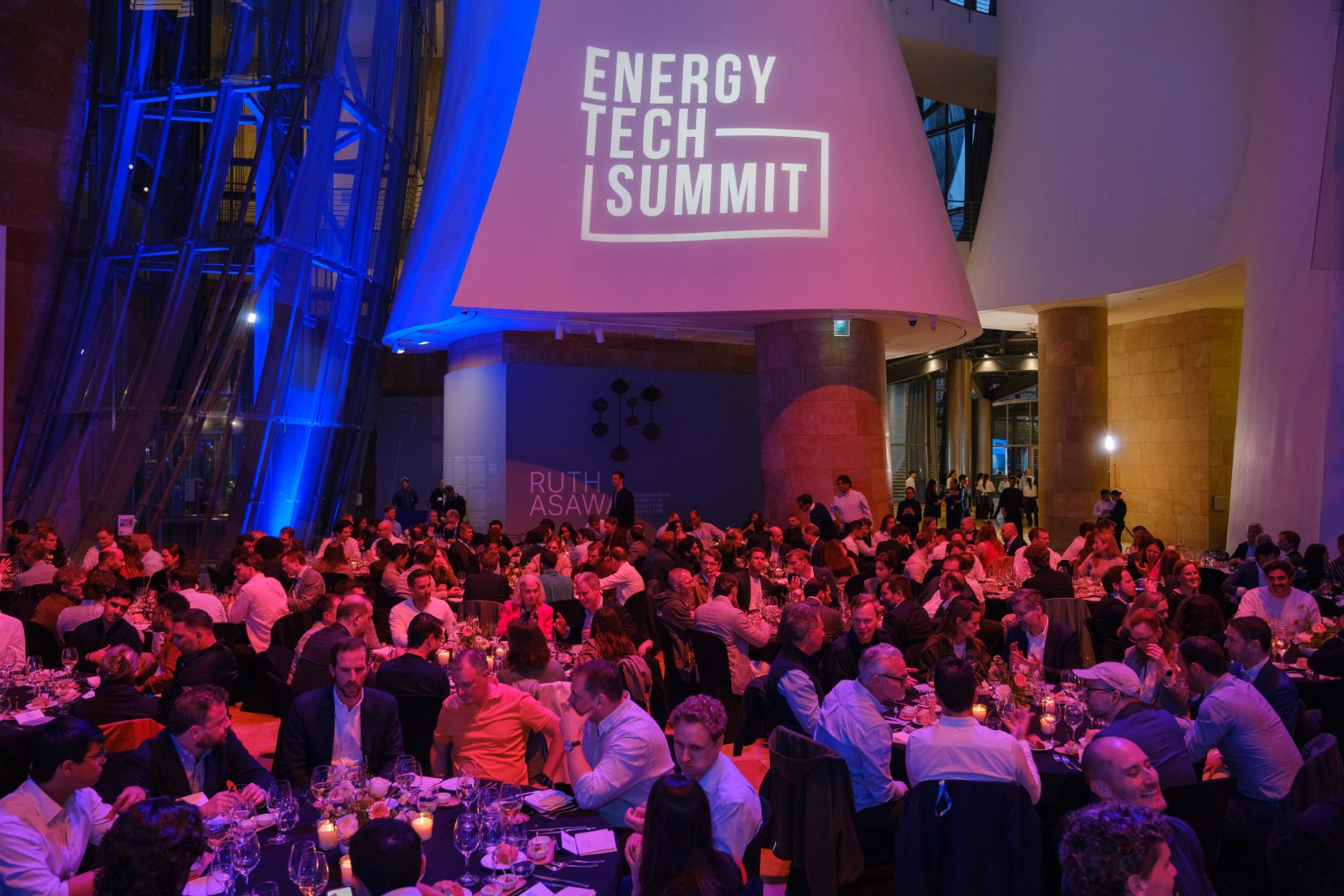
Energy Tech Summit 2026 has set a new benchmark for Europe’s leading climate tech and energy transition event. Held in Bilbao on April 15–16, the 7th edition brought together 1,400+ founders, investors, corporates, and policymakers across two days of high-impact sessions, curated networking, and deal-making. With 400+ funds, 400+ startups and scale-ups, and 250+ corporates actively sourcing POCs, running pilots, investing, and fundraising, ETS 2026 is the densest concentration of active capital and execution capacity in European energy tech. The message was sharper than any previous edition: Europe’s climate tech ecosystem has moved from promise to production.
Energy Tech Summit 2026 In Numbers
Energy Tech Summit 2026 drew participants from 51 countries across all seven continents. In total, the summit featured 130+ speakers, 41 sessions across three stages, 73 startup pitches, and more than 3,300 one-to-one meetings over two days in Bilbao, Bizkaia. The attendee breakdown reflected the event’s position at the intersection of capital and execution: 420+ VCs and CVCs, 250+ corporates, and 420+ startups and scale-ups, alongside policymakers and energy industry leaders shaping Europe’s clean energy future.
Notably, global heavyweights including Microsoft, Shell, Google Cloud, NVIDIA, and J.P. Morgan shared the floor with Europe’s most active climate tech founders and investors. Their presence signals how central the energy transition has become to the strategic agenda of the world’s largest corporations. Furthermore 80+ sponsors including ABB, BBVA, the European Investment Bank, Siemens Energy, and Aramco Ventures — reinforced the growing convergence of industrial capital and clean energy deployment at European scale.
Beyond the main stage, curated side events — including Growth Meets Capital, Growth Meets Industry, and Compute Summit— brought targeted groups together for closed-door sessions, roundtables, and structured networking. For sponsors, Energy Tech Summit 2026 represented direct access to the most active and well-capitalised segment of the European energy transition ecosystem.
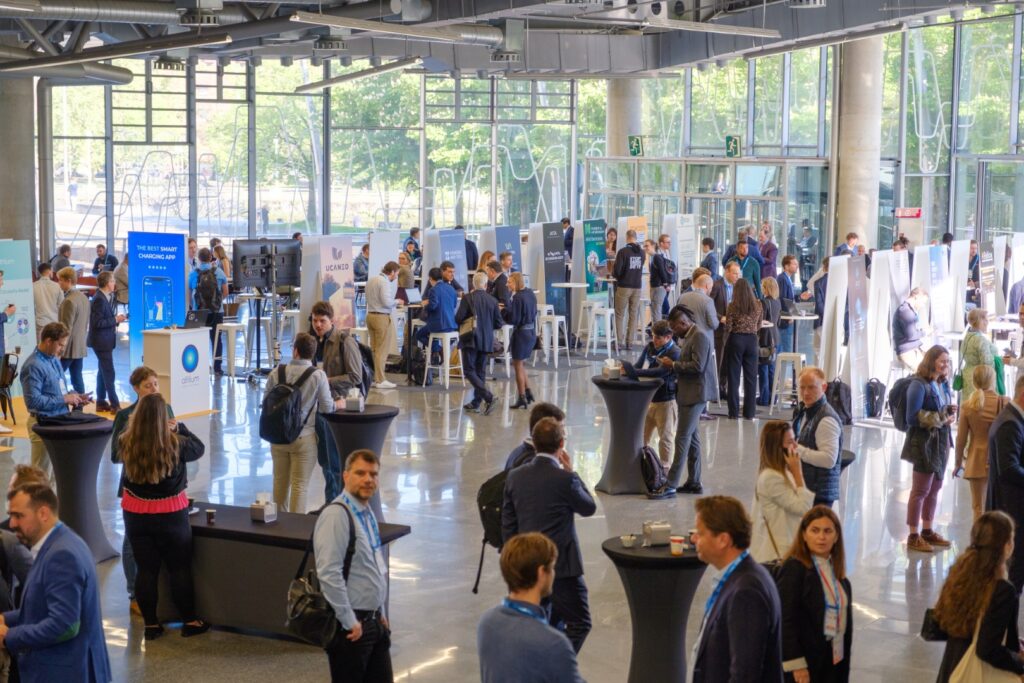
Expo booths at Energy Tech Summit
A New Hosting Model For Europe’s Leading Climate Tech Event
For the first time in ETS history, the hosting role rotated away from founding organizer Contrarian Ventures. Instead, Beebop and its CEO Jan-Willem Rombouts stepped into the role — a deliberate signal that the companies building the energy transition should stand at the center of the room celebrating it.
As Rokas Peciulaitis, Co-Founder of Energy Tech Summit, noted in his founder’s foreword: the era of debate is over. Consequently, the mandate in Bilbao was delivery — and the program, built around companies that are shipping, selling, and scaling, reflected exactly that.
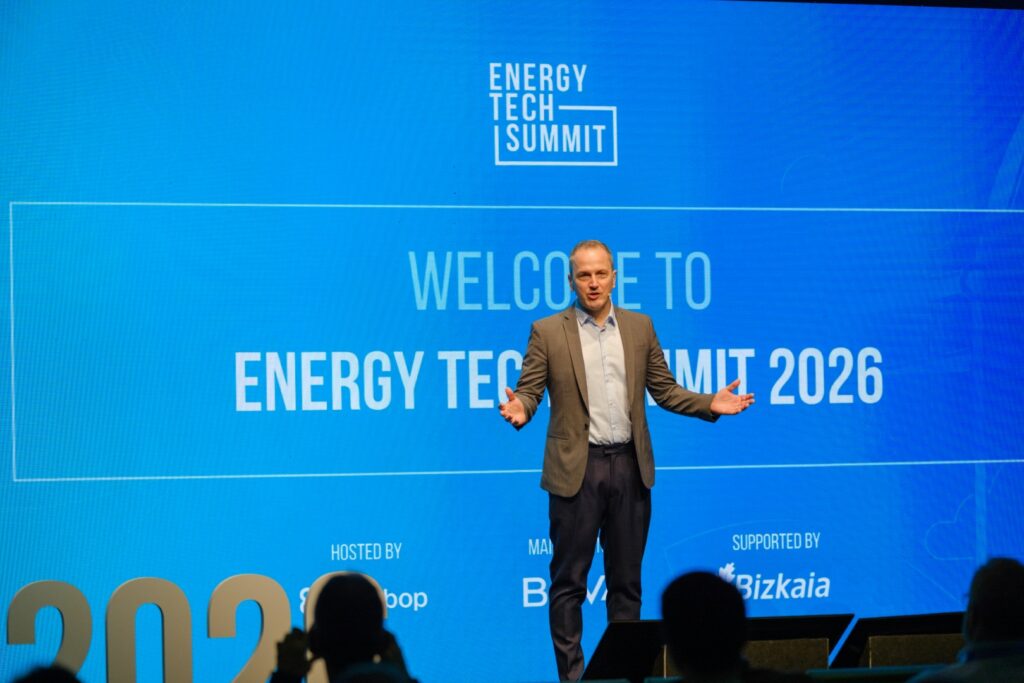
The host of Energy Tech Summit – Beebop
AI And Energy Infrastructure: One Agenda, One Stage
One of the defining features of Energy Tech Summit 2026 was the introduction of a dedicated Compute Summit stage within the main event. This brought hyperscalers, data center operators, infrastructure investors, and AI founders into the same rooms as the broader climate tech community. The decision reflected a conviction now shared across the industry: AI and the energy transition are no longer parallel tracks. They are one agenda.
The Compute Summit stage tackled the questions the industry can no longer defer. Specifically, sessions addressed how to build giga-scale AI infrastructure sustainably, how to power the next generation of data centers without compromising decarbonization goals, and how geopolitics is reshaping data center site strategy globally.
Marc O’Regan, Chief Technology Officer at Dell Technologies, set the tone in his keynote on agentic AI architecture. He argued that the physical infrastructure decisions being made today will define the AI systems of tomorrow. “We need to be careful where we place data centers,” he said — pointing to energy use and sustainability as variables that can no longer be treated as secondary.
In addition, the stage hosted Compute Challengers — a dedicated pitch competition featuring 14 startups presenting frontier solutions across energy infrastructure, green compute, and cooling systems. Finalists included AdAstra Defense, Ainwater, AlumaPower, AssetCool, Enline, Flexiramics, Grunuss, IONATE, MetOx International, Noumenal Labs, Oriole, Qilimanjaro Quantum Tech, QuiX Quantum, and Reverion. Ultimately, the winner was MetOx International, represented by President & CEO Bud Vos.
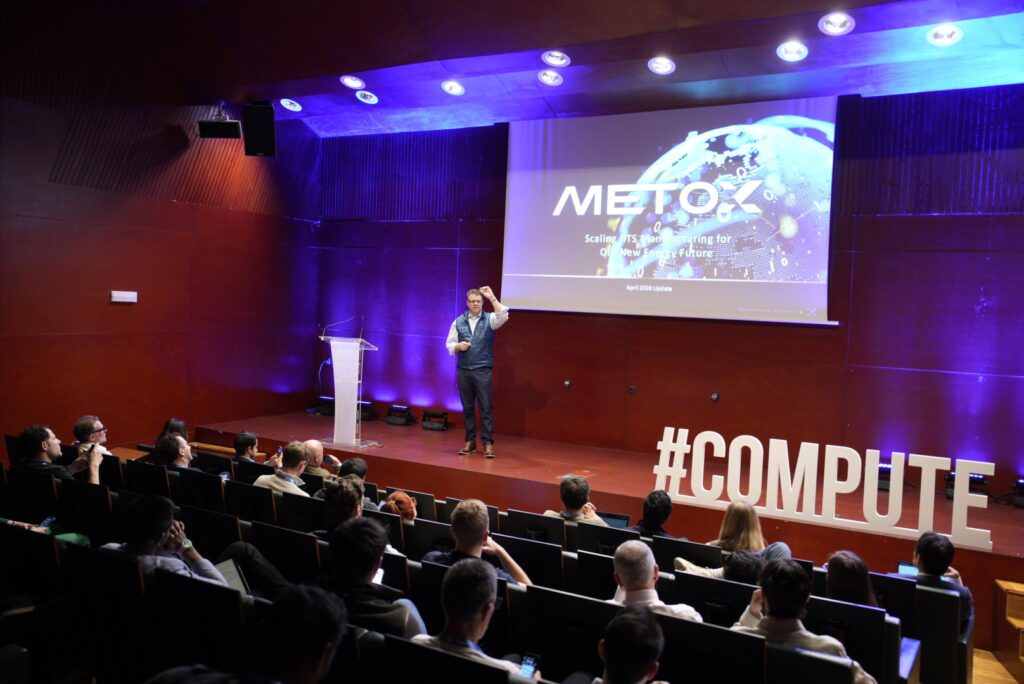
MetOx – Compute Challengers winner
Following its debut as a dedicated stage at ETS 2026, Compute Summit returns in 2027 as a fully standalone event — co-located with Energy Tech Summit 2027 in Bilbao on April 7–8, 2027.
Europe’s Cleantech Scaling Challenge: From Innovation To Deployment
The central tension running through Energy Tech Summit 2026 was not whether Europe has the technology to lead the energy transition. Rather, the urgent and unresolved question is whether European cleantech can scale fast enough to compete globally.
Christopher Frey of Sunfire captured the stakes clearly: “Cleantech success in Europe will depend less on innovation — and more on whether companies can actually scale.” Indeed, permitting delays, fragmented markets, and uneven capital deployment continue to slow the translation of Europe’s strong clean energy innovation pipeline into real industrial infrastructure.
For the energy transition investment community, Juan Diego Bernal of A&G Global Investors identified where the pressure concentrates: “Capital doesn’t move where ambition is highest — it moves where execution is fastest and most predictable.” As a result, bridging the gap between climate ambition and investable, buildable projects remains the defining challenge for European cleantech in 2026 and beyond.
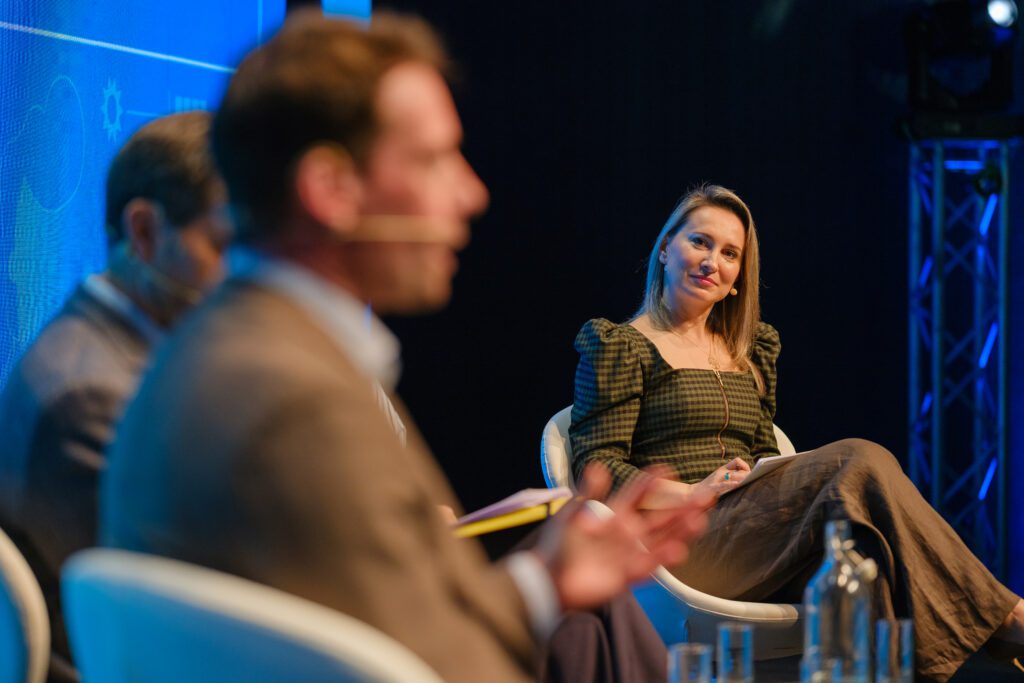
Panel discussion at Energy Tech Summit 2026: A new global order: make or break in Europe’s cleantech policy
Climate Risk And Clean Energy Data: A Present Decision
Across multiple sessions at Energy Tech Summit 2026, one consistent theme emerged: climate risk has moved from a future projection to a present financial reality hitting balance sheets now.
Nigel McCleave of Lightrock noted that the core commercial challenge for clean energy startups is no longer building the solution — it is finding customers who will pay for it today. Moreover, he cautioned that without high-quality climate data, scaling fast means scaling bad decisions faster.
Dr. Alejandro Martí of Mitiga Solutions argued that historical models are no longer sufficient, since climate is changing faster than the datasets built to understand it. Similarly, Viktor Gauk of OroraTech grounded the point in operational terms: models only earn trust when they prove themselves in real events. Together, these perspectives pointed to the same conclusion: the era of planning for climate risk has ended. The era of pricing it has begun.
Smart Grid Infrastructure: The $400 Billion Investment Gap
Jan Sobotka, Director of Strategy at Corinex, outlined a critical dimension of Europe’s energy transition infrastructure challenge at Energy Tech Summit 2026. By 2035, approximately 30% of grid capacity is expected to sit at the low- and medium-voltage edge — driven by the accelerating rollout of renewables, EVs, heat pumps, and distributed storage. Nevertheless, large portions of today’s grid remain effectively invisible to operators.
To illustrate the scale: Spain’s low-voltage network alone spans roughly 250,000 km, much of it still unmonitored. Furthermore, the global investment gap in smart grid infrastructure exceeds $400 billion. Rather than rebuilding from scratch, the solution lies in intelligence — using real-time data over existing power lines to make grids more visible and investments more targeted. As Sobotka put it: “The future is distributed, dynamic, and reliant on intelligence.”
Energy Tech Challengers 2026: Clean Energy Startups Competing For The Future
The Energy Tech Challengers competition at ETS 2026 brought 73 startup pitches across seven tracks, including dedicated streams for AI for Energy and Energy for AI. Together, these tracks reflected the bidirectional relationship between computational demand and clean energy deployment. Additionally, the lineup covered Green Energy Infrastructure, Climate Hardware X, Climate Software X, Future of Materials and Manufacturing, and Climate X.
Track winners represented the full breadth of the clean energy startup landscape. Redoxblox is developing thermochemical energy storage for industrial decarbonization. Heimdall Power delivers real-time grid monitoring for electricity network operators. Noon Energy is building long-duration storage to make solar and wind available around the clock. Tokamak Energy is advancing compact fusion toward commercial deployment in the 2030s. UpGrid connects local solar producers and consumers within shared energy communities. Finally, Dryad provides ultra-early wildfire detection through solar-powered sensor networks deployable even in remote areas.
The ultimate winner of Energy Tech Challengers 2026 was Flexiramics — a materials innovator developing a lightweight, flexible ceramic with applications spanning energy storage, electronics, filtration, and thermal management. As a result, Flexiramics takes home the title as a company with potential to accelerate multiple sectors of the energy transition simultaneously.

Flexiramics – Energy Tech Challengers winner
Side Events And Networking: What Made ETS 2026 Stand Out
Energy Tech Summit 2026 set records not just on the main stages but also across its entire ecosystem of side events — 32 in total, generating 31 hours of informal networking and three times the partner-led participation of the previous year.
Before the main event began, the pre-summit gala dinner at the Guggenheim Museum set the tone — bringing together speakers, partners, and jury members for a Michelin-star dining experience and live music. Subsequently, day one closed with a second evening at the Guggenheim, hosted by BBVA, proving that the most valuable conversations at climate tech events often happen away from the stage.
Growth Meets Capital, now in its third edition, convened around 100 selected founders, growth investors, and industry leaders for focused, invite-only deal conversations. Meanwhile, Growth Meets Industry brought corporates, investors, and clean energy startups into closed roundtables covering electrification, hydrogen, geothermal, physical AI, and battery flexibility. In addition, the ABB Startup Challenge featured 18 finalists — selected from over 200 global applicants — pitching to senior executives from ABB, Microsoft, and Synerleap.
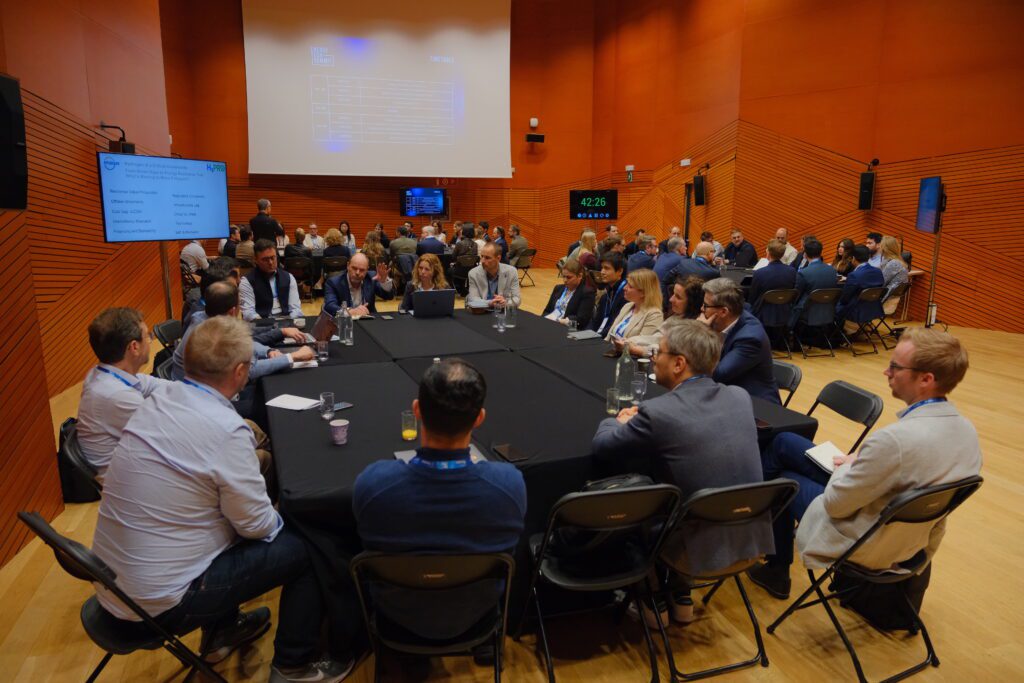
Growth Meets Industry roundtables at Energy Tech Summit 2026
What Comes Next For Energy Tech Summit
Energy Tech Summit 2026 opened new chapters for the global climate tech calendar. Most notably, Energy Tech Summit Asia makes its debut on September 29–30, 2026, in Kuala Lumpur — connecting European clean energy innovation with the manufacturing scale and demand of the region at the center of global energy growth.
Looking further ahead, Energy Tech Summit 2027 and Compute Summit 2027 return to Bilbao on April 7–8, 2027. Tickets are available here.
Q&A: Energy Tech Summit 2026
Q1. What is Energy Tech Summit 2026? Energy Tech Summit 2026 is Europe’s leading climate tech and energy transition event, held on April 15–16, 2026, in Bilbao, Bizkaia, Spain. The 7th edition brought together 1,400+ attendees from 51 countries, including 400+ funds, 400+ startups and scale-ups, and 250+ corporates, across 41 sessions, 73 startup pitches, and 3,300+ one-to-one meetings.
Q2. Who won Energy Tech Challengers 2026? The ultimate winner of Energy Tech Challengers 2026 was Flexiramics, a developer of lightweight flexible ceramic materials with applications in energy storage, electronics, filtration, and thermal management. Track winners included Redoxblox, Heimdall Power, Noon Energy, Tokamak Energy, UpGrid, and Dryad.
Q3. What were the key themes at Energy Tech Summit 2026? The central theme was Europe’s shift from climate tech innovation to industrial-scale deployment — from promise to production. Furthermore, AI and energy infrastructure convergence was the defining cross-cutting topic, reflected in the full integration of Compute Summit into ETS for the first time. Clean energy startup scaling, climate risk on balance sheets, and smart grid investment were also major focus areas.
Q4. What is Compute Summit? Compute Summit is a dedicated gathering for leaders shaping digital infrastructure — bringing together hyperscalers, energy companies, infrastructure investors, and founders to address how computing capacity can scale sustainably. After debuting as a stage within ETS 2026, it returns as a standalone event alongside Energy Tech Summit 2027 in Bilbao on April 7–8, 2027.
Q5. When and where is Energy Tech Summit 2027? Energy Tech Summit 2027 takes place April 7–8, 2027, in Bilbao, Bizkaia, Spain, alongside Compute Summit 2027. Additionally, Energy Tech Summit Asia takes place September 29–30, 2026, in Kuala Lumpur, Malaysia.